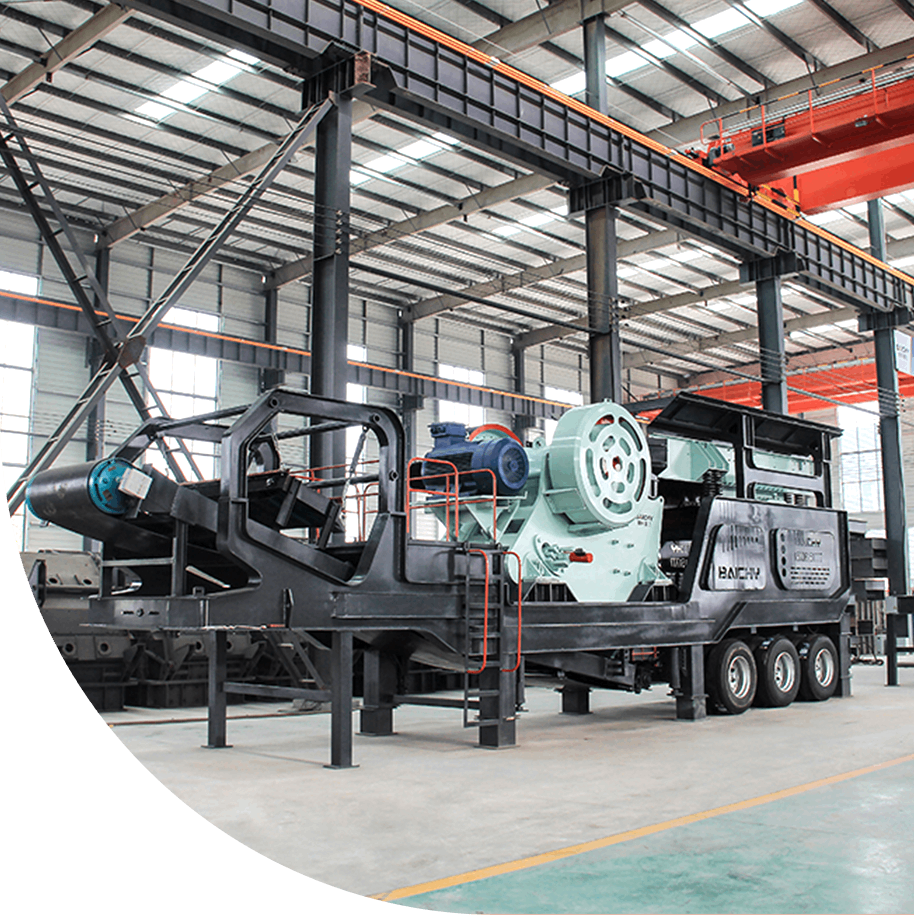


In today's booming infrastructure construction, sand and gravel, as the backbone of concrete and asphalt, are indispensable key raw materials. However, with restrictions on the mining of natural river sand and a significant increase in market demand, sand making machineshave become the core equipment for solving the sand shortage problem. So, what are the important uses of sand making machines?
I. Core Mission: Producing High-Quality Artificial Sand
As the name suggests, the main and core purpose of a sand making machine is to process various large rocks (such as river pebbles, granite, limestone, construction waste, etc.) into particles that meet different engineering standards through a process of "crushing, shaping, and screening," namely "manufactured sand" or "artificial sand."
Compared to natural sand, manufactured sand has the following advantages:
• Controllable Particle Shape: The finished sand particles are cubic with sharp edges, which can generate better interlocking force in concrete and improve compressive strength.
• Adjustable Grading: By adjusting the equipment parameters, the fineness modulus of the sand can be precisely controlled to meet the construction requirements of different grades.
• Abundant Raw Materials: Not limited by geography or environment, various ores, tailings, and construction waste can be used as raw materials, offering a wide range of sources and low costs.
• Environmentally Friendly and Energy-Saving: Effectively reduces the over-exploitation of natural river sand, protects river ecosystems, and enables the resource utilization of construction waste.

II. Wide Range of Applications
The high-quality manufactured sand produced by sand making machines is widely used in the following fields:
1. Construction Engineering: Used to produce concrete, mortar, precast components, etc., forming the "backbone" of high-rise buildings and residential buildings.
2. Infrastructure Construction: Used as base material and concrete mixing for large-scale projects such as highways, railways, bridges, and dams.
3. Building Materials Industry: Used to manufacture blocks, bricks, tiles, and insulation materials.
4. Mining Industry: Used for fine crushing of minerals, preparing for mineral processing operations.

III. Brief Description of Working Principle
The current mainstream vertical shaft impact crusher operates on a combination of "stone-on-stone" and "stone-on-iron" principles. Material falls from the top of the machine into a high-speed rotating impeller. Under centrifugal force, it is ejected at extremely high speed, colliding and rubbing against surrounding freely falling material or the circumferential guard plates, thus achieving efficient crushing and shaping.
In summary, a sand making machine is not just a simple crushing device, but a crucial link in achieving efficient resource utilization, ensuring a high-quality supply of building aggregates, and promoting green and sustainable development. Choosing a suitable sand making machine means securing a stable, high-quality, and economical source of sand and gravel for sand and gravel plants and large-scale engineering projects.