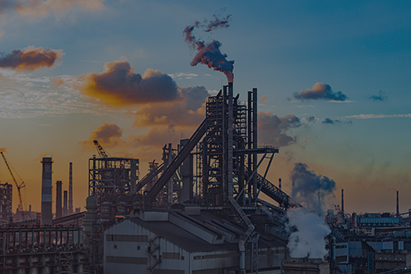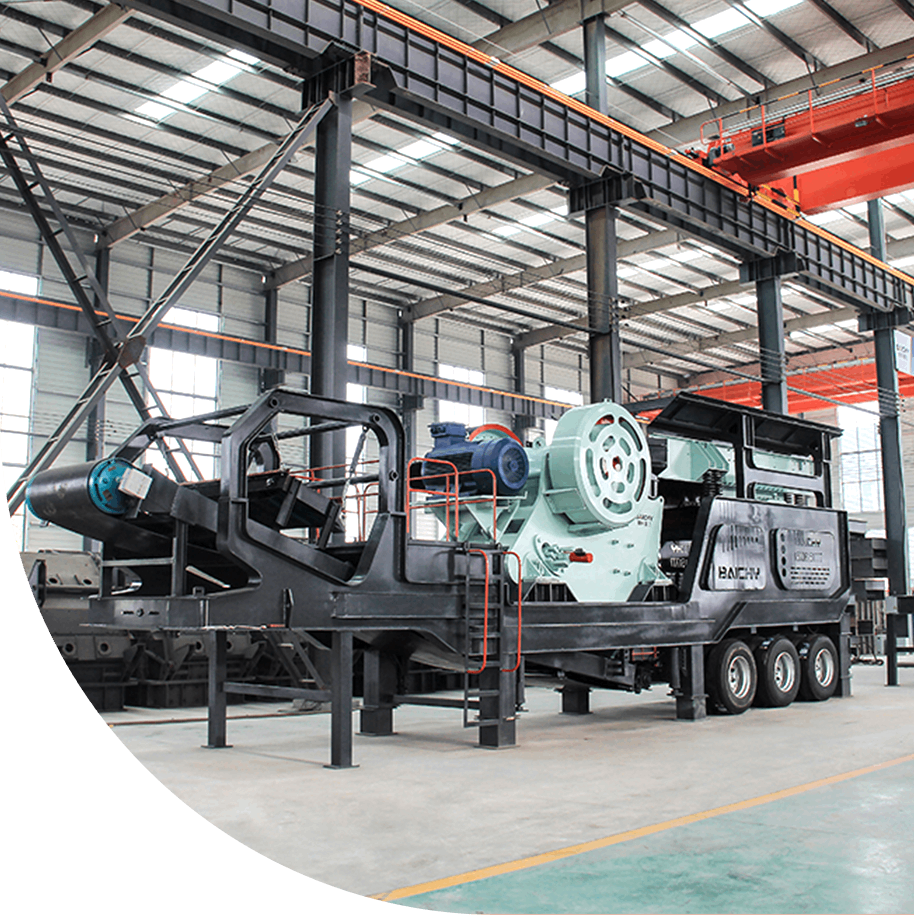

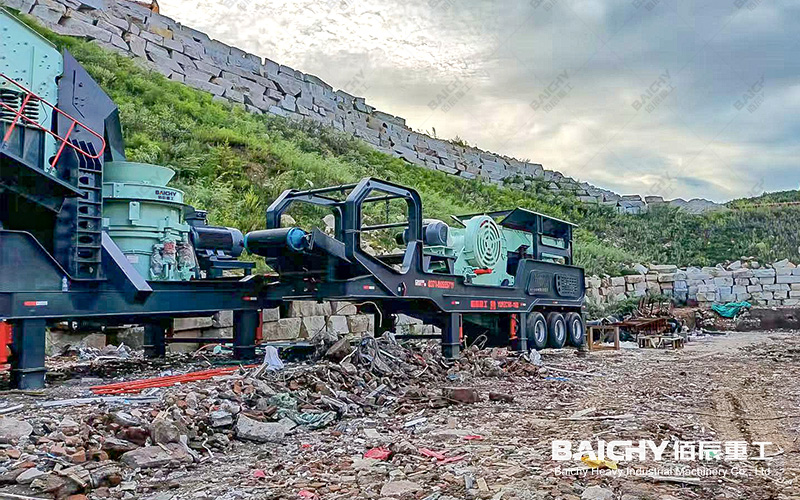
mobile crushing station
Every mine operator eventually faces the same decision: should the crushing plant travel with the ore, or should the ore travel to a fixed plant? Choosing between a mobile crushing station and a stationary crushing station is one of the most consequential equipment decisions in any crushing and screening project. Get it right, and you shorten cycle times, cut haulage cost and lift throughput. Get it wrong, and you lock yourself into years of avoidable operating expense.
In this guide, Baichy Heavy Industry breaks down the differences between the two systems across mobility, cost, capacity, maintenance and payback — so you can match the crushing plant to your deposit, your schedule and your budget.
What Is a Mobile Crushing Station?
A mobile crushing station — also called a portable or wheeled/tracked crushing plant — mounts the crusher, feeder, screen and conveyor on a single chassis or set of wheels. The whole unit can be moved between faces, pits or projects, often by truck, trailer or self-propelled tracks.
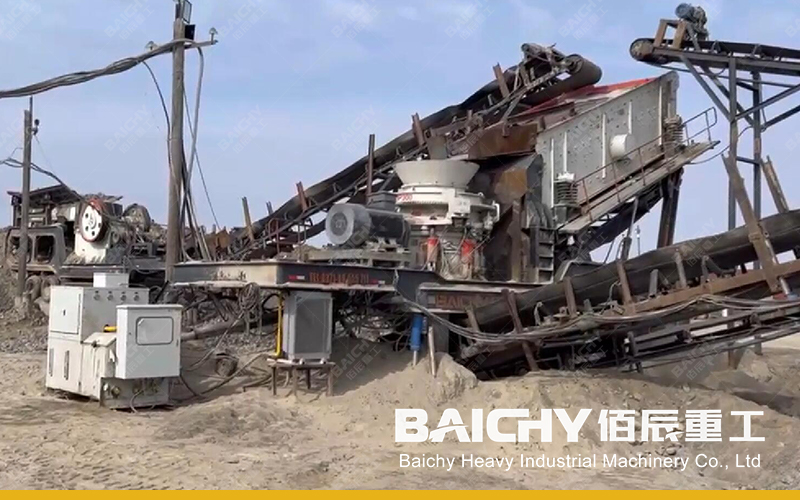
mobile crushing plant
Typical Configurations
- Jaw + cone mobile units for hard rock
- Impact crusher mobile units for aggregate and recycling
- Mobile screening plants that pair with the crushing unit
When It Fits Best
- Multi-face or multi-pit operations
- Short-life or moving deposits
- Quarries and construction-recycling sites
- Projects that relocate every few years
What Is a Stationary Crushing Station?
A stationary crushing station is a fixed, permanent crushing plant installed on a concrete foundation, usually designed around the specific ore, capacity and product spec of one mine. Feed, primary, secondary and tertiary stages are laid out in a permanent flow, often with a dedicated conveyoring and screening system.
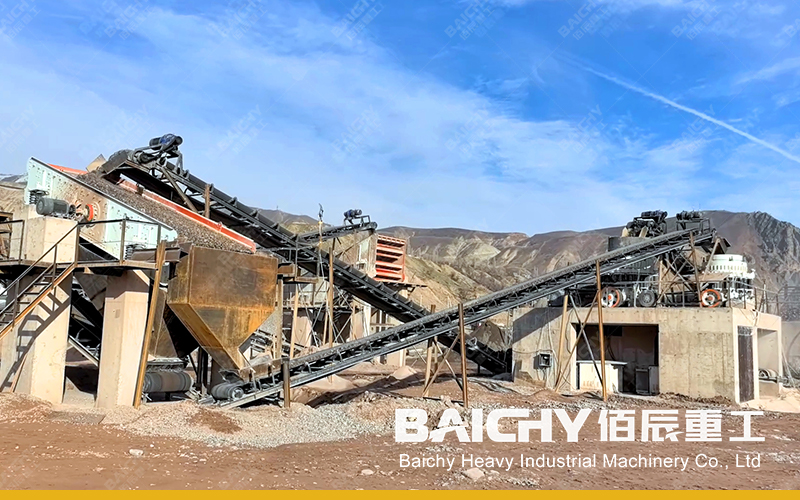
Stationary crushing plants
Typical Layout
- Grizzly feeder → jaw crusher → cone/impact crusher → vibrating screen → stockpiles
When It Fits Best
- Long-life, large-tonnage deposits
- Centralized mining with fixed haulage roads
- Plants that must run for 10–20+ years
- Operations where product quality and uptime outweigh mobility
Key Differences Between Mobile and Stationary Crushing Station
The two systems are not "better or worse" — they are answers to different questions. Here is the direct comparison.
1. Mobility and Site Fit
The most obvious difference is transportability. A mobile crushing station follows the ore; a stationary crushing station forces the ore to travel to it. In an open-pit mine where the working face advances, a mobile unit dramatically shortens haul distance and reduces truck fuel and labor.
2. Capital Cost and Setup Time
- Mobile: lower civil works, no concrete foundation, faster commissioning (days to a few weeks), and lower initial infrastructure spend.
- Stationary: higher upfront investment in foundation, steel structure, civil engineering and installation, with longer lead time (months).
3. Production Capacity
For very high tonnage (e.g., 500–2000+ t/h) and continuous operation, a stationary crushing station generally offers larger, more stable throughput. Modern mobile crushing plants now reach competitive capacities, but very large fixed plants still hold the advantage for extreme scale.
4. Operating and Maintenance Cost
- Stationary plants typically enjoy lower per-ton operating cost and better power/consumable efficiency at scale, because systems are optimized and fixed.
- Mobile units carry higher mobility-related wear (track/trailer, hydraulics) but avoid repeated re-installation cost.
5. Relocation and Project Life
If your deposit or contract life is short (2–5 years), a mobile crushing station lets you move and reuse the asset. If your mine will run for 10+ years, a stationary crushing plant pays back through efficiency.
Mobile vs Stationary Crushing Station: Parameter Comparison Table
| Parameter | Mobile Crushing Station | Stationary Crushing Station |
|---|---|---|
| Installation time | Days to a few weeks | 1–4 months (civil works) |
| Foundation / civil works | Minimal or none | Concrete foundation required |
| Relocation | Easy, reusable across sites | Difficult, site-fixed |
| Typical capacity | 50–800 t/h | 100–2000+ t/h |
| Haul distance to plant | Short (plant follows face) | Long (ore hauled to plant) |
| Initial capital cost | Lower (no foundation) | Higher (civil + steel) |
| Operating cost per ton | Moderate–higher | Lower at large scale |
| Maintenance complexity | Hydraulics + mobile chassis | Fixed, simpler in place |
| Suitability | Multi-face, short-life, portable projects | Long-life, high-tonnage mines |
How to Choose: A Practical Decision Framework
The right choice depends on four factors you should evaluate before buying.
Step 1: Assess Deposit Life
- Deposit or contract life < 5 years → mobile crushing station
- Life > 10 years with large reserves → stationary crushing station
Step 2: Compare Haulage Cost
Haulage often costs more than crushing itself. Calculate the annual fuel, driver and truck cost of hauling ore to a fixed plant. If a mobile crushing station near the face cuts this by more than its extra mobility cost, mobile wins.
Step 3: Size the Required Throughput
For sustained output above roughly 800–1000 t/h, a stationary crushing station is usually more economical. Below that, modern mobile crushing plants can deliver competitive tonnage with far less site work.
Step 4: Plan for Flexibility
If your product mix, feed source or mine plan will change, mobile gives you reconfigurable stages and a resaleable asset. If your process is stable and optimized, stationary maximizes uptime and efficiency.
FAQ
1. Is a mobile crushing station cheaper than a stationary one?
A mobile crushing station usually has a lower initial capital cost because it needs no concrete foundation and installs faster. However, its per-ton operating cost can be higher than an optimized stationary crushing station at very large scale.
2. Which crushing plant gives higher capacity?
For extreme and continuous tonnage (1000+ t/h), a stationary crushing station generally delivers higher, more stable capacity. Modern mobile crushing plants are competitive in the 50–800 t/h range.
3. Can a mobile crushing station replace a stationary crushing plant?
Yes, in many mid-size operations it can, especially where mobility, fast setup and relocation are valuable. For long-life, very large mines, a stationary crushing station remains more cost-efficient over time.
4. How long does it take to set up each type?
A mobile crushing station can be commissioned in days to a few weeks. A stationary crushing station typically requires one to four months due to civil works, foundation and installation.
5. How do I choose between mobile and stationary crushing equipment?
Evaluate deposit life, haulage cost, required throughput and flexibility needs. Use the parameter table above, and talk to a crushing equipment manufacturer like Baichy for a site-specific recommendation.
Baichy Heavy Industry
Baichy Heavy Industry is a high-tech mining equipment company integrating R&D, manufacturing, sales, and after-sales service. Focusing on crushing, grinding, and mineral processing equipment, we provide professional solutions to our customers. We are ISO9001:2015 、certified, and our products include mobile crushing palnts, crawler crushing plant, construction waste crushing plants, jaw crushers, sand making machines, cone crushers, fine crushers, grinding mills, ball mills, etc., all with reliable performance to meet diverse project needs.
Baichy Heavy Industry – Your Trusted Partner
To ensure optimal performance of your equipment, Baichy Heavy Industry offers:
- Professional on-site installation guidance
- Comprehensive operator training
- 24/7 technical support & maintenance services
Our complete after-sales service system guarantees long-term, stable operation of your machinery with minimal downtime.
Protect Your Rights – Only Use Official Channels
To avoid scams and ensure authentic support, contact us exclusively through:
• Official Website: www.baichychina.com
• WhatsApp: +8615093222637
• Email: [email protected]
Your satisfaction is our priority – expect prompt, professional service every time.
(Note: Beware of unauthorized third parties claiming to represent Baichy. Always verify through official contacts.)