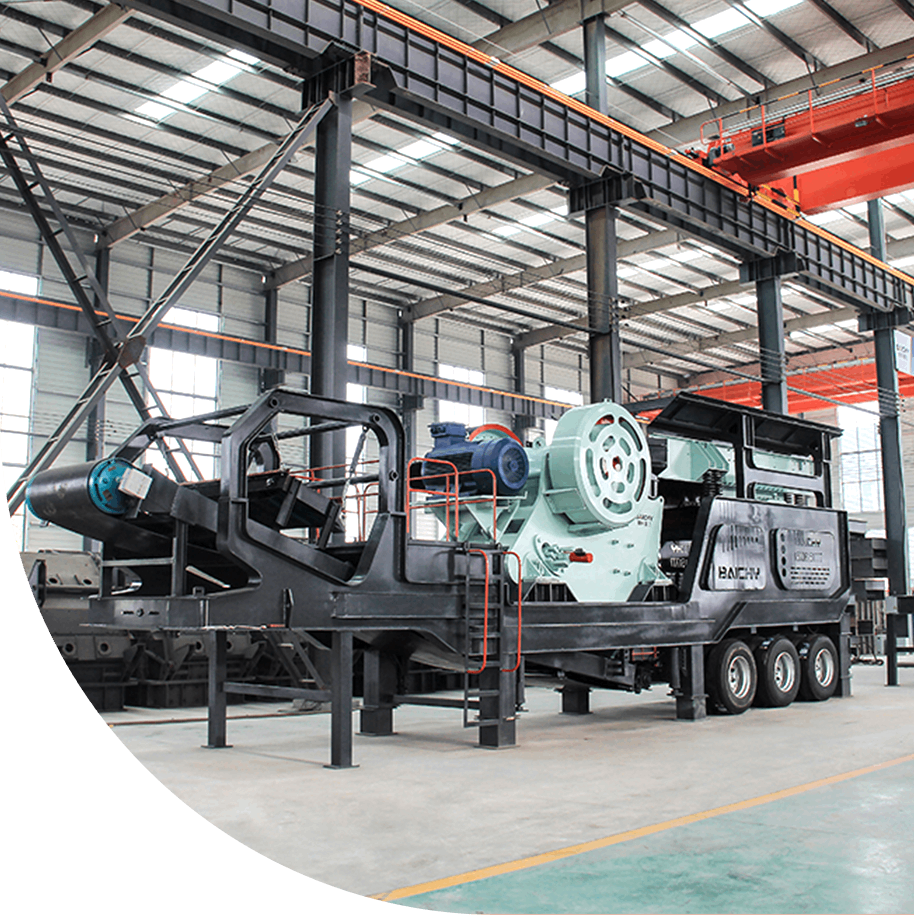

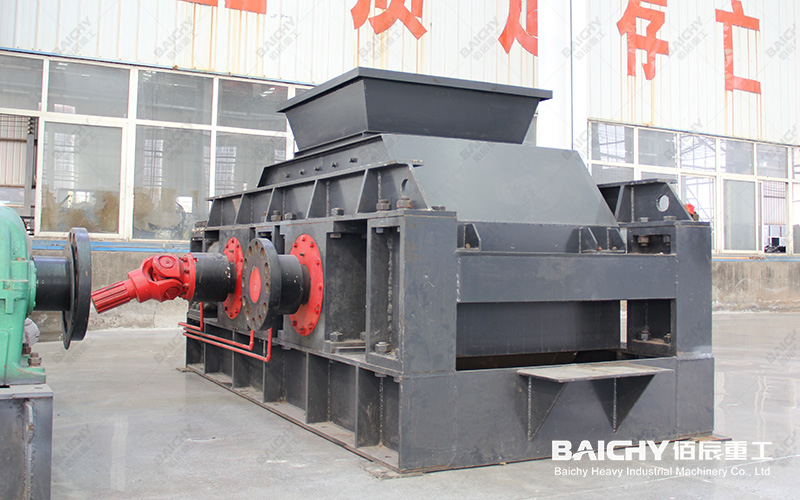
Roll crusher, double-roll crusher
I. What is a Roller Crusher: Working Principle and Types
A roller crusher (also known as a double-roll or twin-roll crusher) features a crushing chamber formed by two rollers rotating towards each other; material is crushed as it undergoes both compressive and shear forces between the roller surfaces. As a low-speed, high-compression machine, it operates on a principle fundamentally different from the high-speed impact mechanisms of hammer crushers or impact crushers. It is suitable for materials of low to medium hardness—such as coal, coke, slag, clay, limestone, shale, and clinker—with compressive strengths below 150 MPa. However, it is not appropriate for hard rocks like granite or basalt; those are best handled by jaw crushers and cone crushers.
In terms of global demand, the manufactured sand and coal washing industries represent the two primary markets for roller crushers: manufactured sand production continues to expand alongside infrastructure investment, while roller crushers are indispensable for the medium-to-fine crushing stages of coal and coke processing. Given this steady demand, the market is flooded with manufacturers of varying quality; price discrepancies of up to 30% often stem from differences in roller shell materials and after-sales service commitments—issues that this purchasing guide aims to address. Based on structure and adjustment mechanisms, mainstream roll crushers fall into three categories:
| Category | Representative Models | Roll Gap Adjustment | Typical Applications |
|---|---|---|---|
| Spring-loaded Double-roll Crusher | 2PG400×250 – 2PG900×700 | Spring + bolt; adjustment requires shutdown | Budget-sensitive; medium-to-fine crushing of clean materials |
| Hydraulic Double-roll Crusher | 2PGY400×250 – 2PGY900×700 | Hydraulic (±1mm); adjustment during operation | Wet/sticky materials, iron-bearing materials, lines requiring frequent spec changes |
| Four-roll Crusher | 2PG1000×800 | Two stages in series; hydraulic + spring | Final crushing/sand making after VSI; single-pass shaping to 0–3mm |
II. Application Scenarios for Roll Crushers
1. Coal Preparation/Coking Plants: Medium-to-fine crushing of raw coal, lump coal, and coke to 10–30mm; significantly reduces fine-powder loss compared to hammer crushers.
2. Metallurgical Slag Processing: Pre-crushing furnace slag, mineral slag, and steel slag to 10–50mm; prepares feed for downstream grinding or magnetic separation.
3. Building Material Preparation: Crushing clay, shale, cement clinker, and limestone to 2–20mm; ensures controllable particle size before grinding.
4. Wet/Sticky Conditions: Handles high-moisture coal (10%–15% water content) and wet clay without clogging; allows for continuous production during rainy seasons.
5. Manufactured Sand Final Crushing: Compresses ≤8mm aggregates (from VSI or jaw crushers) into 0–3mm finished sand using four-roll crushers; stone powder content is controllable at 8%–12%.
Why are roll crushers essential for these scenarios? The key factor is the "over-pulverization rate" (excessive fines generation): High-speed impact crushers can produce 18%–25% fines, whereas roll crushers—utilizing compression—keep this rate below 10%. For materials like coal and coke—where value is determined by particle size and fines represent a financial loss—a 5%–15% difference in yield translates directly into real monetary value. Additional Note on Model Selection: The throughput of the same roller crusher can vary by more than twofold depending on the material; for instance, when processing lightweight materials like coke or coal gangue, the capacity should be calculated at 0.45–0.55 of the limestone-based rating. When purchasing, always request capacity figures calibrated for your specific material rather than relying on default limestone parameters.
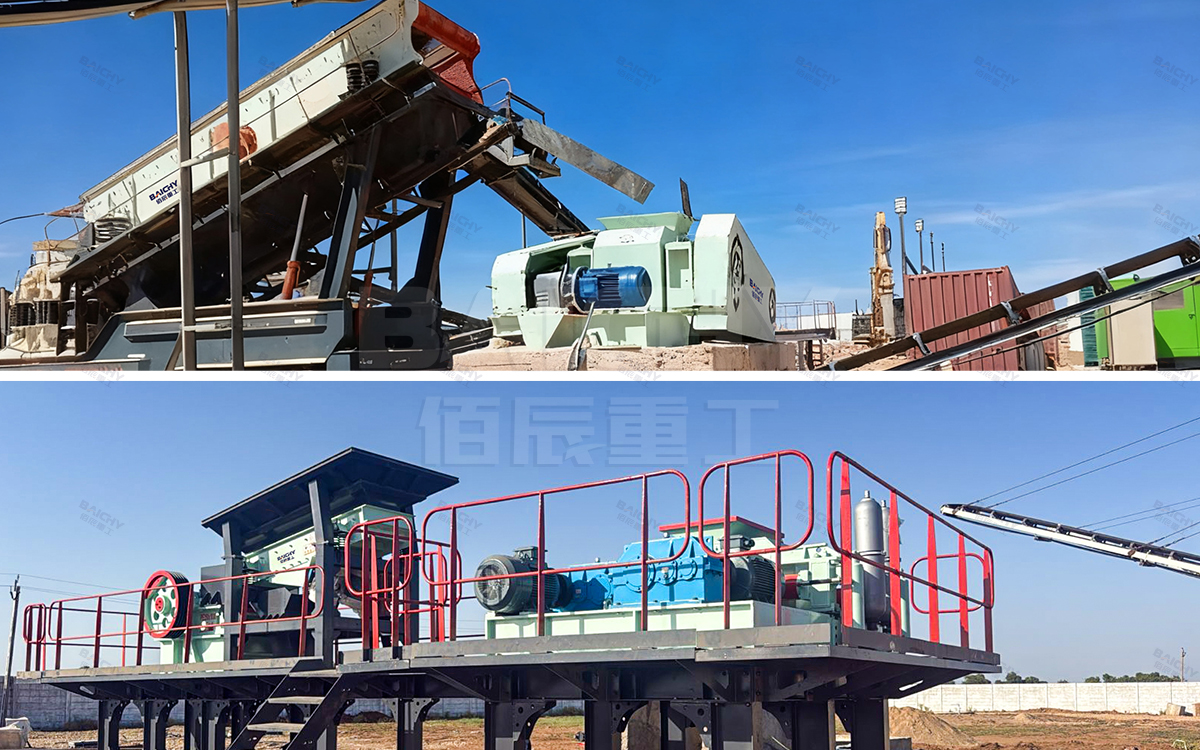
Double roll crusher for Lebanese gold mines
III. Key Advantages of Factory-Direct Roller Crushers
| Advantage | Benefit (Practical Value to the Buyer) |
|---|---|
| Factory-direct sales; no middleman markups | 15%–20% lower procurement cost for the same configuration; savings cover the cost of an iron remover plus spare parts |
| Verifiable factory test reports | Capacity, particle size, and power consumption backed by actual test data; acceptance criteria can be stipulated in the contract |
| Mn18Cr2 high-manganese steel roller shells | 6–8 month lifespan for hard materials; supports hard-facing repair (repair cost is only 20%–30% of a new shell; can be repaired 2–3 times) |
| Direct supply of spares and technical support | OEM supply of roller shells, bearings, and hydraulic components; 48-hour response time; avoids supply interruptions common with middlemen |
| Customization based on operating conditions | Smooth rolls + scrapers for wet/sticky materials; toothed rolls for lump coal; four-roll setup for sand making; system-level integration design |
Three strict criteria for identifying a "quality manufacturer": ① Willingness to specify roller shell material and motor brand in the contract; ② Ability to provide references of operational units of the same model and facilitate on-site or video inspections; ③ Specification sheets that clearly state calibration conditions (e.g., calibrated against limestone at 1.6 t/m³) rather than misleading buyers with theoretical capacity figures. Additionally, technical documentation from quality manufacturers should include roller shell thickness, surface hardness (HRC), and bearing models/replacement intervals—details that determine the true cost of ownership over three years. Requesting written documentation for these items is far more reliable than any verbal promise.
IV. Core Parameter Table for Roller Crushers (Typical Configurations for 2PG/2PGY Series)
| Model | Feed Size | Discharge Size | Capacity | Power | Roll Gap Adjustment |
|---|---|---|---|---|---|
| 2PG400×250 | ≤25mm | 2–8mm | 5–10 t/h | 11kW | Spring |
| 2PG610×400 | ≤40mm | 10–30mm | 15–40 t/h | 30kW | Spring/Hydraulic |
| 2PG750×500 | ≤45mm | 10–40mm | 30–60 t/h | 37kW | Spring/Hydraulic |
| 2PG900×700 | ≤60mm | 10–50mm | 50–120 t/h | 45–55kW | Spring/Hydraulic |
| 2PGY1000×800 (Four-roll) | ≤10mm | 0–3mm | 60–100 t/h | 2×55+2×45kW | Hydraulic + Spring |
Note: Capacity is rated based on limestone (1.6 t/m³); for lightweight materials such as coal and coke, a conversion factor of 0.45–0.55 applies. Hydraulic roll gap setting precision is ±1mm.
V. Typical Case Studies and Market Validation
Case studies provide the most direct evidence when selecting a roller crusher. The three operational projects listed below cover three typical application scenarios—final crushing for manufactured sand, intermediate crushing of wet/sticky coal, and clinker processing upgrades. All utilize roller crushers supplied directly by Baichy, with data derived from on-site acceptance records.
1. Two-stage sand-making line in Southeast Asia: A two-stage closed-circuit system comprising a mobile VSI sand-making machine (output ≤8mm) and a 2PG1000×800 four-roll crusher (output 0–3mm). It delivers a stable capacity of 60–100 t/h, with a finished sand product featuring ≤5% flaky/elongated particles, 8%–12% stone powder content, and a fineness modulus of 2.3–2.8; the product is supplied directly for dry-mixed mortar and C30–C50 concrete production. Compared to a single-stage VSI process producing 0–3mm sand directly (which yields 18%–25% stone powder), the roll crusher’s compression-based final crushing reduces the stone powder rate by more than half.
2. Medium-fine crushing of coal gangue at a coal washing plant: A 2PGY750×500 unit processes raw coal and coal gangue with 12% moisture content; the combination of smooth rolls and scrapers ensures continuous operation without clogging. The system features a hydraulic relief mechanism with a 0.2-second response time to handle tramp iron entering from the mine; the roll shells have a service life of approximately 7 months, and the hydraulic protection system has prevented any jamming-related shutdowns.
3. Cement clinker final crushing upgrade: A hydraulic double-roll crusher replaced the original hammer crusher. Electricity consumption per ton dropped by approximately 35%, the over-pulverization rate fell from 20% to below 8%, and the overall electricity consumption of the grinding mill decreased by over 25%—transforming the waste of "crushing into powder" into the profit of "crushing into usable aggregate."
VI. Recommended auxiliary equipment based on this guide
Double-roll crushers have a maximum feed size limit (not exceeding 1/10 to 1/15 of the roll diameter); therefore, a single unit cannot independently constitute a complete production line. For a complete double-roll crushing production line, the following upstream and downstream equipment is recommended:
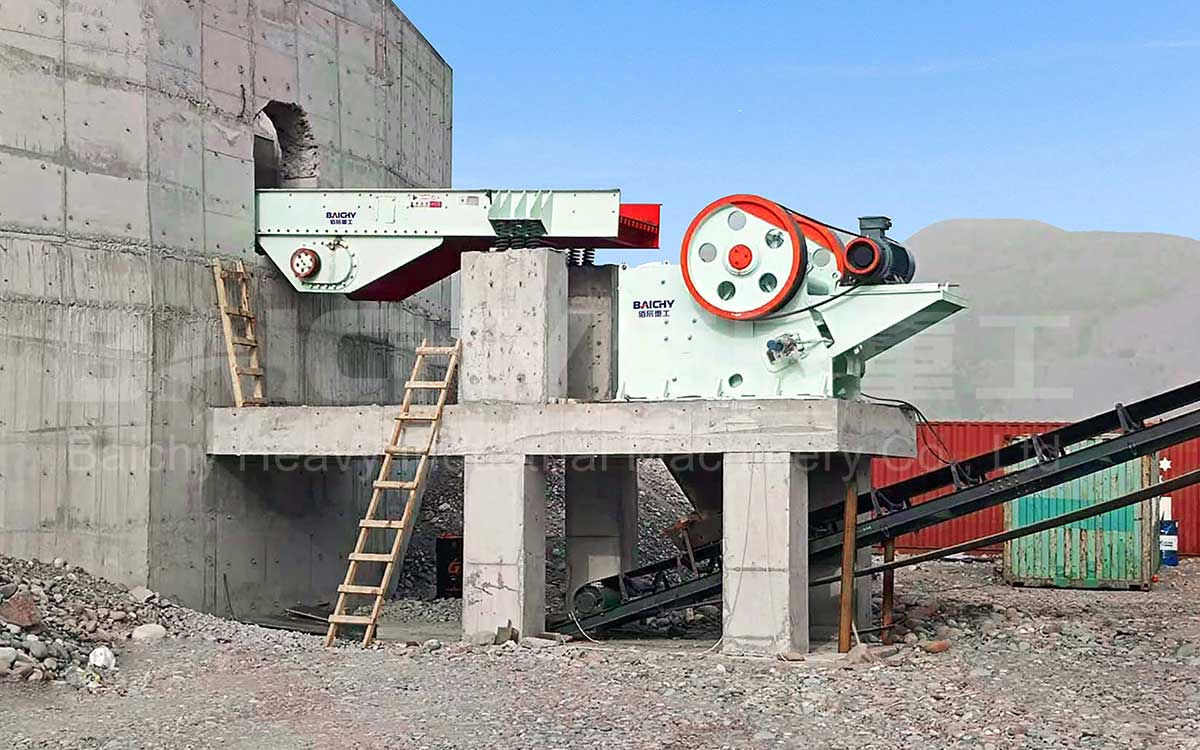
• PE Series Jaw Crusher: Performs primary coarse crushing (reducing material to ≤60mm) before feeding the double-roll crusher; this prevents large chunks from jamming the rolls.
• ZSW Vibrating Feeder: Ensures uniform feeding, extends roll shell lifespan, and stabilizes production capacity.
• Iron Remover: Intercepts iron contaminants at the source and reduces the frequency of hydraulic retraction (safety release) events; an essential companion for roll crushers.
• YK Circular Vibrating Screen: Facilitates closed-circuit screening; oversized particles are returned for re-crushing to ensure the final product meets size specifications.
• VSI Sand-Making Machine: Used in a two-stage sand-making setup (VSI for pre-crushing → four-roll crusher for final 0–3mm crushing).
• Belt Conveyors: Connect the various stages to form a continuous crushing production line.
VII. Four Key Tips to Avoid Pitfalls in Selection
When selecting a double-roll crusher, avoid the mistake of "wanting it all" (expecting one machine to handle every scenario). Compare your specific operating conditions against these four points:
• Consider Hardness: Not suitable for hard rock with compressive strength >150 MPa; do not be misled by claims of a "universal crusher."
• Consider Feed Size: Feed size must match the roll diameter; oversized chunks can jam rolls and damage surfaces—install a jaw crusher or grizzly screen upstream.
• Select Roll Type: Use smooth rolls with scrapers for wet/sticky materials; use toothed rolls for lump coal; use a four-roll two-stage setup for fine sand production.
• Mandatory Iron Removal: Hydraulic retraction (safety release) is a last resort, not a normal operating mode; upstream iron removal can eliminate 90% of such retraction events.
VIII. FAQ (Frequently Asked Questions)
Q1: How can I determine if a "factory-direct" roll crusher manufacturer is reliable?
A: Look for three strict standards:
① Willingness to specify roll shell material (e.g., Mn18Cr2) and motor brand in the contract;
② Ability to provide operational case studies for the same model and accommodate video inspections;
③ Specification sheets that clearly state the calibrated operating conditions (e.g., limestone at 1.6 t/m³) rather than just theoretical capacity. Meeting all three criteria generally indicates a high-quality factory-direct manufacturer.
Q2: Can roll crushers handle wet material? Will the machine get clogged?
A: Yes, they can. The smooth-roll and scraper configuration is specifically designed for handling wet, sticky materials; it operates without clogging even with coal or clay containing 10%–15% moisture. This capability represents a key advantage of roll crushers over hammer or impact crushers, making them the preferred choice for coal washing plants and mining operations during the rainy season.
Q3: How do I select the right model, and what is the approximate budget?
A: Selection is based on target production capacity: choose the 2PG400×250 for 5–10 t/h, the 2PG610×400 for 15–40 t/h, the 2PG750×500 for 30–60 t/h, the 2PG900×700 for 50–120 t/h, or the 2PGY1000×800 (four-roll model) for sand making. By providing details such as material hardness, moisture content, feed particle size, and target capacity, you can obtain a free model selection plan and an FOB/CIF price quote from the manufacturer.
Baichy Heavy Industry
Baichy Heavy Industry is a high-tech mining equipment company integrating R&D, manufacturing, sales, and after-sales service. Focusing on crushing, grinding, and mineral processing equipment, we provide professional solutions to our customers. We are ISO9001:2015 、certified, and our products include mobile crushing palnts, crawler crushing plant, construction waste crushing plants, jaw crushers, sand making machines, cone crushers, fine crushers, grinding mills, ball mills, etc., all with reliable performance to meet diverse project needs.
Baichy Heavy Industry – Your Trusted Partner
To ensure optimal performance of your equipment, Baichy Heavy Industry offers:
- Professional on-site installation guidance
- Comprehensive operator training
- 24/7 technical support & maintenance services
Our complete after-sales service system guarantees long-term, stable operation of your machinery with minimal downtime.
Protect Your Rights – Only Use Official Channels
To avoid scams and ensure authentic support, contact us exclusively through:
• Official Website: www.baichychina.com
• WhatsApp: +8615093222637
• Email: [email protected]
Your satisfaction is our priority – expect prompt, professional service every time.
(Note: Beware of unauthorized third parties claiming to represent Baichy. Always verify through official contacts.)