
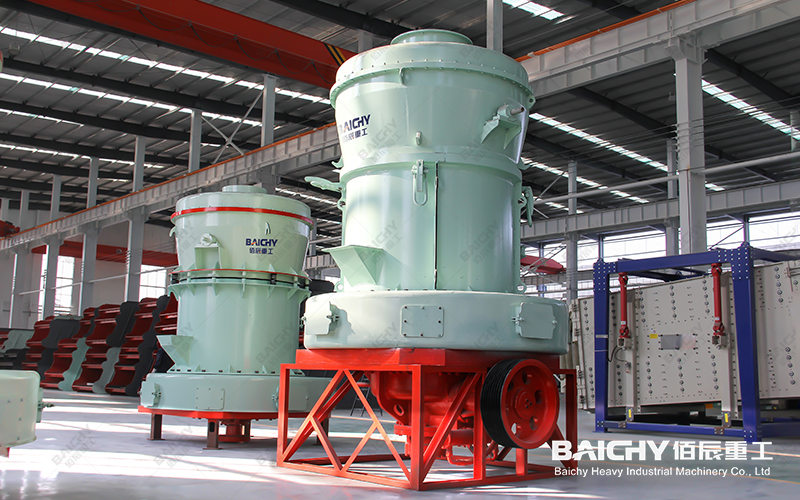
MTW Bentonite Mill
The challenge with bentonite grinding mills lies not in the ability to achieve fine grinding, but in three specific areas: maintaining consistent fineness to meet grade acceptance standards; controlling moisture and sand content to prevent clogging or damage to grinding components; and ensuring high single-unit output to keep the cost per ton competitive. Montmorillonite has a Mohs hardness of only 1–2 and is extremely easy to grind; however, profits are often eroded by downtime, parts replacement, and the need to sell the product at a lower grade. The MTW grinding mill (a European-style trapezoidal mill) replaces the traditional Raymond mill's "spider assembly + gearbox" structure with an integrated bevel gear drive. Combined with centralized thin-oil lubrication and a built-in variable-frequency classifier, it minimizes both fineness fluctuations and maintenance-related downtime for 200–325 mesh bentonite powder—making it the ideal upgrade solution for bentonite processing. The following sections analyze the mill across four dimensions: mechanism, parameters, application scenarios, and case studies.
I. What is the MTW Grinding Mill? A Turning Point from "Raymond Sufficiency" to "European-Style Upgrades"
Bentonite's primary mineral is montmorillonite, which swells upon contact with water and turns to powder when dry, making it naturally suitable for roller mill processing. The traditional solution is the Raymond mill: it offers low investment costs and a short learning curve, but its shortcomings become magnified during long-term operation. Its spring-pressured suspended shaft structure causes fineness to coarsen as wear occurs, requiring downtime for pressure adjustments; grease lubrication leads to uncontrollable temperature rises and wear during continuous summer production; and classification precision is limited, making grade switching laborious.
The MTW grinding mill introduces three structural innovations: regarding the drive system, it utilizes an integrated bevel gear drive that directly connects the reducer to the main shaft, eliminating the wear-prone suspension structure; for lubrication, it employs a forced-circulation thin-oil station with real-time monitoring of oil temperature and pressure, moving away from maintenance methods that require stopping the machine to apply grease; and regarding classification, it features a built-in variable-frequency turbine classifier paired with arc-shaped air ducts, providing a large air intake area and precise classification, with fineness continuously adjustable between 80 and 400 mesh. For bentonite—where "grade equals price"—the direct result of this structural design is that product fineness remains stable even as grinding rollers wear down; batch-to-batch D97 values remain consistent, and fluctuations in 200-mesh sieve residue are minimal. These are precisely the key metrics prioritized during qualification reviews for drilling-grade and pellet-grade suppliers, marking a genuine turning point for equipment selection and upgrades in bentonite milling.
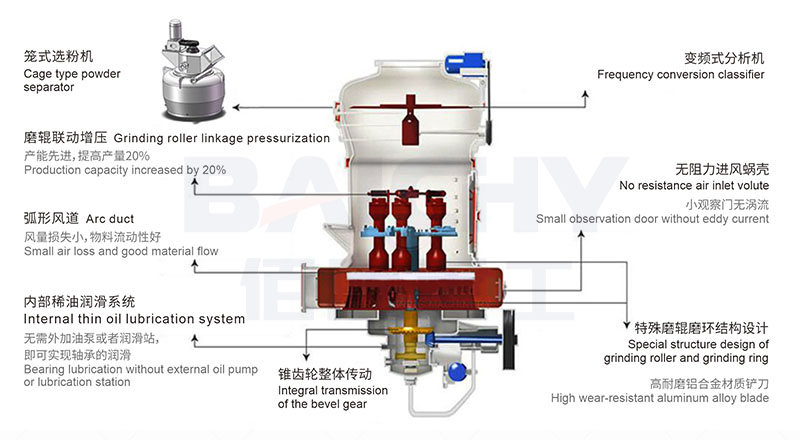
Structural diagram of the MTW European-style grinding mill
II. Three Critical Hurdles in Bentonite Milling: Moisture, Sand Content, and Grade Specifications
Before selecting equipment, it is essential to analyze the material characteristics; three prerequisites must be met:
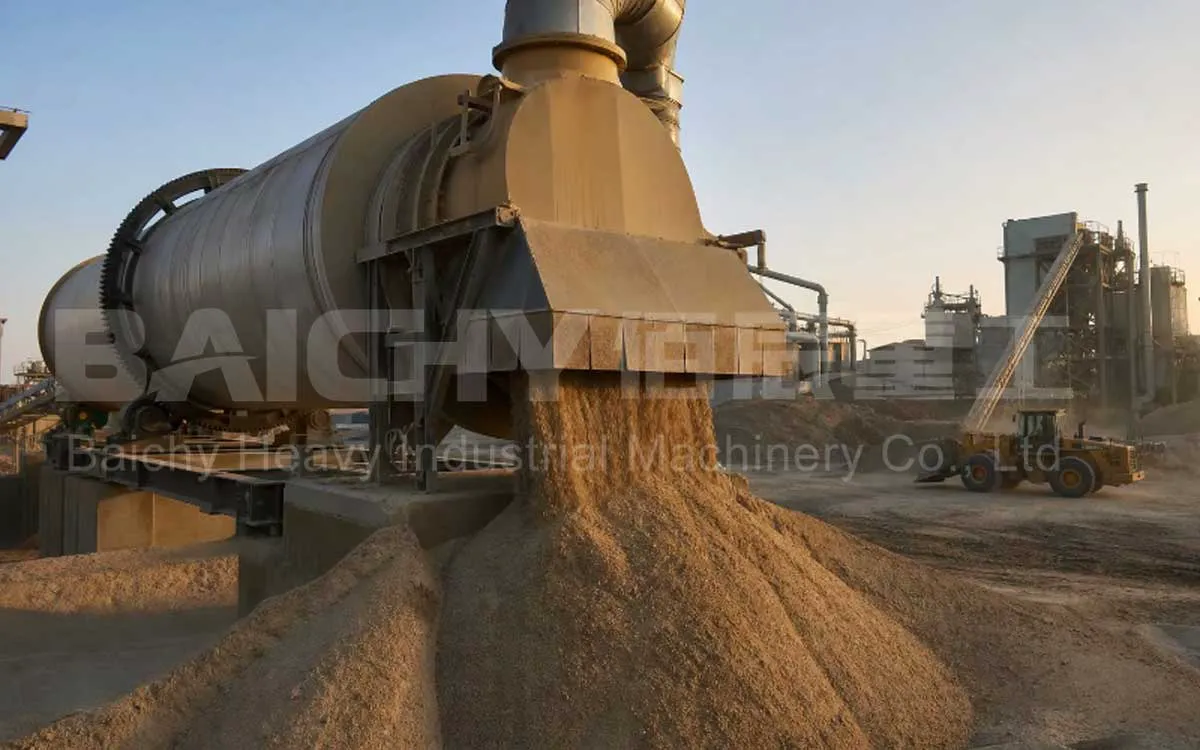
• The Moisture Hurdle: Feed moisture must be controlled below 5%. Raw bentonite often contains 20%–30% moisture; feeding wet material into the mill causes clogging of grinding rollers, classifiers, and air ducts. High-moisture raw ore requires a rotary dryer upstream (drying to 8%–12% for storage equilibrium), while low-moisture material requires careful moisture control in the stockpile area. The drying stage is not optional; it is a prerequisite for the MTW mill to achieve its rated output.
• The Sand Content Hurdle: Address sand removal before discussing grinding component lifespan and whiteness. Bentonite deposits are often associated with quartz sand and feldspar. While montmorillonite (Mohs hardness 1–2) causes negligible wear on grinding components, quartz sand (Mohs hardness 7) significantly shortens the service life of grinding rollers and rings while reducing whiteness; beneficiation and purification are recommended for high-sand ore prior to milling.
• The Grade Hurdle: Fineness specifications dictate the classifier configuration. Drilling mud grades primarily target the 200-mesh (75μm) fraction; foundry grades typically require a 200-mesh passing rate of ≥85%–90%; and pellet binders or activated bleaching earth often require ≥95% passing 200 mesh or even passing 325 mesh. The MTW’s built-in classifier allows for continuous adjustment between 80 and 400 mesh, enabling a single main unit to handle multiple grade specifications. However, one must verify the actual production capacity at the target fineness rather than relying solely on the main unit's nominal rating.
III. Core Specifications: MTW Series Configurations for Bentonite Processing
The table below outlines the typical parameter ranges for Baichy’s MTW series grinding mills when processing bentonite (based on a 200-mesh benchmark). Actual production capacity varies depending on fineness, feed moisture content, and sand content; the final specifications are subject to the technical agreement signed for the specific model.
| Parameter Category | MTW Series Typical Range | Significance for Bentonite Processing |
|---|---|---|
| Finished Product Fineness | 80–400 mesh (D97 continuously adjustable) | Single unit covers both 200-mesh drilling grade and 325-mesh activated bleaching earth feedstock |
| Feed Particle Size | ≤ 35 mm (requires jaw/roll crusher pre-crushing) | Matches standard particle sizes of crushed raw ore |
| Feed Moisture Content | ≤ 5% (requires pre-drying if exceeded) | Prevents mill clogging and classifier blockage; ensures continuous operation |
| Single-Unit Capacity | Approx. 3–20 t/h (200-mesh basis, model-dependent) | Achieves target output for medium-scale lines with a single unit; minimizes need for parallel units |
| Main Motor Power | 90–400 kW (model-dependent) | High-power models suit large-scale pellet-grade production lines |
| Drive Mechanism | Integrated bevel gear drive | Fineness remains stable despite grinding roller wear |
| Lubrication Method | Centralized forced-circulation thin-oil lubrication | Oil temperature and pressure monitoring; supports continuous, non-stop production |
| Classification System | Built-in variable-frequency turbine classifier | Instantaneous grade switching; stable batch-to-batch D97 values |
| Dust Collection (Closed-loop) | Cyclone collector + pulse-jet bag filter | Negative-pressure operation; recovers fines and ensures emissions compliance |
Note: The MTW series is an upgraded replacement for traditional Raymond mills, offering lower specific power consumption and reduced maintenance hours for the same fineness (exact figures depend on material testing). Baichy provides free material grinding tests and issues equipment selection reports based on the results.
IV. Typical Application Scenarios: Milling Process Parameters for Different Grades of Bentonite
Application Scenario Target Fineness/Specifications Key Process Points MTW Model Selection Advice
| Application Scenario | Target Fineness / Index | Process Key Points | MTW Selection Advice |
|---|---|---|---|
| Drilling Mud Grade (Sodium-based Bentonite) | 200 mesh; stable sieve residue | Sodium modification followed by drying and milling; fineness affects rheological properties | Medium-to-large models + variable-frequency classification; include sieve residue spot checks |
| Foundry Green Sand Binder | 200 mesh passing rate ≥85%–90% | Prioritize uniform particle size distribution; high montmorillonite content commands a premium | Standard models; calibrate classifier according to particle size window |
| Iron Ore Pellet Binder | -200 mesh ≥95% (or per process specs) | High output; narrow moisture tolerance window; stable post-milling moisture | High-power models + pre-drying; include moisture monitoring |
| Raw Material for Activated Bleaching Earth / Organobentonite | Predominantly -325 mesh fine powder | Fine grinding required both before and after modification; control temperature rise in the grinding chamber | Models optimized for fine grinding; temperature control to preserve modification properties |
| Waterproofing Blanket (GCL) / Wall-protection Slurry Powder | Predominantly 200 mesh; meet swelling index standards | Prioritize batch consistency; prevent coarse particle contamination | Standard models + pre-desanding; batch spot checks |
Selection Tip: When targeting the 200-mesh market, select the MTW mill model based on the production capacity curve for that specific fineness; do not estimate line output using nominal capacity figures intended for coarser grinding.
V. Equipment Advantages: Translating MTW’s Structural Design into Operational Profit
• Integrated Bevel Gear Drive → Consistent fineness, maintaining product grade value. Drilling-grade bentonite is inspected by batch; a batch exceeding sieve residue limits must be downgraded and sold to foundries, resulting in a price difference of hundreds of yuan per ton. High pass rates represent MTW’s greatest hidden economic benefit.
• Centralized Thin-oil Lubrication → High continuous operation rate. Milling is a high-volume business where an hour of downtime means losing an entire shift's output; the thin-oil lubrication system keeps bearing temperature rise under control, enabling standard 24-hour production schedules and shifting maintenance from reactive emergency repairs to planned servicing.
• Variable-frequency integrated classification → One machine handles multiple product grades. Produce 200-mesh drilling-grade powder in the morning and 325-mesh activated bleaching earth feedstock in the afternoon; switch settings in seconds via the control panel. A single production line covers three price tiers, balancing demand across peak and off-peak seasons.
• High single-unit capacity → Saves space, labor, and electrical control infrastructure. A 20 t/h line using traditional Raymond mills would require multiple units in parallel, exponentially increasing auxiliary equipment and control systems; the MTW mill achieves this capacity with a single unit, simultaneously reducing civil engineering and O&M costs.
• Synergistic integration with the drying section → Transparent investment scope. The MTW mill is part of a complete processing line—connecting to upstream crushing and drying, and downstream modification and packaging. Quoting for the entire line eliminates compatibility risks associated with piecemeal procurement.
VI. Relevant Case Studies
A bentonite processing plant in Weifang, Shandong (Drilling mud grade, 200 mesh): Originally used three parallel traditional Raymond mills to produce drilling-grade powder; product fineness fluctuated with wear, and quarterly issues with excessive sieve residue led to product downgrading. After switching to a single medium-to-large MTW mill, sieve residue remained consistently within acceptance limits. Maintenance labor was reduced by one shift, and both electricity consumption and wear costs decreased; the company has since been listed as a qualified supplier for oilfield additive enterprises.
A sodium-based bentonite mine in Inner Mongolia (Pellet binder grade): High raw ore moisture content in winter frequently caused the mill to clog. After upgrading the line to a configuration of "Rotary Dryer (drying to 8%–10%) + MTW Mill (-200 mesh ≥95%) + Closed-loop Pulse Dust Collection," both moisture and fineness met standards. This enabled full-load winter production for the first time and stabilized batch pass rates for steel mill pelletizing lines. Bentonite enterprise in Kutch, India (Foundry grade; negotiations underway): Planning a 15 t/h production line configured for a 400V/50Hz power grid, featuring the MTW mill model and a pre-drying section; technical clarifications are currently in progress.
Market Reference: According to IMARC Group (2026) data, the global bentonite industry is valued at approximately US$2.2 billion as of 2025, with drilling, foundry, and iron ore pelletizing driving core demand. Pellet and drilling grades impose the strictest requirements regarding fineness and moisture content; the stability of fineness achieved during the grinding stage directly determines whether the product can access these high-premium markets.
VII. Recommended Equipment for This Application
| Recommended Equipment | Function | Applicable Stage |
|---|---|---|
| MTW Mill (Main unit discussed here) | Produces 200–325 mesh bentonite powder; stable fineness, low maintenance | Main grinding stage (post-drying) |
| Rotary Bentonite Dryer | Reduces raw ore moisture from 25%–35% to 8%–12% | Essential drying stage (pre-grinding) |
| Raymond Mill | Alternative for small-to-medium output or budget-sensitive projects | Small production lines (<3 t/h) |
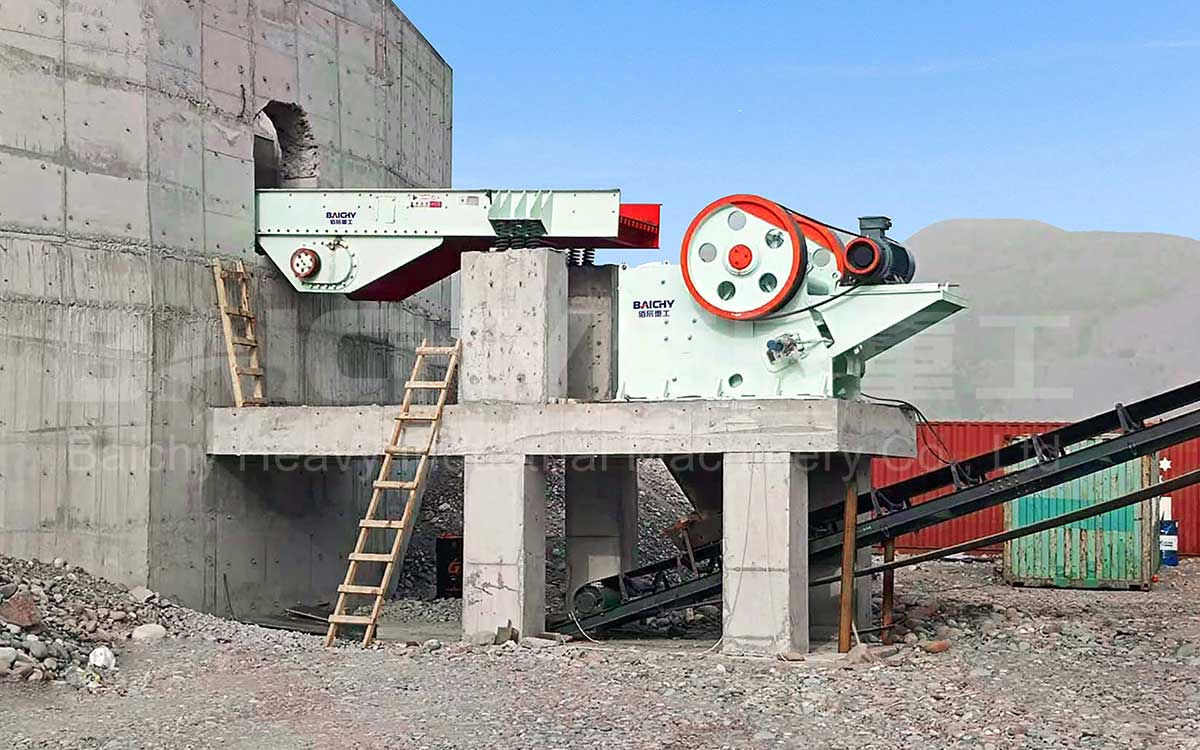
| Jaw Crusher / Double-Roll Crusher | Pre-crushes raw ore to <35 mm | Crushing stage (pre-grinding) |
| Bucket Elevator + Electromagnetic Vibrating Feeder | Ensures continuous, uniform feeding; stabilizes mill load | Feeding system |
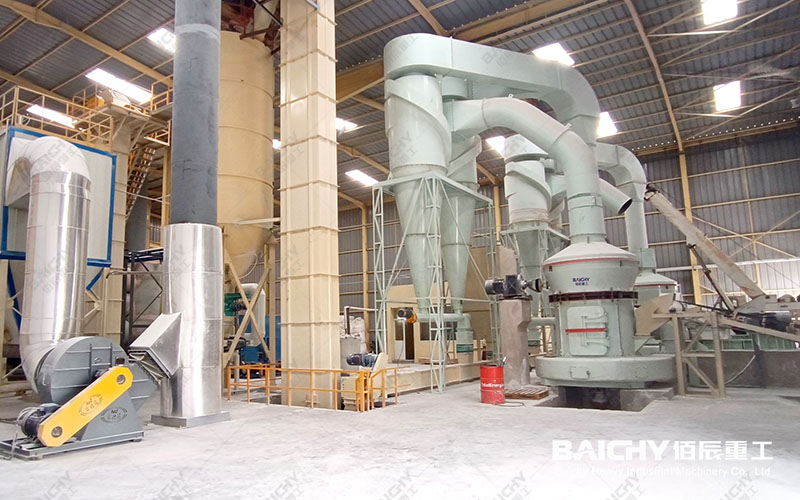
| Cyclone Collector + Pulse Bag Dust Collector | Negative-pressure closed-loop dust collection; recovers fine powder | Dust collection system |
| Sodium/Organic Modification Mixing Equipment | Modification processes such as sodium activation or acid activation | Modification stage (pre- or post-grinding) |
VIII. FAQ
Q1: Both MTW mills and Raymond mills can be used for bentonite grinding; what is the actual difference?
A1: The difference lies in structural reliability during long-term operation. Raymond mills rely on spring pressure and grease lubrication; as grinding rollers wear, the product fineness coarsens, necessitating shutdowns to adjust pressure. In contrast, the MTW series utilizes an integrated bevel gear drive and centralized thin-oil lubrication, ensuring stable fineness even as wear progresses; its built-in variable-frequency classifier allows for switching between 200-mesh and 325-mesh specifications in seconds. For batch-acceptance supplies (such as drilling-grade or pelletizing-grade bentonite), the advantage in pass rates translates directly into a higher price per ton. However, if production capacity is below 3 t/h and the focus is solely on high-volume casting-grade production, the Raymond mill remains a cost-effective choice.
Q2: Can raw bentonite ore with high moisture content be fed directly into the MTW mill?
A2: No. Feed moisture exceeding 5% causes the material to stick to the grinding rollers and clog the classifier and air ducts; forced operation will only result in frequent shutdowns. When raw ore moisture is 20%–30%, a rotary dryer must be installed upstream (drying the material to 8%–12% for storage equilibration before milling), or at the very least, yard air-drying and the blending of dry material back into the feed must be ensured. The drying stage is a prerequisite for the MTW mill to achieve its rated output; Baichy can provide a complete "drying + milling" line solution along with the corresponding parameter specifications.
Q3: I want to produce 200-mesh drilling-grade bentonite powder; how do I select the right MTW model and calculate capacity?
A3: First, determine the target grade and daily output, then work backward to calculate the required hourly capacity. Drilling-grade specifications use the 200-mesh (75μm) sieve residue as the acceptance criterion; when selecting a model, require the manufacturer to provide the actual output capacity for the "200-mesh specification" rather than the main unit's nominal rating. Example: A daily output of 120 tons (based on a 20-hour production schedule) requires a capacity of approximately 6 t/h at 200 mesh, corresponding to a medium-sized MTW model; a variable-frequency classifier and sieve residue spot-checking are recommended. If also supplying pelletizing-grade material (-200 mesh ≥95%) or activated bleaching earth (-325 mesh), you must consult an engineer regarding the capacity reduction factors associated with those specific fineness levels.
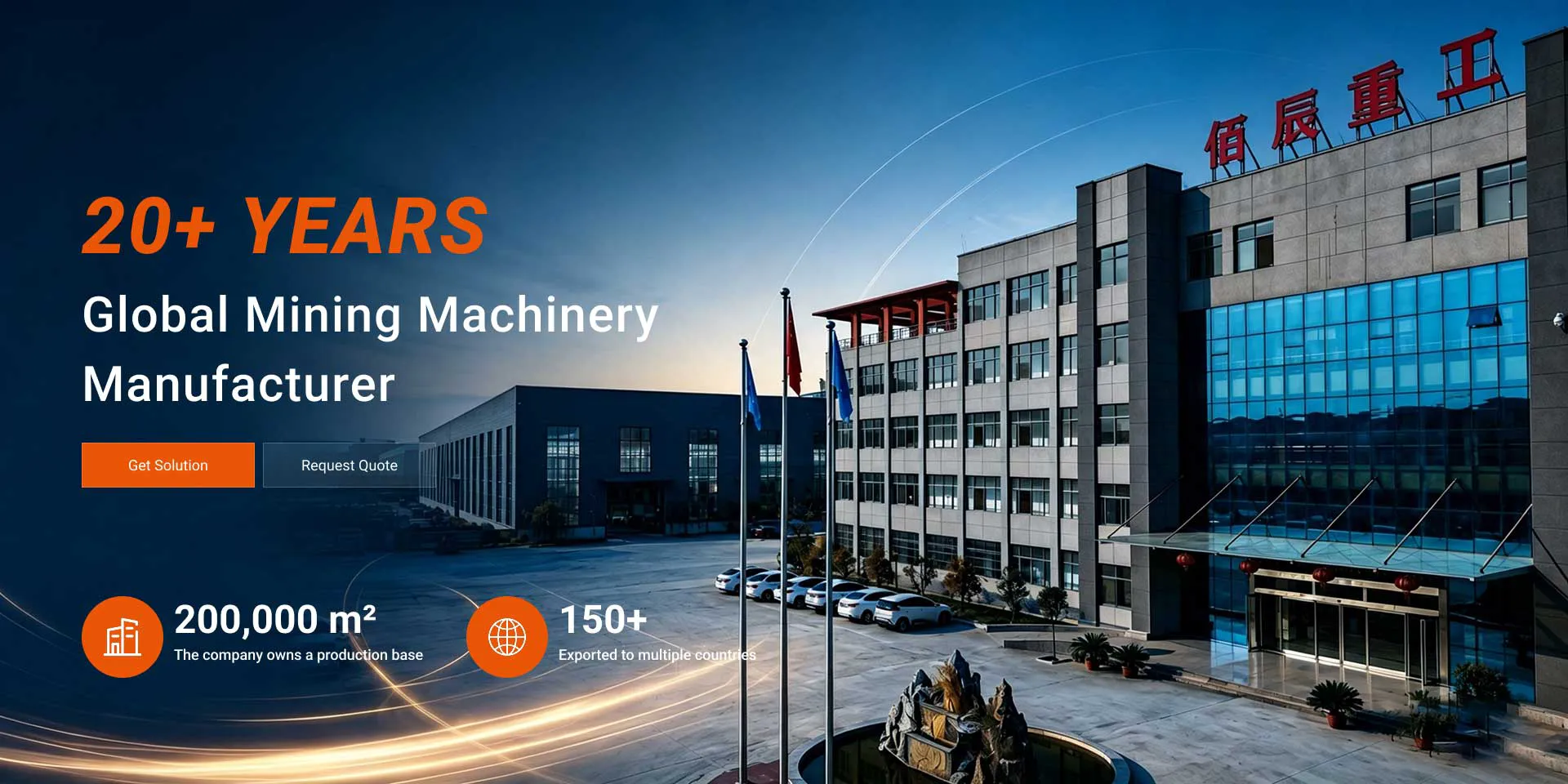
Baichy Heavy Industry
Baichy Heavy Industry is a high-tech mining equipment company integrating R&D, manufacturing, sales, and after-sales service. Focusing on crushing, grinding, and mineral processing equipment, we provide professional solutions to our customers. We are ISO9001:2015 、certified, and our products include mobile crushing palnts, crawler crushing plant, construction waste crushing plants, jaw crushers, sand making machines, cone crushers, fine crushers, grinding mills, ball mills, etc., all with reliable performance to meet diverse project needs.
Baichy Heavy Industry – Your Trusted Partner
To ensure optimal performance of your equipment, Baichy Heavy Industry offers:
- Professional on-site installation guidance
- Comprehensive operator training
- 24/7 technical support & maintenance services
Our complete after-sales service system guarantees long-term, stable operation of your machinery with minimal downtime.
Protect Your Rights – Only Use Official Channels
To avoid scams and ensure authentic support, contact us exclusively through:
• Official Website: www.baichychina.com
• WhatsApp: +8615093222637
• Email: [email protected]
Your satisfaction is our priority – expect prompt, professional service every time.
(Note: Beware of unauthorized third parties claiming to represent Baichy. Always verify through official contacts.)