
Granite Crushing Plant
As a manufacturer with two decades of experience in the mining crushing equipment industry, we are asked a core question by our customers every day: Which crusher is best for crushing granite? This is not a simple multiple-choice question, because the standard for best depends on your production goals, material characteristics, and investment budget. This article will draw on our twenty years of practical experience to provide an in-depth analysis and help you find the most suitable solution for you.
I. Why is Granite Difficult to Crush?
Granite is a typical hard, highly abrasive rock with high compressive strength and high silica content. This presents three core challenges for crushing equipment:
1. High hardness requires highly wear-resistant equipment: otherwise, vulnerable parts wear out quickly, leading to a surge in costs.
2. High abrasiveness requires impact resistance: core components of the equipment must withstand continuous and severe wear.
3. perse finished product requirements: different projects require stones with different particle shapes and gradations.
Therefore, no single all-purpose crusher can handle all working conditions. The key to selection lies in matching the crushing stage with the finished product requirements.
II. Optimal Equipment Selection for Different Stages
Granite crushing is generally pided into three stages: coarse crushing, medium crushing, and fine crushing and shaping. Each stage has its ace equipment.
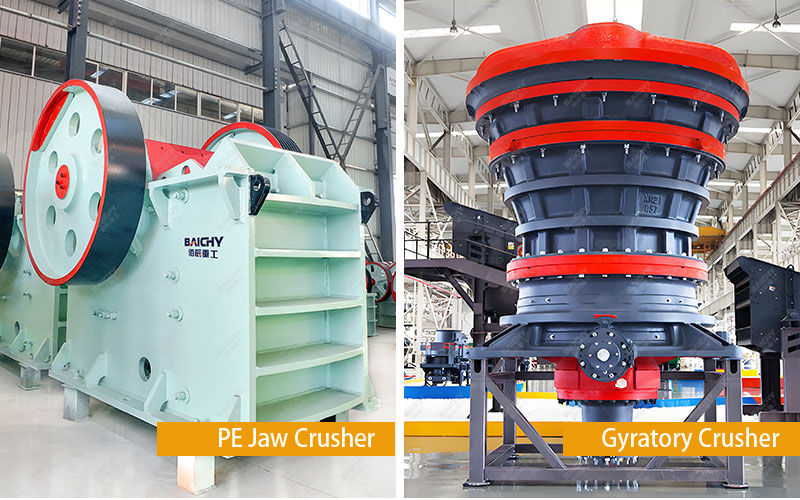
Jaw-Crusher-vs-Gyratory-Crusher
1. Coarse Crushing Stage (Large Feed, Coarse Output)
The goal of this stage is to process large blocks of raw stone (generally ≤1200mm in diameter) directly from the mine, crushing them to below 250mm.
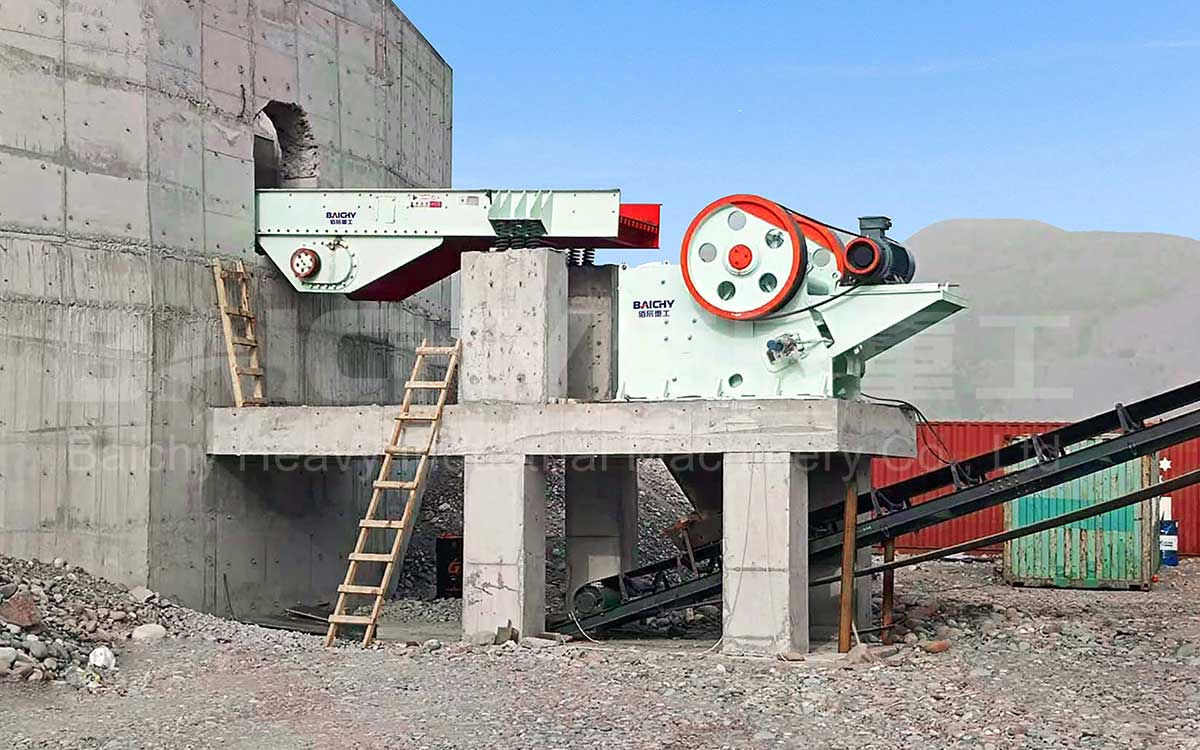
• Jaw Crusher: Undoubtedly the mainstay of this stage. Its robust structure, like a steel jaw, excels at handling large materials, possesses powerful crushing force, and is extremely reliable. It is the standard primary crusher in all granite crushing production lines.
• Gyratory Crusher: Suitable for large mines and projects with extremely high output requirements (typically over 2000 tons per hour). It has a larger processing capacity and more stable operation, but also higher investment and maintenance costs.
Comparison Table of Coarse Crushing Equipment
| Features | Jaw Crusher | Gyratory Crusher |
| Applicable Scale | Medium and Large Production Lines | Extra-Large Production Lines |
| Feed Size | Large | Very Large |
| Investment Cost | Low | High |
| Maintenance Complexity | Relatively Simple | Complex |
| Product Particle Shape | General (Mostly Flaky) | General |
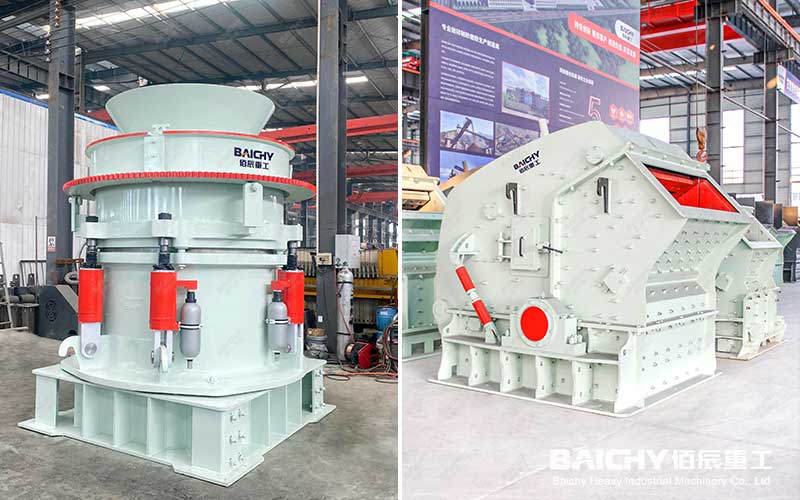
Cone-Crusher-Vs-Impact-Crusher
2. Medium Crushing Stage (A Crucial Link Between Crushing and Grain)
This stage receives the coarse crushing product and crushes it to below 60mm, preparing for fine crushing.
• Cone Crusher: The king of medium crushing for granite. Utilizing the principle of layered crushing, it has a long service life for wear-resistant parts and is particularly suitable for handling highly abrasive granite. Various models are available (single-cylinder, multi-cylinder, fully hydraulic, etc.), which can be flexibly adjusted according to the finished product particle size.
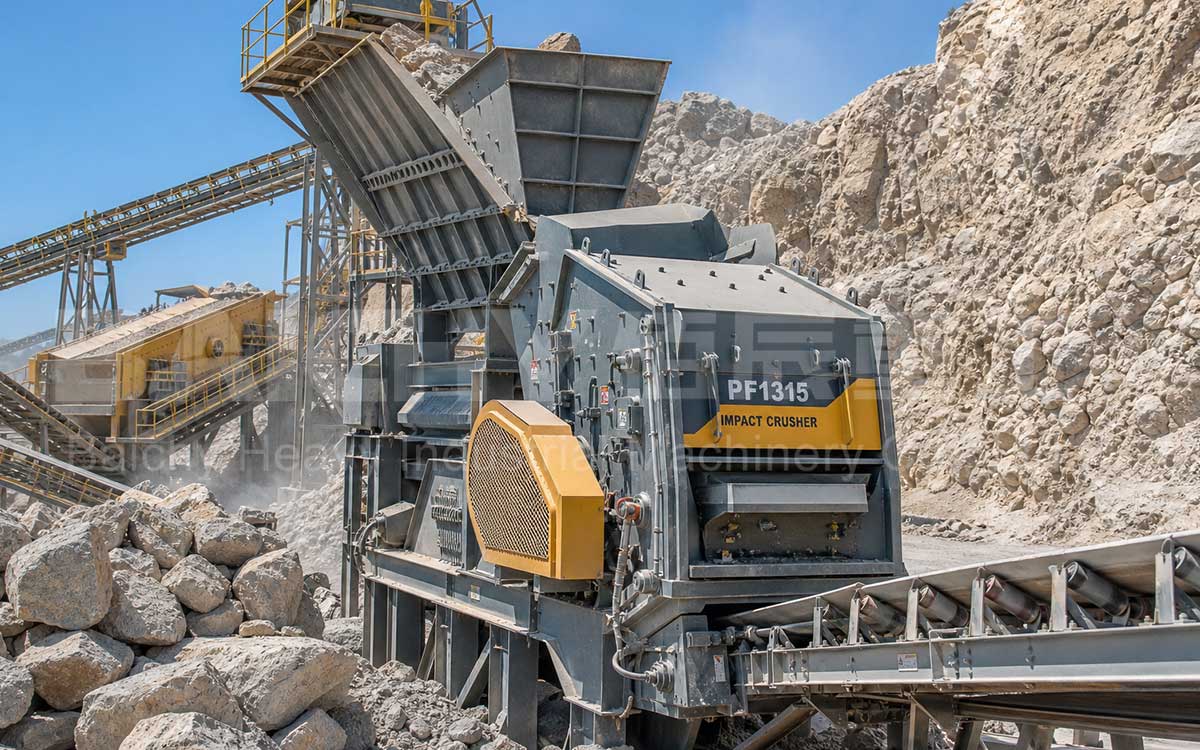
• Impact Crusher: Although it can also be used for medium crushing, its impact plates wear extremely quickly when crushing high-hardness granite, resulting in high operating costs. It is generally not recommended as the first choice for medium crushing of granite.
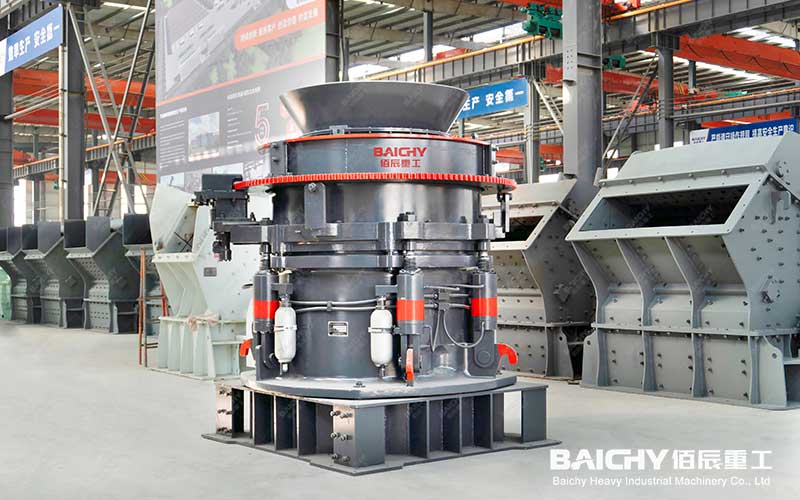
Hydraulic Cone Crusher
3. Fine Crushing and Shaping Stage (Pursuing High-Quality Finished Products)
The goal of this stage is to produce final products with excellent particle shapes (e.g., 0-5mm, 5-10mm, 10-20mm concrete aggregates).
• Cone Crusher (Multi-cylinder or Fully Hydraulic): Still performs excellently in fine crushing, especially suitable for producing small-diameter crushed stone, with controllable operating costs.
• Vertical Shaft Impact Crusher (Sand Making Machine): This is the key equipment for producing high-quality manufactured sand and cubical gravel. Through the stone-on-stone or stone-on-iron principle, it can greatly improve particle shape, meeting high-grade building material standards.
Comparison Table of Core Medium and Fine Crushing Equipment
| Features | Cone Crusher | Vertical Shaft Impact Crusher (Sand Making Machine) |
| Main Advantages | Wear-resistant, low operating cost, stable output | excellent particle shape, combining crushing and shaping functions |
| Applicable Products | All grades of crushed stone | High-quality crushed stone, manufactured sand |
| Wear Parts Cost | Lower | Higher |
| Maintenance Frequency | Low | Relatively High |
III. Twenty Years of Experience Summary: How to Make the Best Choice?
Based on thousands of successful cases, we have summarized the golden decision-making formula for you:
Best Choice = Clear Production Goals + Scientific Stage Matching + Reliable Brand Guarantee
1. Clearly Define Needs: Is your main product high-quality sand or various sizes of gravel? This directly determines the configuration of the end-stage equipment.
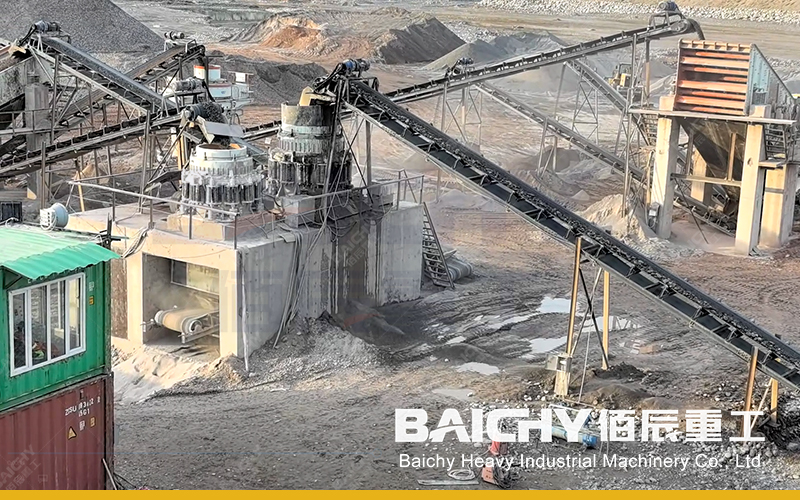
2. Scientific Configuration: The classic and efficient combination is jaw crusher + cone crusher + sand making machine. The cone crusher is responsible for efficient medium crushing and some fine crushing, while the sand making machine is responsible for shaping and sand making. This is currently the mainstream high-end configuration for granite aggregate production, achieving the best balance between output, finished product quality, and long-term operating costs.
3. Focus on the Core: Don't just compare equipment prices. For granite, the material of the wear-resistant parts, the structural strength of the main unit, and the convenience of the hydraulic clearing system are key to reducing your costs in the long run. A reliable manufacturer can provide comprehensive support from process design and equipment selection to the wear-resistant parts supply chain.
So, back to the initial question: Which granite crusher is best?
• For coarse crushing, a jaw crusher is the most reliable and economical choice.
• For medium and fine crushing, a cone crusher is the only way to handle highly abrasive granite.
• For sand making and shaping, a vertical shaft impact crusher is a key tool for achieving high value-added products.
The best solution is not the most expensive single machine, but a combination system of equipment that best fits your overall production goals and performs its specific function. As a manufacturer with twenty years of experience, we know how to tailor this challenging granite crushing production line for you.