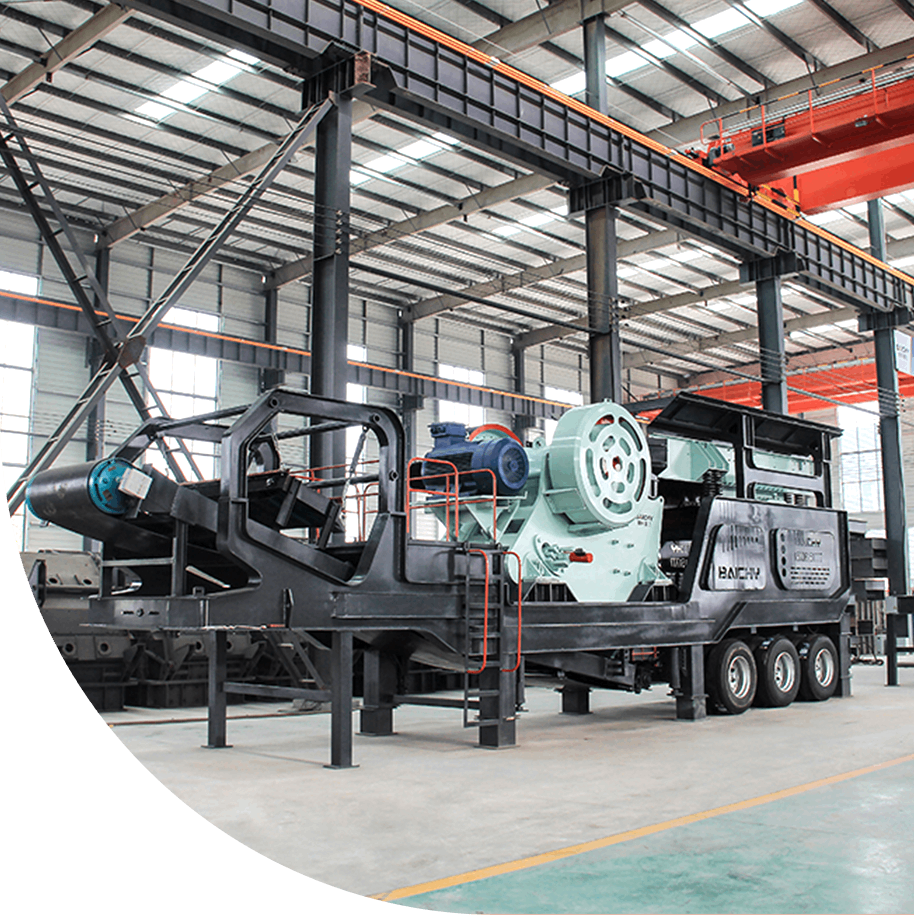

For a limestone crushing requirement of 50 tons per hour (equivalent to a daily output of 800–1,000 tons based on a 16–20 hour workday), there is no need to pay a premium for the excess capacity of large-scale production lines. A standard two-stage configuration—comprising a vibrating feeder, a jaw crusher for primary crushing, an impact crusher for secondary/fine crushing, and a circular vibrating screen in a closed-loop circuit—can reliably meet production targets. The total installed power for the main equipment is approximately 180 kW, with an electricity consumption of 1.5–2.5 kWh per ton. Baichy Heavy Industry is a professional manufacturer of mining crushing, ore grinding, and mineral processing equipment; its 50 tph limestone crushing systems and associated production lines serve projects in over 80 countries across the cement, lime kiln, aggregate, and agricultural lime sectors.
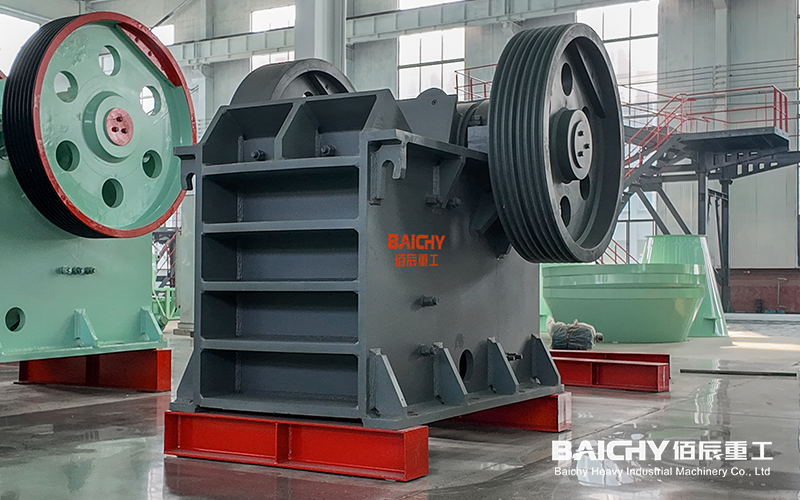
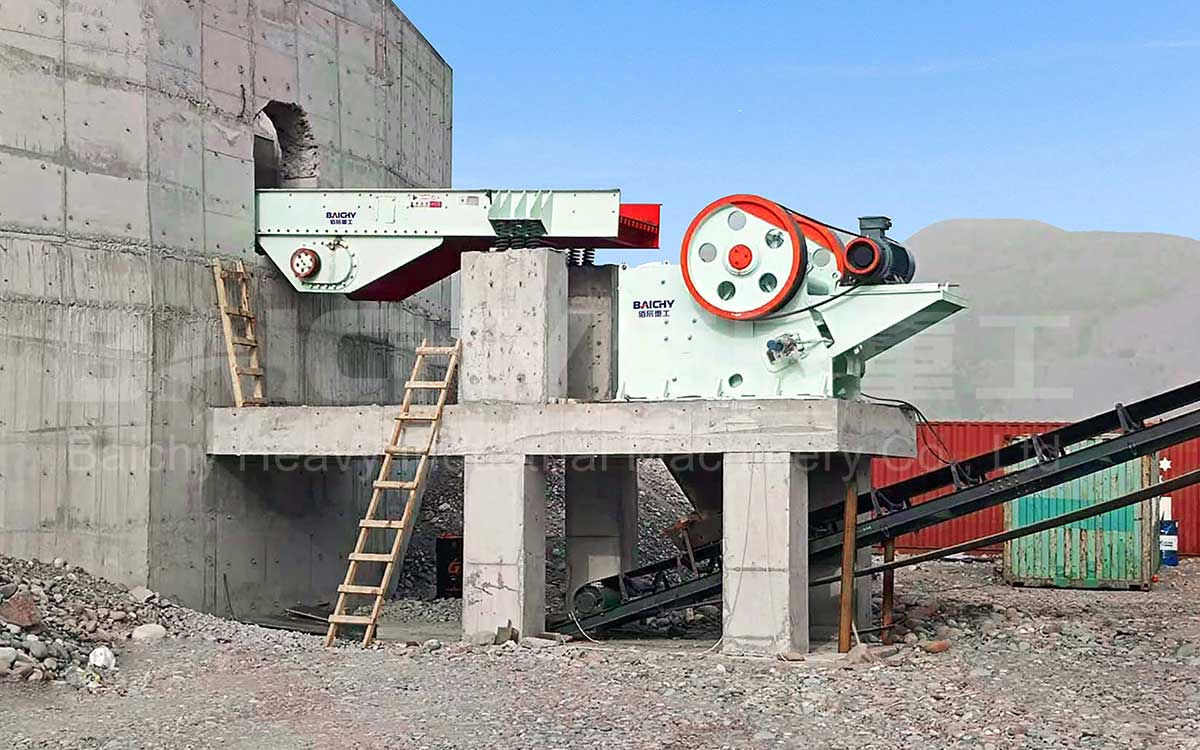
PE500x750 Jaw Crusher
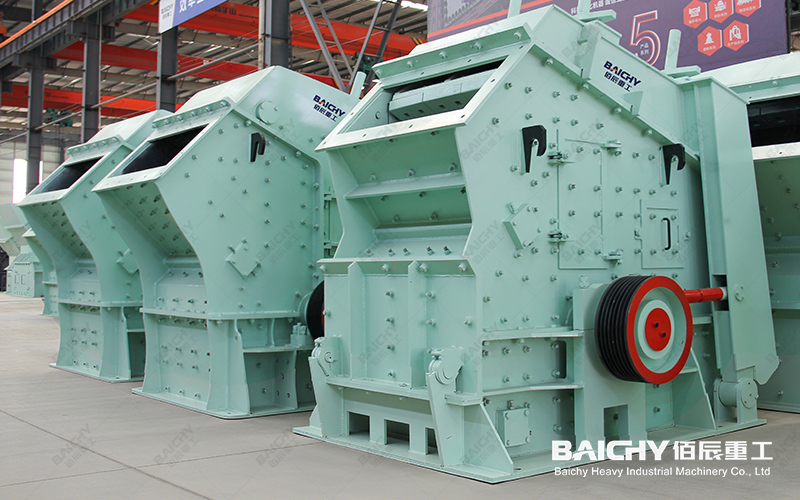
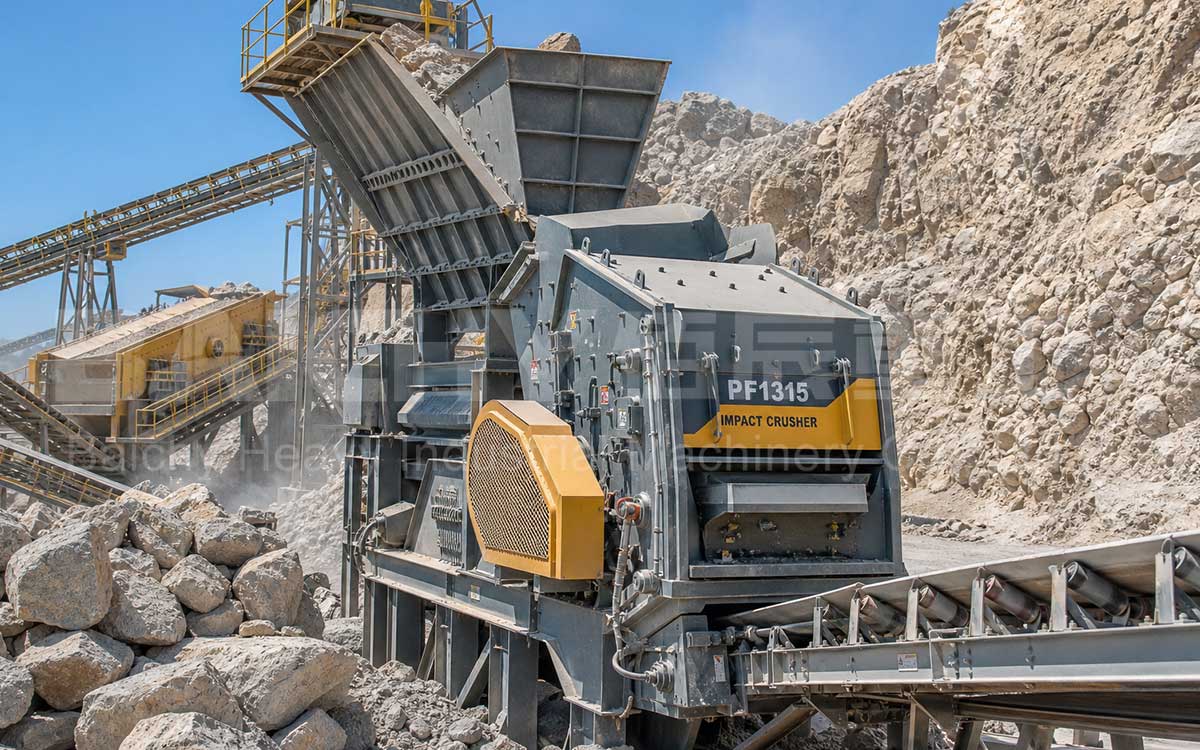
PF1210 Impact Crusher
I. Overview: Who is the 50 tph limestone crusher for?
Limestone, with a compressive strength of 50–150 MPa and a bulk density of approximately 1.6 t/m³, serves as the benchmark material for calibrating crushing equipment capacity. The 50 tph capacity tier occupies the "sweet spot" between the overcapacity of single-machine primary crushing setups and the excessive investment costs of large-scale fixed production lines. It caters to two main types of buyers: small-to-medium quarries with their own mining rights that need to process raw ore into aggregates for sale, and facilities such as lime kilns, cement plants, and calcium carbonate plants where crushing is merely the initial stage, followed by processes like calcination, raw meal grinding, or Raymond milling.
To understand the "50 tph limestone crusher," it is important to distinguish between two operational scopes: a single PE jaw crusher suffices to reduce raw ore (≤400–500 mm) to a size of 50–100 mm; however, producing finished aggregates or mill-ready feed (≤20–40 mm) requires a complete configuration involving primary crushing, secondary/fine crushing, and screening. The solution presented here is designed based on the latter approach—a turnkey production line ready for immediate operation.
II. Application Scenarios: Four Typical Project Types
| Scenario | Raw Material / Target Product | Production Line Value |
|---|---|---|
| Quicklime (Calcium Oxide) Kiln Feed | 5–40mm graded stone | Controllable particle size; stable kiln conditions; continuous output |
| Cement Batching & Raw Meal Mill Feed | Crushed to ≤25mm | Mill hourly throughput increased by 20–30%; reduced electricity consumption per ton |
| Commercial Aggregate / Small-scale Manufactured Sand | 0–5/5–10/10–20mm grading | Closed-circuit screening yields multiple finished product sizes in one pass |
| Agricultural Limestone Powder / Desulfurization Powder Feed | ≤15mm mill feed | Seamless crushing-to-grinding transition; savings in both investment and energy |
Cement and lime kiln projects typically require stable secondary crushing output with minimal fines; a two-stage process using a jaw crusher (primary) and an impact crusher (secondary) is the industry standard. Commercial aggregate projects prioritize particle shape and grading; the cubic shape produced by impact crushing meets concrete aggregate requirements regarding the content of elongated and flaky particles. For agricultural lime and desulfurization powder projects, crushing serves as a preliminary step; finer output reduces mill power consumption, so operators often choose single-stage hammer crushers or an "impact crusher + pre-screening" setup to bypass fine material directly.
III. Core Parameter Table: Standard Configuration for a 50 tph Limestone Crushing Line
Capacity is based on medium-hardness limestone (bulk density approx. 1.6 t/m³). If raw material moisture exceeds 8% or clay content is high, capacity should be adjusted by a factor of 0.7–0.85, and a grizzly pre-screen must be installed at the front end.
| Equipment Unit | Model | Qty | Power (kW) | Feed Size | Output Size | Capacity (Limestone) |
|---|---|---|---|---|---|---|
| Vibrating Feeder (Grizzly Pre-screener) | ZSW380×96 | 1 | 11 | ≤500mm | Pre-screening (soil removal) | ≥50t/h |
| Jaw Crusher (Primary Crushing) | PE500×750 | 1 | 55 | ≤425mm | 50–100mm (adjustable) | 45–100t/h |
| Impact Crusher (Secondary/Fine Crushing) | PF-1210 | 1 | 110 | ≤350mm (actual ≤180mm) | 0–60mm (adjustable) | 60–120t/h |
| Circular Vibrating Screen (Closed-circuit) | 3YK1548 | 1 | 15 | ≤60mm | 0–5/5–20/20–40mm (adjustable via screen mesh change) | 40–120t/h |
| Total Line | — | — | Main equipment: ~191 | ≤500mm raw ore | 2–3 finished product grades | 50–60t/h |
Budget-sensitive alternative: If raw ore feed is ≤200mm and only a single finished product size of ≤20mm is required, a PC1000×800 Hammer Crusher (110kW, 40–90t/h) can replace the two-stage "Jaw Crusher + Impact Crusher" setup. This reduces main equipment investment by approximately 25–30%, making it suitable for low-cost feedstock supply for lime kilns and agricultural lime projects; the trade-off is that particle shape control is inferior to the impact crusher configuration.
Capacity expansion provision: For the 50tph line, it is recommended to size the screening and conveying sections for 80t/h. By upgrading the primary crusher to a PE600×900 model in the future, the production line capacity can be increased to 80–100t/h without major civil engineering modifications.
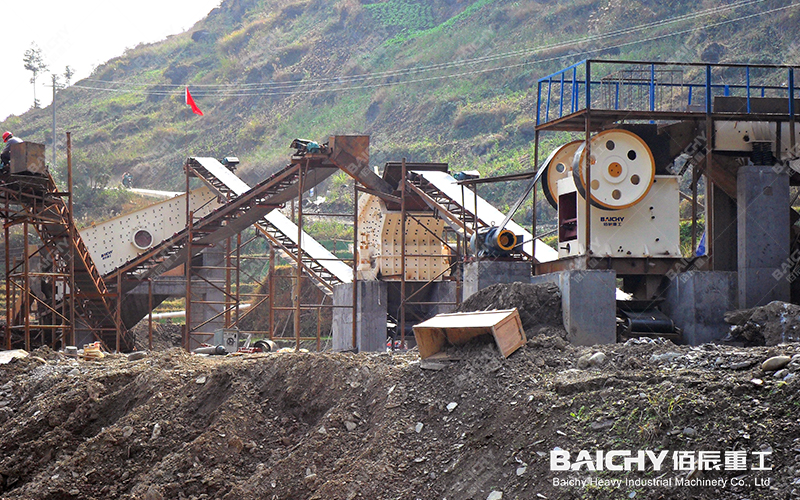
50 tph limestone crusher
IV. Equipment Advantages: Translating Parameters into Profit
Two-stage crushing with a closed-circuit loop—achieving results without the cost of an extra machine. A jaw crusher reduces raw material (≤425mm) to 50–100mm, followed by an impact crusher for secondary and tertiary crushing; oversize material is automatically recirculated to the impact crusher to form a closed-loop circuit. Compared to a three-stage crushing process, this setup eliminates the need for an extra primary machine—along with its associated power consumption, foundation work, and footprint—making it the most cost-effective complete solution for the 50 tph capacity range.
Limestone is the ideal material for impact crushing. Its compressive strength falls perfectly within the "sweet spot" for impact-based reduction. The PF series impact crusher features long-lasting blow bars and produces aggregate with low flaky/elongated particle content, directly meeting concrete aggregate standards. Conversely, using a cone crusher for such soft material would be "using a sledgehammer to crack a nut," resulting in higher—rather than lower—wear-part costs.
Nominal capacity matches actual performance. Baichen rates capacity based on a limestone density of 1.6 t/m³. A vibrating grizzly feeder removes fines and soil, while a buffer hopper smooths out the flow between the jaw crusher’s intermittent discharge and the impact crusher’s continuous intake. This allows the line to operate at full design capacity, avoiding the common discrepancy where a system rated at 50 tph delivers only 35 tph in practice.
Compatible with global power standards—no modifications required. The system supports 380V/50Hz, 400V/50Hz, 440V/60Hz, and diesel generator power, requiring no local modifications for 60Hz markets (such as Latin America). It features centralized electrical controls and supports remote commissioning and multilingual operation manuals.
Low maintenance requirements and predictable downtime. The impact crusher’s blow bars are modular and inpidually replaceable, and the maintenance door opens hydraulically, allowing standard mechanics to perform the work. Blow bar service life is 400–800 hours (processing limestone), and spare parts can be stocked on a quarterly basis, making it ideal for localized maintenance in overseas projects.
V. Application Cases: Data-Driven Results
The following two cases represent the two most common delivery configurations for 50 tph limestone crushers—two-stage closed-circuit crushing and single-stage crushing; all operational data is derived from on-site records:
Case 1: South American Agricultural Lime/Calcium Carbonate Project (60 tph primary crushing)
Configuration: ZSW380×96 Vibrating Feeder → PE500×750 Jaw Crusher → PF-1210 Impact Crusher → 3YK1548 Vibrating Screen
Operational Performance: Output fractions (0–5mm and 5–20mm) fed directly to the mill; actual capacity stabilized at 55–60 tph; product compliance rate >95%
Benefits: Compatible with local 380V/60Hz power supply (no modification required); measured power consumption approx. 2.1 kWh/ton; crushing section investment payback period approx. 14 months
Case 2: Middle East Lime Kiln Feed Line (50 tph)
Configuration: Feed size ≤200mm; PC1000×800 Hammer Crusher (single-stage crushing) → Vibrating Screen
Operational Performance: Compliance rate for ≤20mm output >90%; continuous and stable feed supply to the kiln and batching system
Benefits: Eliminates the need for secondary crushing equipment and auxiliaries; reduces main equipment investment by approx. 28% compared to the original two-stage scheme
VI. Recommended Equipment
A 50 tph limestone crusher requires the following complementary equipment to form a complete "raw ore in, finished product out" production line:
• ZSW Series Vibrating Feeder: Ensures uniform feeding and removes soil/fines via grizzly bars, extending the service life of the main crusher
• PE/PEX Series Jaw Crusher: Option for primary crushing when raw ore size exceeds 425mm or for capacity expansion
• PF Series Impact Crusher: Primary choice for medium-to-fine limestone crushing; delivers excellent particle shape and high product compliance rates
• PC/PCZ Series Hammer Crusher: Budget-friendly single-stage crushing solution for feed sizes ≤200mm
• YK/GTS Circular Vibrating Screen Series: Discharge grading and closed-circuit circulation.
• Sand Washer + Fine Sand Recovery Machine: Suitable for raw ore with high clay content or integration into aggregate production lines; recovers fine sand in the 0.075–3mm range.
• Raymond Mill / Ball Mill: Processes fine material (≤15mm) into agricultural lime or desulfurization limestone powder.
• YDPZ Mobile Crushing Station: A flexible option for scenarios involving unstable mining rights, leased-land operations, or multiple work sites.
VII. FAQ
Q1: How should a 50 tph limestone crushing plant be configured? What is the approximate total investment?
A: A standard two-stage closed-circuit configuration consists of a ZSW380×96 feeder → PE500×750 jaw crusher (primary crushing) → PF-1210 impact crusher (secondary/fine crushing) → 3YK1548 vibrating screen (closed circuit). The total installed power is approximately 191 kW, yielding a daily output of 800–1,000 tons. Investment costs vary significantly based on motor standards, automation levels, and shipping costs. We recommend providing details on limestone hardness, moisture content, and target particle size to obtain a formal configuration proposal and quote; Baichen offers free production capacity calculations.
Q2: Will high clay and moisture content in the limestone cause machine clogging or reduced capacity?
A: Yes. When moisture content exceeds 8%, fines tend to stick to the screen mesh and the impact crusher's crushing chamber, reducing capacity by 20–30%. Solutions: Use a ZSW feeder with grizzly bars at the front end to pre-screen and remove soil, or add a sand-washing stage. For rainy season operations, we recommend covering the feed hopper and including a pre-screening bypass; the design capacity should be adjusted by a factor of 0.7–0.85.
Q3: Should I use a hammer crusher for single-stage shaping, or a two-stage setup with a jaw crusher and an impact crusher?
A: For feed sizes ≤200mm and a requirement for a single finished product size of ≤20mm (e.g., for lime kilns or mill feed), choose the PC1000×800 hammer crusher—a standalone unit that saves 25–30% on investment costs. For feed sizes of 200–500mm or when multiple aggregate sizes are required, opt for a two-stage closed-circuit configuration comprising a jaw crusher and an impact crusher; this offers flexible adjustment and produces excellent particle shapes. Simply send details regarding the raw ore size and your finished product specifications to Baichen to receive a tailored equipment selection proposal that includes an investment cost comparison.
Baichy Heavy Industry
Baichy Heavy Industry is a high-tech mining equipment company integrating R&D, manufacturing, sales, and after-sales service. Focusing on crushing, grinding, and mineral processing equipment, we provide professional solutions to our customers. We are ISO9001:2015 、certified, and our products include mobile crushing palnts, crawler crushing plant, construction waste crushing plants, jaw crushers, sand making machines, cone crushers, fine crushers, grinding mills, ball mills, etc., all with reliable performance to meet diverse project needs.
Baichy Heavy Industry – Your Trusted Partner
To ensure optimal performance of your equipment, Baichy Heavy Industry offers:
- Professional on-site installation guidance
- Comprehensive operator training
- 24/7 technical support & maintenance services
Our complete after-sales service system guarantees long-term, stable operation of your machinery with minimal downtime.
Protect Your Rights – Only Use Official Channels
To avoid scams and ensure authentic support, contact us exclusively through:
• Official Website: www.baichychina.com
• WhatsApp: +8615093222637
• Email: [email protected]
Your satisfaction is our priority – expect prompt, professional service every time.
(Note: Beware of unauthorized third parties claiming to represent Baichy. Always verify through official contacts.)