
Quartz sand is the main raw material for glass, casting, ceramics and refractory materials, ferrosilicon smelting, metallurgical flux, metallurgy, construction, chemical industry, plastics, rubber, abrasives, filter materials, and other industries. During the processing, it needs to be crushed and ground into fine particles first, but some quartz sand contains mud impurities, which seriously reduces the efficiency of quartz sand purification and causes economic losses.
In order to obtain high-purity quartz sand, mud removal, and purification are very important. So how to effectively remove mud-containing mud impurities from quartz sand? This can be done by washing with water. Let’s take a look at the quartz sandwashing methods and equipment.
01. Quartz sand washing method
• Washing is the process of removing clay material from quartz sand. It is usually set up before crushing, gravity separation, magnetic separation and flotation operations to eliminate the impact and harm of sludge on these operations, thereby improving operation efficiency and obtaining good separation indicators.
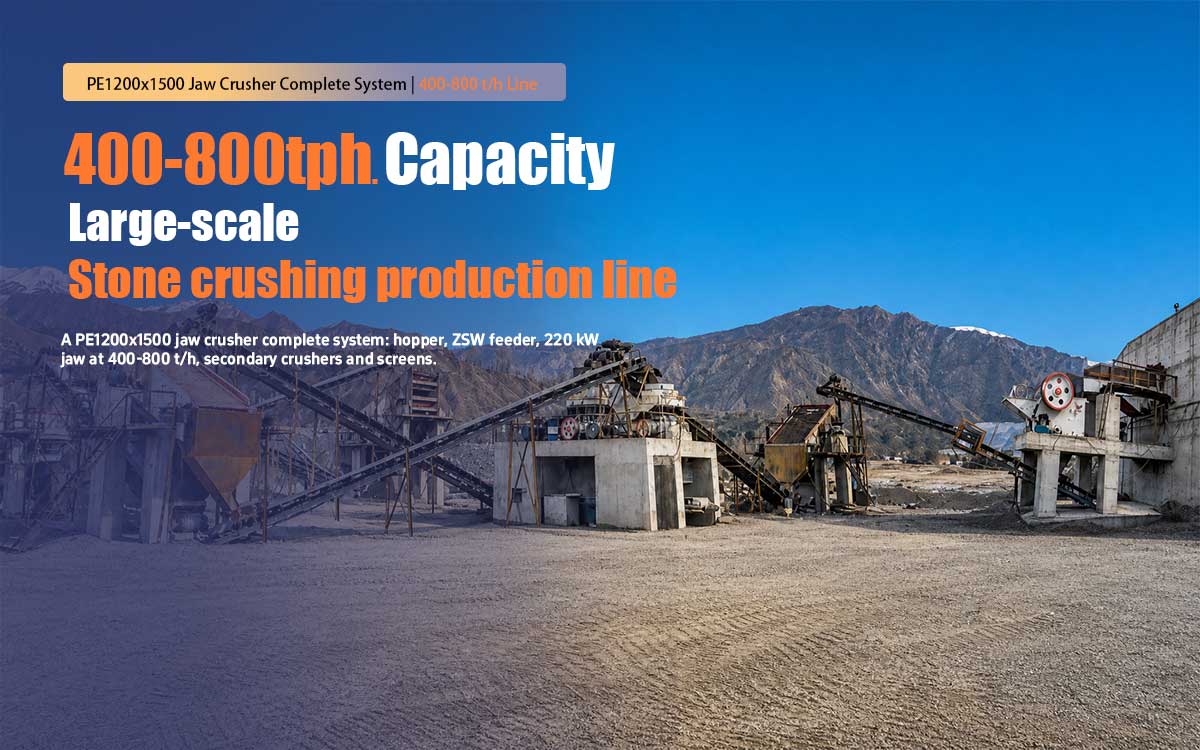
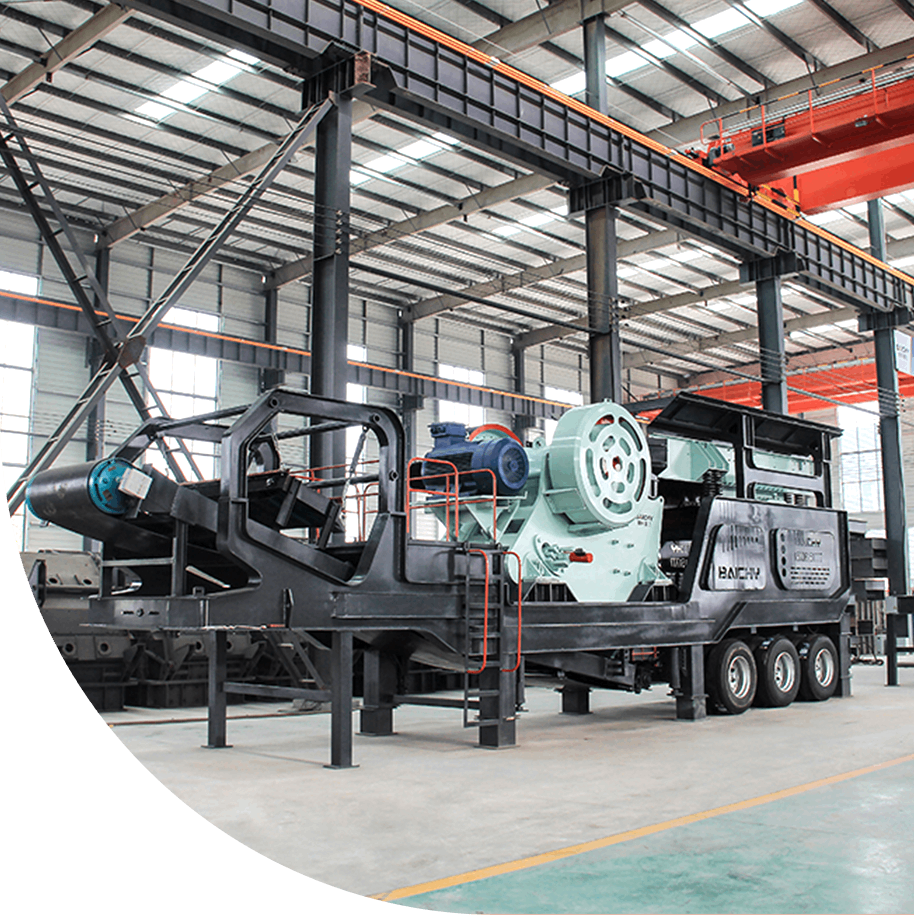
• The process is as follows: large pieces of quartz raw material are evenly and continuously transported by the vibrating feeder to the jaw crusher for coarse crushing; the coarsely crushed quartz is fed into the cone crusher for secondary crushing and fine crushing; and then the finely crushed quartz is transported Go to the sand making machine for sand making and shaping; then the processed quartz sand is screened through a vibrating screen to screen out quartz sand of various specifications. Those that meet the particle size requirements are transported to the sand washing machine for cleaning, and those that do not meet the particle size requirements are returned to the upper sand making machine for reprocessing. In finishing production lines, belt conveyors are usually used to connect various equipment. This forms a closed-loop quartz sand crushing and screening system.
• The finished products processed by the quartz sand washing production line have uniform particle size, reasonable gradation, high cleanliness and reliable quality.
02. Quartz sand washing equipment
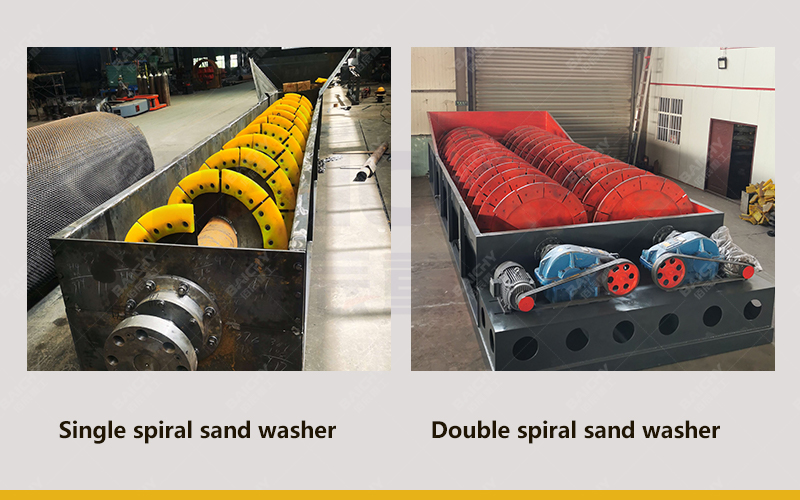
Common quartz sand washing equipment can be divided into two types: single spiral sand washing machine and double spiral sand washing machine.
Single spiral sand washing machines and double spiral sand washing machines are both mechanical equipment used to clean sand and gravel, but they have some differences in structure, working principle, and applicable scenarios.
1. Structure:
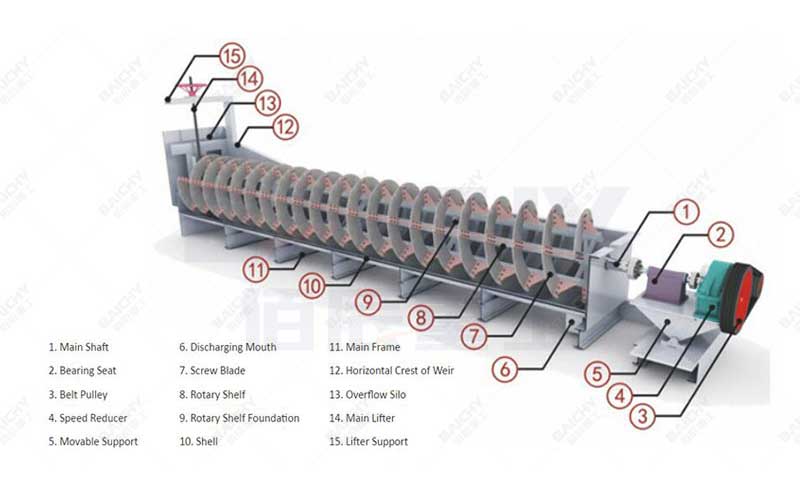
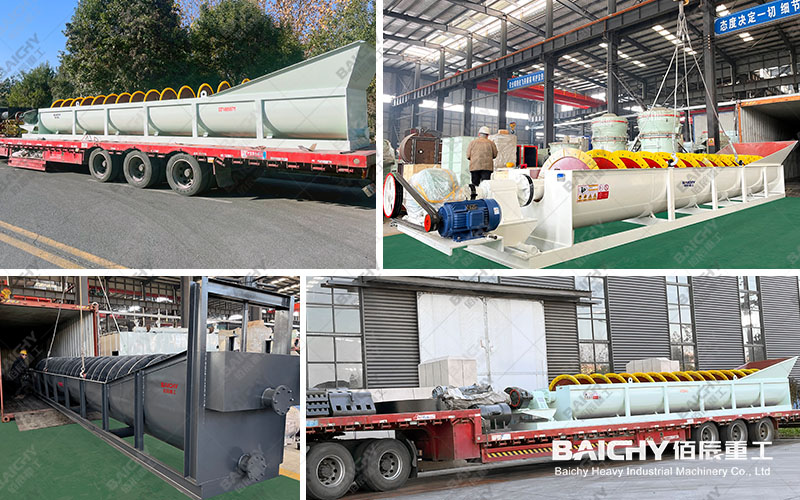
• Single spiral sand washing machine: There is only one spiral shaft and the structure is relatively simple. It usually includes components such as a tank body, reducer, motor, spiral blade, and bracket.
• Double spiral sand washing machine: It has two spiral shafts, which is equivalent to the combination of two single spiral sand washing machines. Therefore, its structure is relatively complex, but its processing power and efficiency are stronger.
Quartz sand is the main raw material for glass, casting, ceramics and refractory materials, ferrosilicon smelting, metallurgical flux, metallurgy, construction, chemical industry, plastics, rubber, abrasives, filter materials, and other industries. During the processing, it needs to be crushed and ground into fine particles first, but some quartz sand contains mud impurities, which seriously reduces the efficiency of quartz sand purification and causes economic losses.
In order to obtain high-purity quartz sand, mud removal, and purification are very important. So how to effectively remove mud-containing mud impurities from quartz sand? This can be done by washing with water. Let’s take a look at the quartz sandwashing methods and equipment.
01. Quartz sand washing method
• Washing is the process of removing clay material from quartz sand. It is usually set up before crushing, gravity separation, magnetic separation and flotation operations to eliminate the impact and harm of sludge on these operations, thereby improving operation efficiency and obtaining good separation indicators.
• The process is as follows: large pieces of quartz raw material are evenly and continuously transported by the vibrating feeder to the jaw crusher for coarse crushing; the coarsely crushed quartz is fed into the cone crusher for secondary crushing and fine crushing; and then the finely crushed quartz is transported Go to the sand making machine for sand making and shaping; then the processed quartz sand is screened through a vibrating screen to screen out quartz sand of various specifications. Those that meet the particle size requirements are transported to the sand washing machine for cleaning, and those that do not meet the particle size requirements are returned to the upper sand making machine for reprocessing. In finishing production lines, belt conveyors are usually used to connect various equipment. This forms a closed-loop quartz sand crushing and screening system.
• The finished products processed by the quartz sand washing production line have uniform particle size, reasonable gradation, high cleanliness and reliable quality.
02. Quartz sand washing equipment
Common quartz sand washing equipment can be divided into two types: single spiral sand washing machine and double spiral sand washing machine.

Single spiral sand washing machines and double spiral sand washing machines are both mechanical equipment used to clean sand and gravel, but they have some differences in structure, working principle, and applicable scenarios.
1. Structure:
• Single spiral sand washing machine: There is only one spiral shaft and the structure is relatively simple. It usually includes components such as a tank body, reducer, motor, spiral blade, and bracket.
• Double spiral sand washing machine: It has two spiral shafts, which is equivalent to the combination of two single spiral sand washing machines. Therefore, its structure is relatively complex, but its processing power and efficiency are stronger.
2. Working principle:
• Single spiral sand washing machine: The motor drives the spiral shaft to rotate through the reducer, and the sand and gravel are rolled, stirred and washed in the tank driven by the spiral shaft. Through the push of the spiral blades and the scouring effect of the water flow, the soil, impurities, etc. on the surface of the sand and gravel are removed.
• Double-spiral sand washing machine: The two spiral shafts are staggered and rotate in opposite directions, causing the sand and gravel to form a stronger tumbling and stirring effect in the tank. This design can further improve cleaning efficiency and sand quality.
3. Applicable scenarios:
• Single spiral sand washing machine: It is suitable for small to medium-sized sand and gravel processing plants. The processing capacity is relatively small, but the price is relatively affordable.
• Double-spiral sand washing machine: It is suitable for large-scale sand and gravel processing plants. It has a large processing capacity and high efficiency and can meet the needs of large-scale production. At the same time, because the structure of the double-spiral sand washing machine is more complex, its price is also relatively high.
4. Performance advantages:
• Single spiral sand washing machine: simple structure and easy maintenance, but the cleaning effect and efficiency are relatively low.
• Double-spiral sand washing machine: The cleaning effect and efficiency are higher, and it can handle a larger amount of sand and gravel. At the same time, due to its more reasonable structure, its service life is relatively longer.
In the actual mineral processing plant, the quartz sand washing process and equipment should be determined based on the mud impurities contained in the quartz sand. They cannot be chosen blindly. The better the ore-washing effect, the higher the efficiency of later mineral processing and purification. Therefore, it is recommended to conduct a mineral processing test analysis first and design a suitable quartz sand washing process and purification process through analysis.
• Single spiral sand washing machine: The motor drives the spiral shaft to rotate through the reducer, and the sand and gravel are rolled, stirred and washed in the tank driven by the spiral shaft. Through the push of the spiral blades and the scouring effect of the water flow, the soil, impurities, etc. on the surface of the sand and gravel are removed.
• Double-spiral sand washing machine: The two spiral shafts are staggered and rotate in opposite directions, causing the sand and gravel to form a stronger tumbling and stirring effect in the tank. This design can further improve cleaning efficiency and sand quality.
3. Applicable scenarios:
• Single spiral sand washing machine: It is suitable for small to medium-sized sand and gravel processing plants. The processing capacity is relatively small, but the price is relatively affordable.
• Double-spiral sand washing machine: It is suitable for large-scale sand and gravel processing plants. It has a large processing capacity and high efficiency and can meet the needs of large-scale production. At the same time, because the structure of the double-spiral sand washing machine is more complex, its price is also relatively high.
4. Performance advantages:
• Single spiral sand washing machine: simple structure and easy maintenance, but the cleaning effect and efficiency are relatively low.
• Double-spiral sand washing machine: The cleaning effect and efficiency are higher, and it can handle a larger amount of sand and gravel. At the same time, due to its more reasonable structure, its service life is relatively longer.
In the actual mineral processing plant, the quartz sand washing process and equipment should be determined based on the mud impurities contained in the quartz sand. They cannot be chosen blindly. The better the ore-washing effect, the higher the efficiency of later mineral processing and purification. Therefore, it is recommended to conduct a mineral processing test analysis first and design a suitable quartz sand washing process and purification process through analysis.