
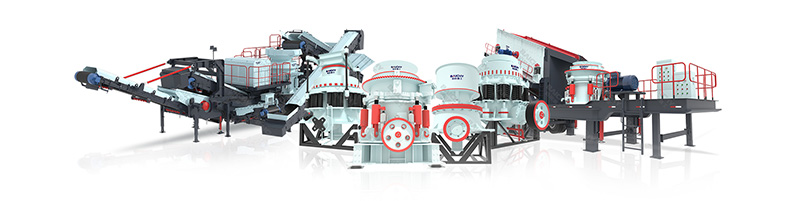
Mining stone crusher
Advantage 1: Comprehensive equipment lineup; one production line, one supplier
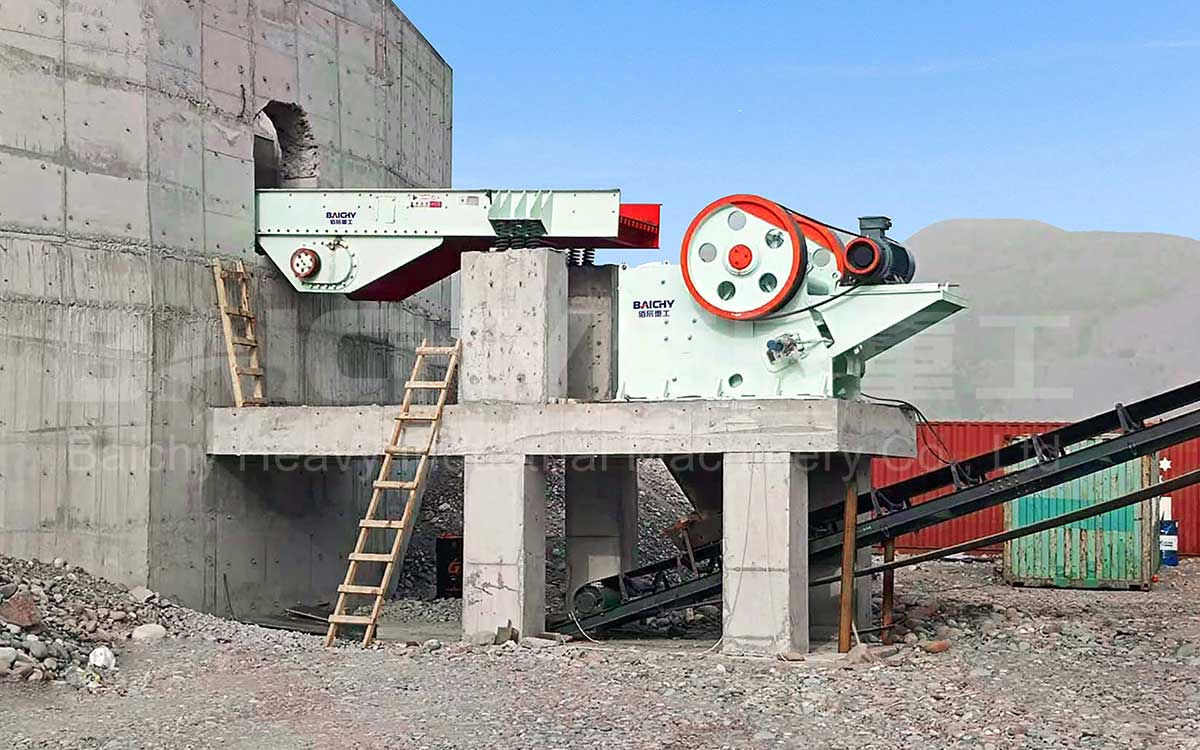
Technical Highlights: Primary crushing (PE/PEX/C90 jaw crushers) → Secondary/tertiary crushing (cone/impact crushers) → Sand making & shaping (VSI/hammer crushers) → Auxiliaries (ZSW feeders, vibrating screens, conveyors, dust collection systems). Baichen delivers the entire process, from primary crushing to the finished product.
The hidden costs of multi-vendor procurement are often severely underestimated—interface modifications, line commissioning, and disputes over liability for malfunctions all result in downtime costs. With single-supplier, full-line delivery, the commissioning period can be shortened by 2–4 weeks (estimated). Based on an hourly output of 50–100 tons, this equates to an additional 2,000–6,000 tons of finished product produced through earlier startup—the profit from this "early output" is sufficient to cover any price difference in the equipment.
Advantage 2: Honest capacity ratings; nominal vs. actual performance clearly distinguished
Technical Highlights: Nominal capacity is consistently based on limestone (bulk density: 1.6 t/m³). Actual capacity for hard rock (granite/basalt, Mohs hardness 6–8) is approximately 80–95% of the nominal value, while for soft rock (limestone/gypsum) it is about 85–100% (estimates vary based on feed size and discharge settings). We offer free material test crushing and particle size analysis reports prior to contract signing, with guaranteed capacity locked into the technical agreement.
In the industry, 90% of disputes regarding "insufficient capacity upon startup" stem from a failure to account for material density differences. By basing the project plan on capacity adjusted for your specific material, you ensure that conveyor widths, screening areas, and downstream equipment are neither oversized (wasting CAPEX) nor undersized (resulting in chronic underproduction). Dual labeling of nominal and actual capacities ensures investment decisions are grounded in verifiable data.
Advantage 3: Transparent cost-per-ton and clear 3-year CAPEX/OPEX analysis
Technical highlights: Service life for high-manganese steel (Mn13/Mn18) jaw plates in hard-rock applications is approximately 800–1,200 hours; cone crusher liners last about 1,000–1,500 hours; and high-chrome hammer heads last about 1,200–2,000 hours in soft-rock applications (estimates). Wear parts are available from domestic stock with delivery in 7–15 days—far faster than the 2–3 month lead time for imported models. Total installed power for the entire line is transparent, allowing for independent verification of electricity costs.
Taking the PE600×900 (75 kW) model as an example: with 6,000 hours of annual operation and an industrial electricity rate of $0.08/kWh, annual electricity costs are approximately $36,000. Every 10 kW increase in installed power adds about $4,800 to annual electricity costs—amounting to $14,400 over three years. When selecting equipment, choosing a motor that saves 10 kW is more valuable than negotiating a $10,000 discount on the purchase price. Spare parts availability reduces downtime from three months to one week; given estimated daily downtime losses of $5,000–$10,000, a single rapid parts replacement can recoup the initial price difference.
Advantage 4: Adaptability to global operating conditions; factory customization for power and extreme environments
Technical highlights: Factory support for mainstream power configurations including 380V/50Hz, 400V/50Hz, 440V/60Hz, 480V/60Hz, and 380V/60Hz. Customization is available for high-altitude (derating design for >3,000m), rainy/humid (anti-rust and anti-clogging features), and high-temperature (enhanced heat dissipation) environments. Delivery options include stationary, wheeled mobile, and tracked mobile configurations.
The biggest pitfall in local procurement is a mismatch in voltage or frequency, leading to motor burnout and a complete production line shutdown. Motors and electrical components are customized at the factory to meet local power standards, ensuring "plug-and-play" readiness upon arrival and eliminating the time and extra costs associated with on-site transformer or motor modifications. Mobile delivery makes "sign today, start production this week" a reality—for infrastructure projects with tight schedules, the cash flow generated by starting production even one month earlier far outweighs any price difference in the equipment.
Advantage 5: Integrated line delivery—the crushing stage designed for downstream processes
Technical Highlights: Discharge settings and crushing ratios are customized based on downstream requirements (sand making, grinding, screening); the system features an integrated design covering crushing, screening, sand making, and dust collection, with all parameters finalized before the contract is signed; clients can choose between stationary and mobile line configurations, complete with supporting feeding, conveying, and dust collection equipment.
The crushing stage does not operate in isolation. Inconsistent discharge particle size can cause a 15–20% drop (estimated) in the throughput of downstream sand-making machines or mills and simultaneously shorten the lifespan of wear parts. An integrated line approach locks in the variables of "crushing output size," "downstream throughput," and "wear part lifespan" before the contract is signed, preventing the need for repeated post-commissioning modifications—the cost of a single line modification is often enough to purchase a new piece of equipment.
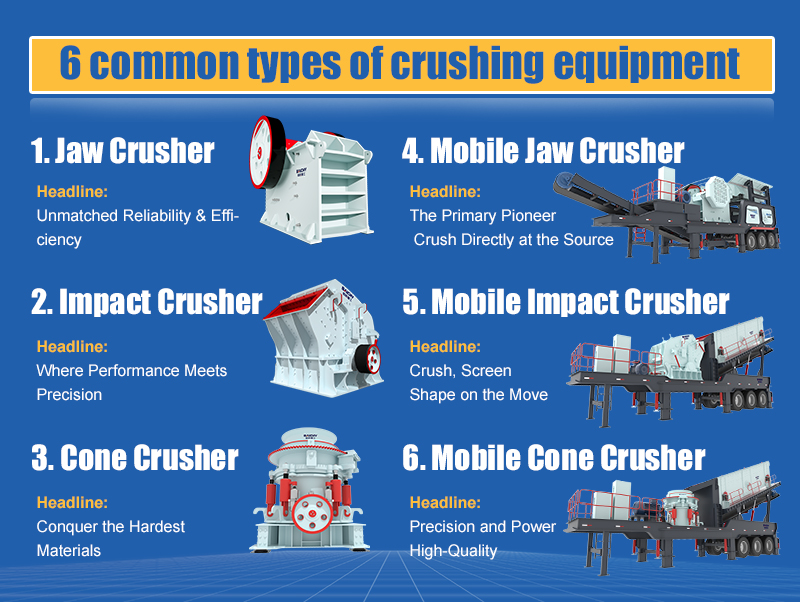
5 Major Advantages of Baichy Rock Crushers
Key Specifications: Quick Reference for Core Models
| Crushing Stage | Representative Model | Max. Feed Size | Output Size | Capacity (t/h)* | Main Motor Power |
| Primary Crushing | PE250×400 Jaw Crusher | ≤210 mm | 20–60 mm | 5–20 | 15 kW |
| Primary Crushing | PE400×600 Jaw Crusher | ≤340 mm | 40–100 mm | 16–60 | 30 kW |
| Primary Crushing | PE600×900 Jaw Crusher | ≤500 mm | 75–200 mm | 60–160 | 75 kW |
| Primary Crushing | PE750×1060 Jaw Crusher | ≤630 mm | 80–230 mm | 90–200 | 110 kW |
| Secondary/Fine Crushing | PYB900/CS Series Cone Crusher | ≤115–150 mm | 5–30 mm | 50–90 | 55–90 kW |
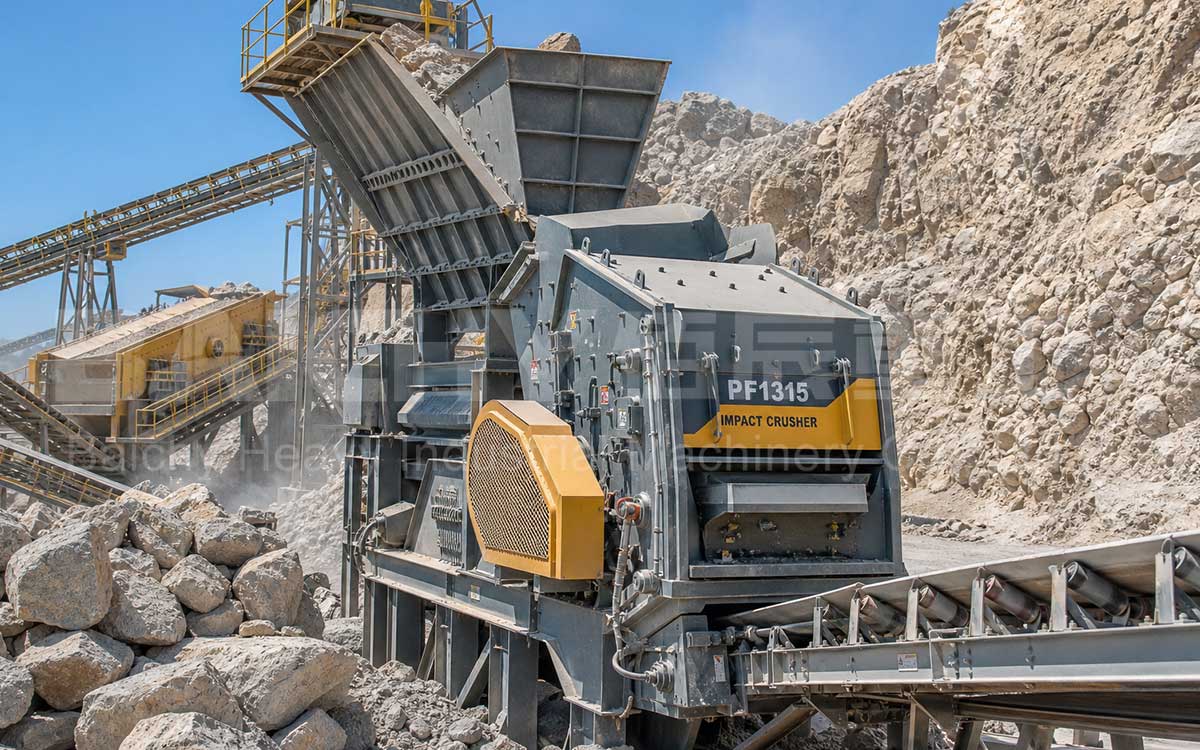
| Secondary/Fine Crushing | PF Series Impact Crusher | ≤350 mm | ≤50 mm | 30–120 | 75–160 kW |
| Sand Making & Shaping | VSI Series Sand Maker | ≤50 mm | 0–5 mm | 30–200 | 75–200 kW |
*Note: Capacity figures are based on limestone (bulk density 1.6 t/m³); for hard rock, apply a conversion factor of 0.80–0.95 (estimated value). Primary crushing specifications represent standard factory settings, while secondary/fine crushing and sand-making figures indicate reference ranges; final specifications are subject to the signed technical agreement and material test-crushing report.
Selection Guide: Identify the Right Model in 30 Seconds
• Hard Rock (Granite/Basalt/Diabase, Mohs hardness 6–8): Jaw Crusher (Primary) → Cone Crusher (Secondary/Fine) → VSI (Shaping). Inter-particle (lamellar) crushing in cone crushers offers optimal performance regarding wear and energy consumption for hard rock.
• Medium-soft rock (limestone/dolomite/gypsum, Mohs hardness 3–5): Jaw crusher for primary crushing → Impact crusher for secondary/tertiary crushing. Impact crushers offer high reduction ratios, excellent particle shape, and lower investment costs compared to cone crushers.
• Sand making & shaping requirements: VSI sand-making machines provide stable 0–5mm grading and high-quality particle shape (low needle/flake content), capable of replacing two-stage crushing processes.
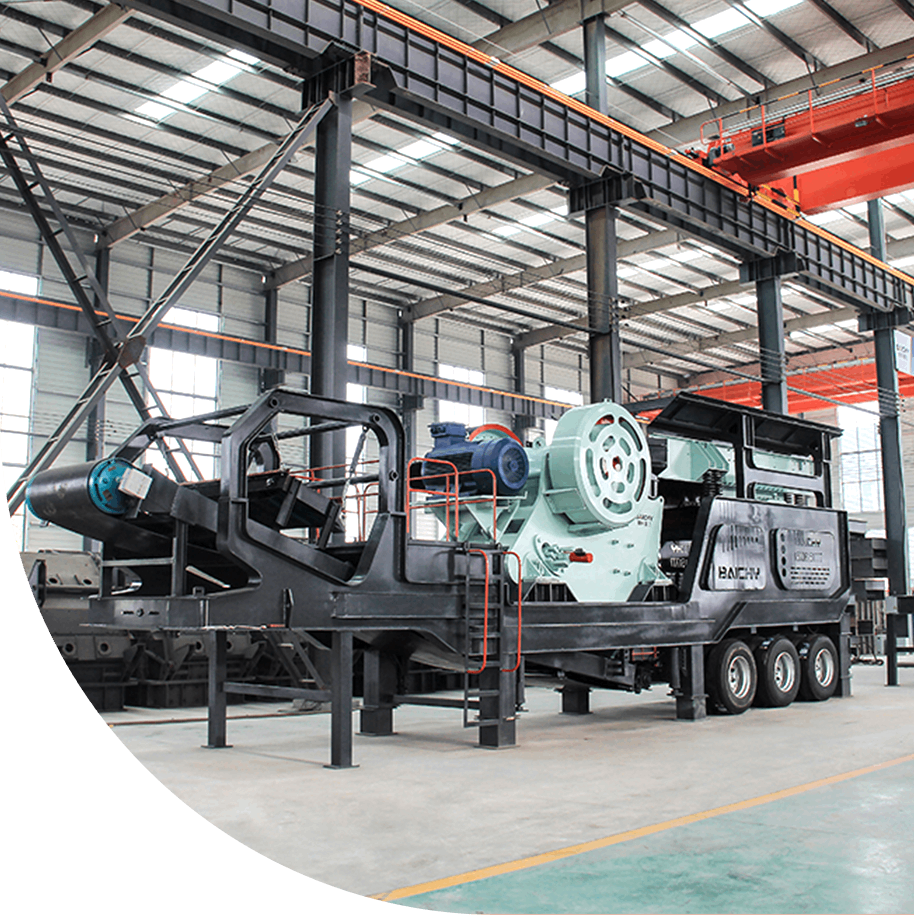
• Mobility requirements: Wheeled or tracked mobile stations allow for rapid site relocation; ideal for multiple quarry sites, construction and demolition waste, and small-scale mines.
FAQ (Frequently Asked Questions)
Q1: What types of rock crushers are there, and what materials are they suited for?
Four main categories: Jaw crusher (primary crushing; preferred for hard rock; reduction ratio ~1:4–6); Cone crusher (secondary/tertiary crushing; inter-particle crushing for hard rock); Impact crusher (secondary/tertiary crushing; medium-soft rock; high reduction ratio and good particle shape); VSI sand-making machine (sand making and shaping; 0–5mm product). Golden rule for selection: Hardness determines the machine type; capacity determines the specifications.
Q2: Why is capacity rated based on limestone? How do I calculate the capacity for my material?
The industry standard uses limestone (bulk density 1.6 t/m³) as the benchmark. Hard rock: multiply by ~0.80–0.95; soft rock: multiply by ~0.85–1.00; lightweight materials (e.g., coke): multiply by ~0.45–0.55 (estimates). Before signing a contract, Baichen provides free test crushing and a particle size analysis report to guarantee capacity based on the actual material.
Q3: How do I choose a crusher for hard rock versus soft rock?
For hard rock, choose "Jaw Crusher + Cone Crusher"; for soft rock, choose "Jaw Crusher + Impact Crusher." Specific materials (like gypsum) can be processed in a single stage using a hammer crusher. Using a soft-rock configuration for hard rock leads to frequent tooth breakage and excessive liner wear; using a hard-rock configuration for soft rock results in over 30% wasted CAPEX.
Q4: How often do wear parts need replacing? Are spare parts easy to purchase?
Estimated service life for wear parts: 800–1,200 hours for high-manganese steel jaw plates (hard rock applications) and 1,200–2,000 hours for high-chromium hammer heads (soft rock applications). Baichen maintains domestic stock for immediate availability and offers a 7–15 day delivery lead time; we provide a wear-parts list and replacement schedule with the equipment and can arrange annual stocking plans.
Q5: Is the equipment compatible with our country's voltage and frequency?
Yes. We offer factory customization for various configurations (e.g., 380V/50Hz, 400V/50Hz, 440V/60Hz, 480V/60Hz, 380V/60Hz). Motors and electrical components are matched to local standards, and we provide customized solutions for high-altitude, high-rainfall, or high-temperature environments, ensuring the equipment is ready for immediate use upon arrival.
Q6: How can I avoid purchasing equipment with exaggerated capacity ratings?
Do three things: request a capacity chart adjusted for material density; ask for test-crushing and particle size analysis reports prior to signing the contract; and include guaranteed capacity specifications in the technical agreement. Baichen does all three, clearly stating both nominal capacity and actual operational capacity.