
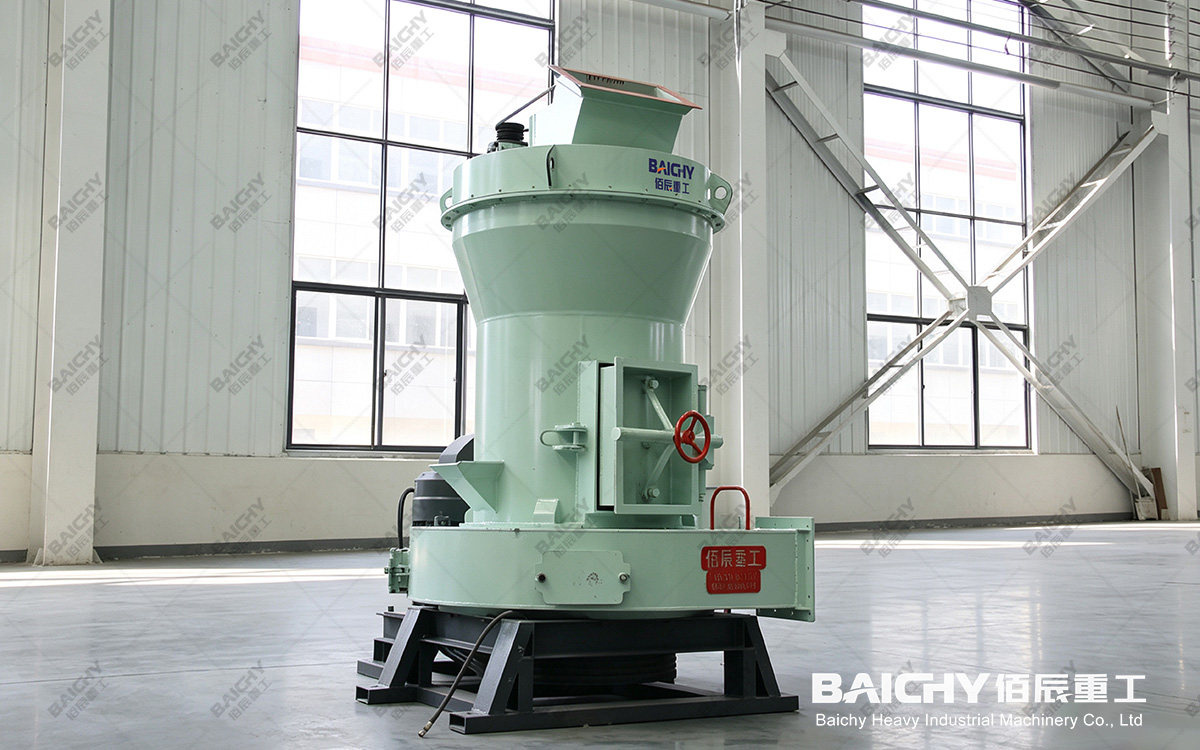
Raymond mill
The working principle of the Raymond mill (a type of pendulum roller mill) can be summarized in a single sentence: driven by centrifugal force, grinding rollers roll tightly against a stationary grinding ring, subjecting material falling into the gap between the roller and ring to a process of "crushing and grinding"; an airflow then conveys the powder to a classifier for separation—where qualified fine powder is collected and coarse particles fall back for regrinding—creating a closed-loop grinding system. Centrifugal crushing, airflow classification, and recirculating regrinding are the keys to understanding the mill's performance characteristics.
I. Working Principle of the Raymond Mill: Understanding the Grinding Process in Three Stages
1. Feeding and Shoveling: How Material Enters the Grinding Zone
Raw material is transported via a bucket elevator to a storage hopper and fed at a controlled rate into the mill's grinding chamber by an electromagnetic vibrating feeder. At the bottom of the chamber, shovels—rotating synchronously with the spider assembly—continuously scoop up material that has settled at the base and throw it into the annular grinding zone located between the grinding rollers and the grinding ring. The shovels represent the first critical factor for grinding efficiency: insufficient shoveling leads to "idling" in the roller-ring gap and a sharp drop in output; excessive shoveling causes material accumulation, resulting in fluctuations in fineness and increased motor current. Controlled feeding combined with uniform shoveling is the prerequisite for stable powder output.
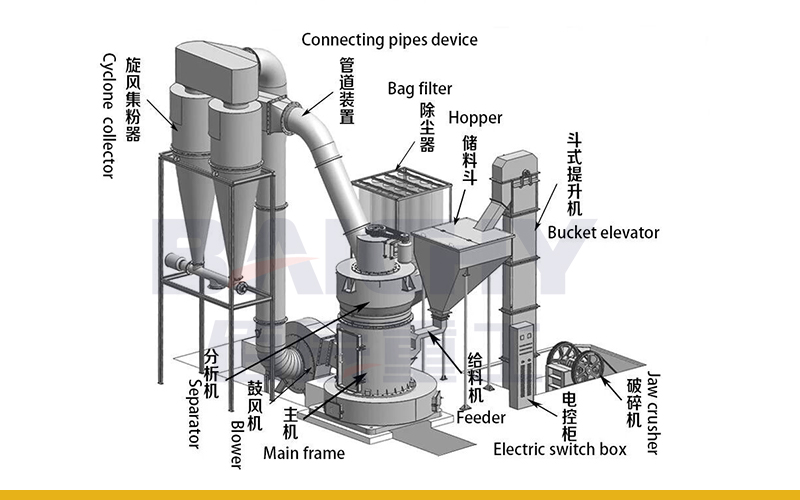
Process flow of grinding equipment
2. The Grinding Core: How Centrifugal Force Drives "Crushing" Rather Than "Impact"
The main motor drives the rotation of the spider assembly via a gearbox, with 3 to 6 grinding rollers suspended from it. The key mechanism is as follows: the grinding rollers do not actively rotate around their own axes; instead, they "revolve" along with the spider assembly. Driven by centrifugal force, they swing outward and remain pressed tightly against the inner wall of the stationary grinding ring, where the material is repeatedly crushed and ground into powder between the rotating rollers and the stationary ring. This design embodies two profound implications: First, the grinding pressure is generated by centrifugal force (proportional to the square of the rotational speed); the absence of hydraulic stations or spring pre-tensioning mechanisms results in a simple structure with fewer potential points of failure. Second, the grinding action is characterized by "low speed and high pressure," which minimizes over-grinding and temperature rise, making it particularly suitable for processing medium-hardness non-metallic minerals such as limestone, barite, and gypsum.
3. Airflow Classification: Controlling the Fineness (Coarse vs. Fine)
Powdered material is carried by an upward airflow—generated by a fan—into the classifier located at the top of the main unit. A high-speed rotor utilizes centrifugal force to classify the particles: coarse particles are rejected and fall back into the grinding zone, while qualified fine powder exits with the airflow into a cyclone collector. The exhaust gas is purified by a pulse dust collector and recirculated, creating a closed-loop system. Adjusting the fineness essentially involves changing the classifier's rotational speed—higher speeds yield finer products (typically adjustable between 80 and 425 mesh). This principle enables the Raymond mill to cover a wide range of fineness levels with a single machine.
II. Principles Define Performance Limits: Choosing Between Raymond Mills, Ball Mills, and Jet Mills
| Equipment Type | Primary Force | Fineness Range | Energy Consumption | Typical Drawbacks |
|---|---|---|---|---|
| Raymond Mill | Centrifugal rolling + grinding | 80–425 mesh | Low to medium | Limited capability for ultra-fine powder (<800 mesh) |
| Ball Mill | Media impact + grinding | Primarily <100 mesh | High | High noise, high power consumption, significant over-grinding |
| Jet Mill | High-speed airflow impact | 325–2500 mesh | High | High investment and operating costs |
The conclusion is clear: The Raymond mill is best suited for processing non-metallic mineral powders within the 80–425 mesh range and with a Mohs hardness of 7 or lower. For ultra-fine powders, jet mills are the choice; for high-capacity coarse grinding, ball mills retain their niche; however, in the market for medium-to-fine powders derived from mainstream non-metallic minerals—such as heavy calcium carbonate, gypsum, bentonite, talc, dolomite, and kaolin—Raymond mills dominate due to their simple operating principles, low power consumption, and manageable maintenance requirements.
III. Maintenance and Operating Principles: Why Wear Concentrates in Two Areas
Within the entire machine, only the outer surface of the grinding rollers and the inner wall of the grinding ring are subjected to direct crushing and grinding forces; this dictates the pattern of wear:
• Normal wear is concentrated on the surfaces of the rollers and rings; this involves predictable replacement of wear parts and is directly correlated with processing volume and material abrasiveness.
• Abnormal wear almost invariably stems from inadequate feed control—specifically, the inclusion of ultra-hard impurities like quartz or metal fragments, which cause rapid, groove-like wear on the roller and ring surfaces.
• Wear on the scraper blades indirectly reduces production capacity, as changes in the scraping angle result in less material being fed into the grinding zone.
This implies that the operating principle itself serves as a reminder to users: installing an iron remover and a screening system at the feed inlet is not merely an optional add-on, but a "physical safeguard" for the grinding assembly—one that directly determines the service life of the rollers and rings as well as the cost per ton of powder produced.
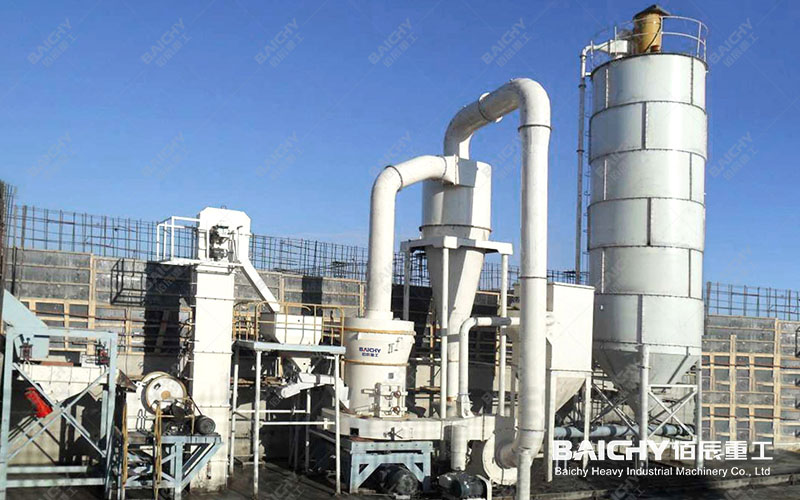
Raymond Mill Production Line: Customer Site
IV. Comparison of Typical Models and Specifications for Raymond Mills
The table below lists common models of Baichy Raymond mills (capacities are rated based on medium-hardness materials such as limestone or gypsum, with a 200-mesh sieve residue of approximately 10%; actual performance varies significantly depending on material properties and required fineness, so model selection should be adjusted based on the specific material):
| Model | Number of Rollers | Roller Dimensions (mm) | Max. Feed Size (mm) | Product Fineness (mm/mesh) | Capacity (t/h) | Main Unit Power (kW) |
|---|---|---|---|---|---|---|
| 3R2115 | 3 | 210×150 | ≤15 | 0.613–0.044 / 30–325 | 0.4–1 | 15 |
| 4R3016 | 4 | 300×160 | ≤25 | 0.613–0.044 / 30–325 | 1–4 | 30 |
| 5R4119 | 5 | 410×190 | ≤30 | 0.613–0.044 / 30–325 | 2.5–9.5 | 75 |
| YGM95 | 4 | 310×190 | ≤25 | 0.613–0.033 / 30–425 | 2.1–5.6 | 45 |
| YGM130 | 5 | 410×230 | ≤30 | 0.613–0.033 / 30–425 | 2.5–9.5 | 90 |
| YGM160 | 6 | 450×300 | ≤35 | 0.613–0.033 / 30–425 | 8–16 | 132 |
The model number itself encapsulates the machine's specifications: the first digit indicates the number of grinding rollers, while the last two digits represent the roller diameter and height. The more grinding rollers there are and the larger their diameter, the greater the crushing contact area and the higher the production capacity—this is a direct extrapolation of the "centrifugal crushing" principle.
V. FAQ
1. Why is it called a "Raymond Mill"? How does its working principle differ fundamentally from other pulverizers?
"Raymond" comes from the name of its inventor; the term later became the generic name for pendulum-type roller mills. Unlike ball mills, which rely on a rotating drum to drive steel balls to impact the material, the Raymond mill operates by rolling and crushing grinding rollers against a grinding ring. Unlike jet mills, which rely on high-speed particle-on-particle collisions, it applies continuous pressure via mechanical centrifugal force. This crushing method results in a simple structure and low power consumption, making it one of the most cost-effective models for processing medium-to-fine powders.
2. What materials is the Raymond mill suitable for grinding? Which ones are unsuitable?
It is suitable for non-metallic minerals and brittle materials with a Mohs hardness below 7 and moisture content below 6%—such as limestone, barite, gypsum, talc, dolomite, bentonite, kaolin, calcite, and potash feldspar—capable of producing powders ranging from 80 to 425 mesh. It is not recommended for directly grinding materials with a Mohs hardness above 7 (e.g., quartz sand, corundum) or for processing high-moisture, sticky materials; excessively wet feed can cause material adhesion in the grinding zone and clogging of the classifier, so a drying process is required prior to operation.
3. Can I adjust the fineness of the finished product simply by changing the classifier speed?
Yes, but with two caveats: while fineness is indeed primarily determined by the classifier speed (higher speed yields finer powder)—a key advantage of the Raymond mill's "stepless adjustment" capability—fineness and production capacity are inversely related. The finer the powder, the lower the proportion of qualified powder in the airflow, resulting in reduced capacity. The optimal approach is to first set the speed based on the target mesh size, then adjust the feed rate accordingly, striking a balance between "meeting fineness standards," "maintaining stable motor current," and "maximizing capacity," rather than simply sacrificing output.
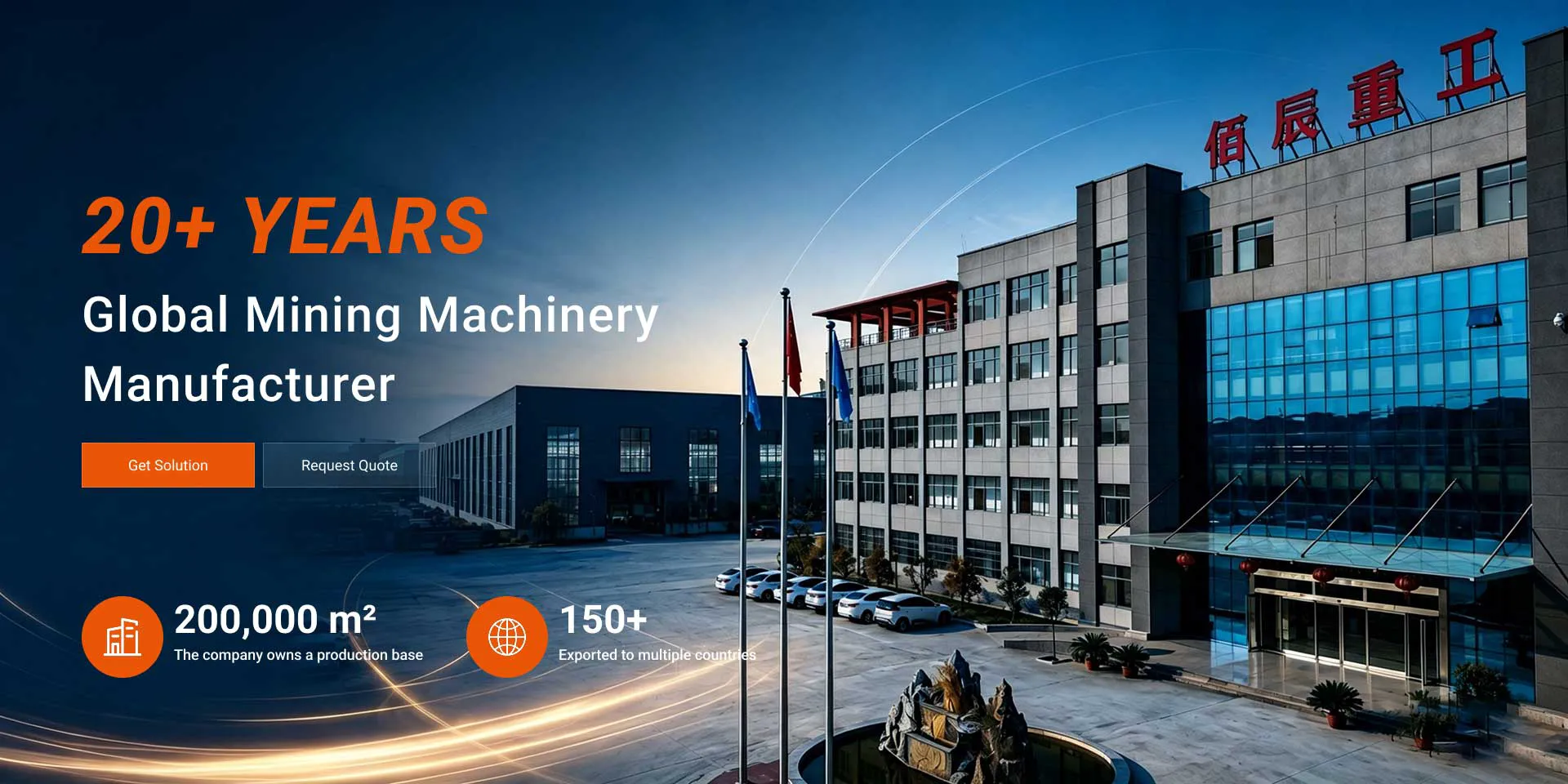
Baichy Heavy Industry
Baichy Heavy Industry is a high-tech mining equipment company integrating R&D, manufacturing, sales, and after-sales service. Focusing on crushing, grinding, and mineral processing equipment, we provide professional solutions to our customers. We are ISO9001:2015 、certified, and our products include mobile crushing palnts, crawler crushing plant, construction waste crushing plants, jaw crushers, sand making machines, cone crushers, fine crushers, grinding mills, ball mills, etc., all with reliable performance to meet diverse project needs.
Baichy Heavy Industry – Your Trusted Partner
To ensure optimal performance of your equipment, Baichy Heavy Industry offers:
- Professional on-site installation guidance
- Comprehensive operator training
- 24/7 technical support & maintenance services
Our complete after-sales service system guarantees long-term, stable operation of your machinery with minimal downtime.
Protect Your Rights – Only Use Official Channels
To avoid scams and ensure authentic support, contact us exclusively through:
• Official Website: www.baichychina.com
• WhatsApp: +8615093222637
• Email: [email protected]
Your satisfaction is our priority – expect prompt, professional service every time.
(Note: Beware of unauthorized third parties claiming to represent Baichy. Always verify through official contacts.)