Baichy Heavy Industrial Machinery Co., Ltd

Phone/Wechat/Whatsapp:+008615093222637

Email:[email protected]
24 hours online
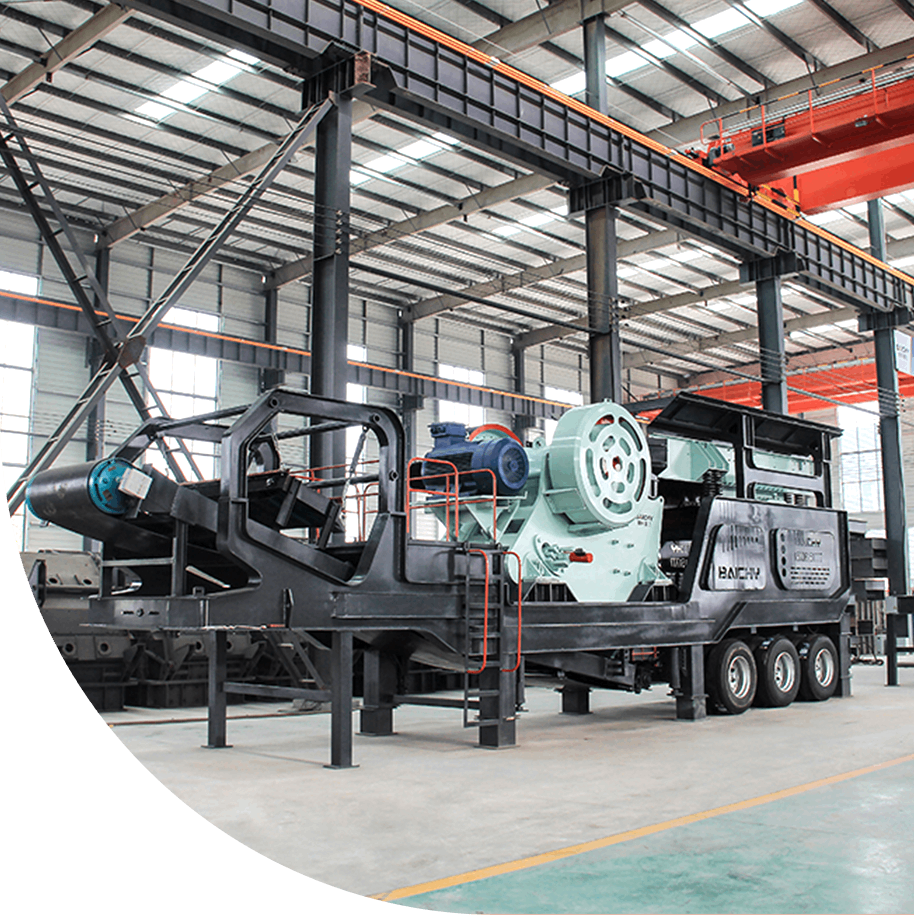
200-300 t/h stone crushing station can efficiently crush granite, limestone, basalt, pebbles, and other hard rocks and construction waste, suitable for sand and gravel aggregates, mining, and solid waste recycling.
|
Equipment |
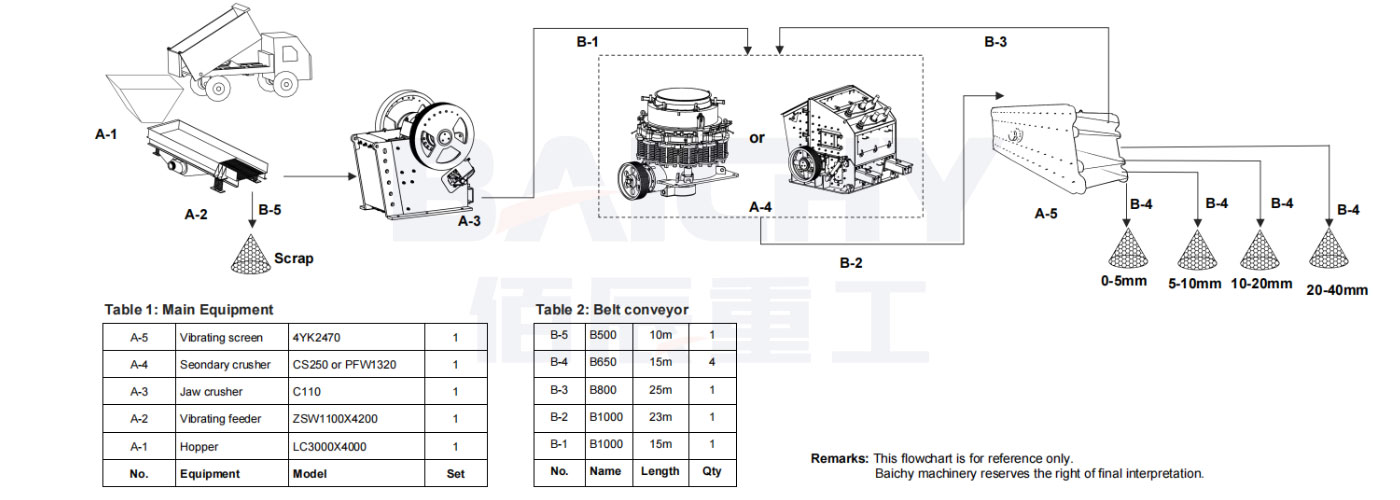
ZSW1142 Vibrating feeder | C110 jaw crusher | CS250 Symons Cone Crusher(PFW1320 Impact Crusher) | 4YK2460 Vibrating Screen | Belt conveyor. |
|
Closed-circuit |
3-stage closed circuit, 100% Controllable Finished Size |
|
Raw materials |
Limestone crushing and sand making, granite aggregate production, iron ore primary crushing and pre-processing, and aggregate processing lines supporting commercial concrete mixing plants. |
|
Feed Size |
≦700mm |
|
Capacity |
200-300tph |
|
Finished product |
Adjustable, common sizes are 0-5mm (machine-made sand), 5-10mm, 10-20mm, 20-40mm, etc. |
|
Design requirements
|
1. Required production capacity (t/h) 2. Raw material type, hardness, and abrasiveness 3. Maximum feed size (mm) 4. Target finished product size(s) |

Feed opening size: 850×1100 mm
Max. Feed: 700 mm
Processing capacity: 200-400 t/h

Feed Size: ≤228 mm
Discharge Size: 20-60 mm
Capacity: 181-635 t/h

Feed Opening Size: 550 × 1900 mm
Max. Feed: 400 mm
Processing Capacity: 160–350 t/h

Screen Mesh Size: 2400 × 7000 mm
Max. Feed: 200 mm
Processing Capacity: 180–900 t/h
Seamless width alignment between the C110 and the ZSW1100×4900 ensures smooth material flow—the feeder’s 1100mm-wide grizzly bars perfectly match the C110’s feed opening width, eliminating the need for transition hoppers, preventing bridging by large material, and ensuring greater overall system stability.
The C110 easily handles a capacity range of 200–300 TPH—delivering a steady 230–350 t/h with a discharge setting of 125–175mm and a maximum capacity of 525 t/h, providing ample flexibility for future production expansion.
• Limestone/Dolomite → Single PF1320 impact crusher; produces cubical shaped aggregate suitable for direct sale as commercial concrete aggregate.
• Granite/Basalt/Iron Ore → Parallel configuration of HPC400 and CS220 cone crushers; offers high wear resistance and controllable operating costs.
No two quarries are the same. That's why every Baichy configuration starts with your raw material and target capacity — never a catalog template. The installations below are just a sample. Your project could be the next one on this list.
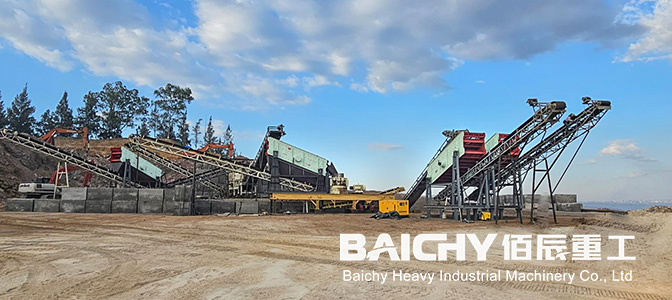
4× 4YK1860 Vibrating Screen + Spiral Sand Washer: River Pebble Screening & Washing Upgrade Solution
Project Location: Guatemala
Project equipment: 4 × 4YK1860 Four-Deck Vibrating Screen + Spiral Sand Washer (added to existing mobile jaw crusher line)
Output size: 0–5 mm clean manufactured sand (multi-grade classification via 4-deck screening)
Applicable materials: River pebble, granite, limestone, basalt, quartzite
Main Brand: Baichy Heavy Industry
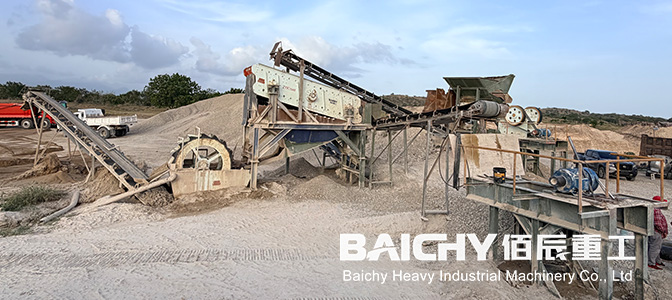
80-100TPH Crushing And Sand-Making Production Line in Dominican Republic
Production Line Type: Stationary Crushing and Sand Making Combined Production Line
Designed Capacity: 80-100 t/h
Applicable Materials: River pebbles, cobblestones, granite, basalt, limestone (Mohs 5-8)
Core Equipment: PE500×750 Jaw Crusher + VSI8518 Impact Crusher + 2YK1548 Vibrating Screen + XSD2160 Sand Washing Machine
Finished Product Types: 0-5mm manufactured sand, 5-20mm premium aggregate, 20-40mm construction aggregate
Tell us your raw material and target capacity. Our engineers will design a custom line and send you a quote within 24 hours.
Get Your Custom Layout & Quote NowWe don't just sell machines. We deliver production lines that work — on time, on spec, on budget.
Certified manufacturing. 35,000 m² facility. 200+ skilled workers. All key components made in-house.
Senior engineers analyze your rock type, feed gradation, moisture content, and site elevation before proposing a single machine.
Foundation drawings, steel structure, electrical controls, dust suppression, installation supervision, and operator training — all included.
No dealer, no trader, no markup. You pay the ex-factory price. Competitive freight to your seaport.
Full warranty on main equipment. Wearing parts always in stock. Shipped within 48 hours via DHL/FedEx.
Lines operating in Indonesia, Philippines, Saudi Arabia, Nigeria, Kenya, Peru, Kazakhstan, Russia, and more.