




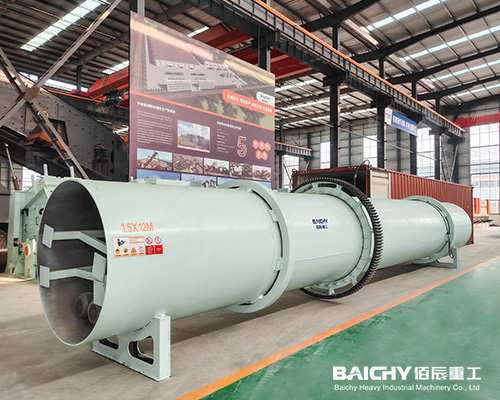
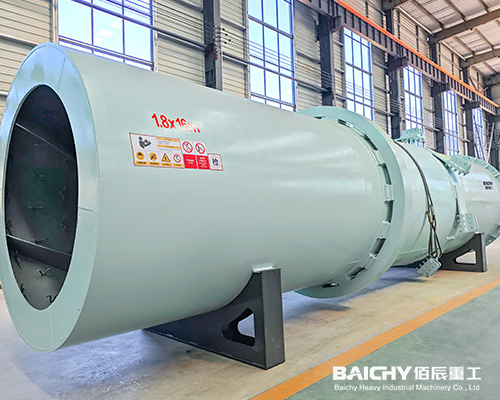
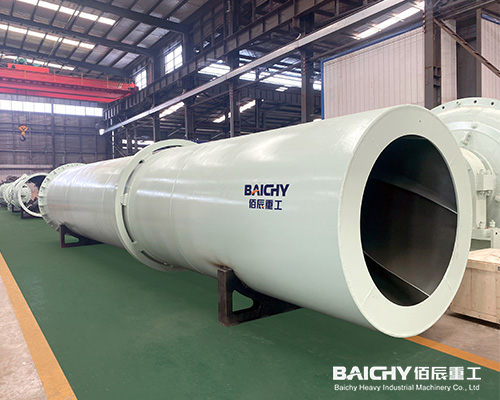
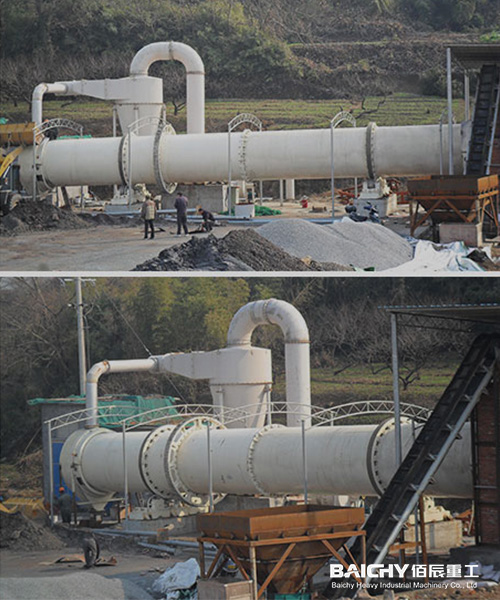
The workflow of the dryer is as follows:
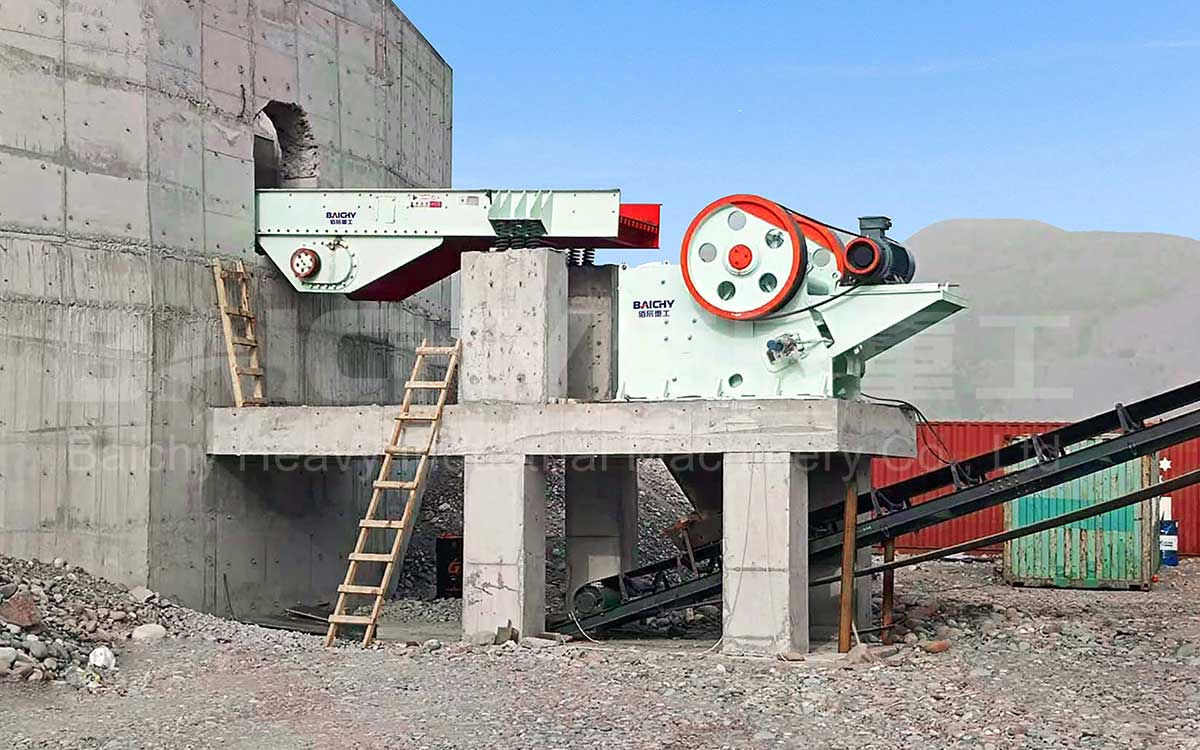
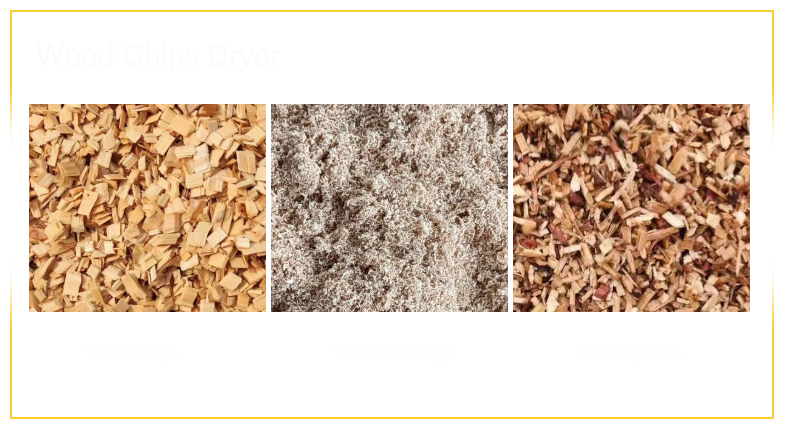
1. Material Entry: Wet materials (such as wood chips) are first fed into the system uniformly and in a controlled manner via a GZ3 electromagnetic vibrating feeder.
2. Infeed Conveying: The materials are subsequently transported to the inlet of the main drying unit by a B500x13m infeed belt conveyor.
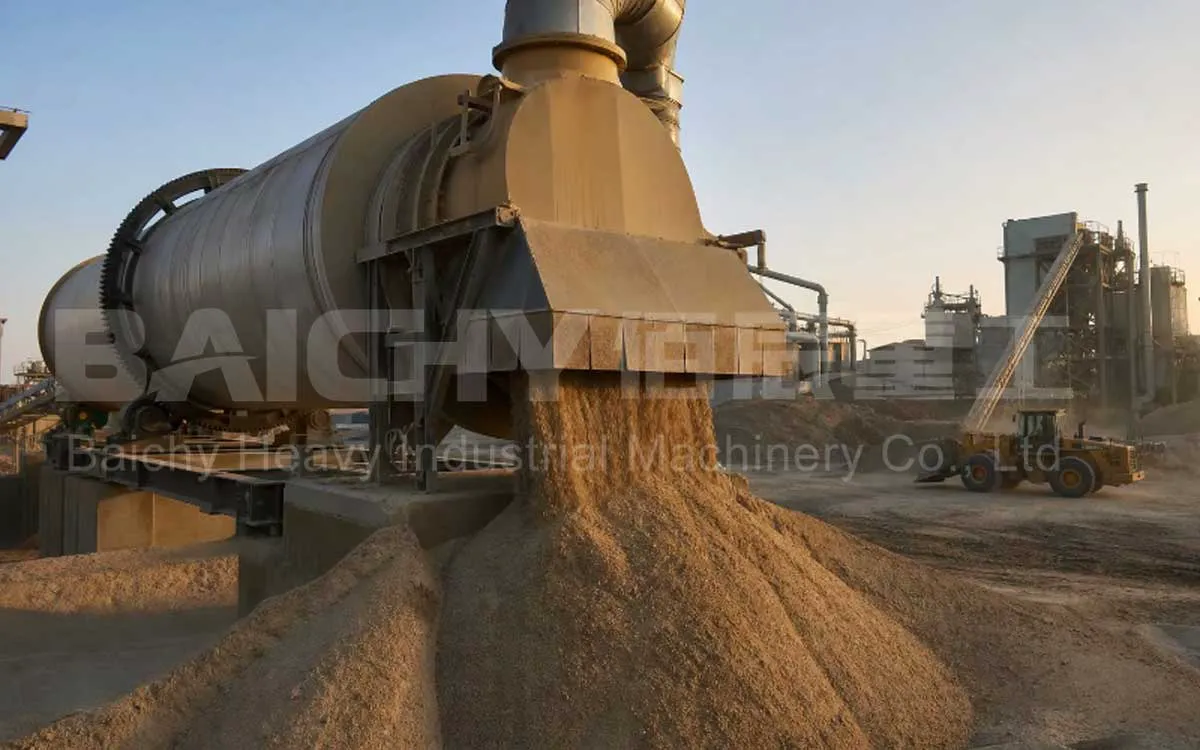
3. Core Drying: The materials enter the main body of the 1x10m single-drum dryer. Driven by a motor mechanism, the rotating drum begins to turn.
4. Lifting and Heat Exchange: Lifting flights (also known as "scoop plates") installed on the inner wall of the drum continuously scoop up and cascade the materials, creating a uniform, thin, and dense "material curtain" across the drum's cross-section.
5. Heat Transfer: Hot air—generated by a hot air furnace (or another heat source, such as waste gas)—is introduced into the interior of the drum from either the inlet or outlet end. The falling "material curtain" engages in thorough and efficient heat transfer through conduction, convection, and radiation with the hot air, causing the moisture within the materials to evaporate rapidly.
6. Product Discharge: Driven by the drum's rotational motion and its slight incline, the dried materials are propelled toward the discharge end and conveyed out of the system via a B500x8m discharge belt conveyor.
7. Subsequent Elevation (Optional): Depending on the production line layout, the dried materials may be vertically transported to the next processing stage (such as a pelletizing bin or packaging station) using a T250x14m bucket elevator.
Process Summary: The entire process achieves a continuous, automated workflow encompassing wet material feeding → conveying → core drum drying → dry material discharge → and subsequent elevation. Ultimately, the system dries the materials—for instance, reducing the moisture content of wood chips from 20%—to a target humidity level (6–8%) to meet the specific requirements of subsequent production stages (such as biomass pelletization).