
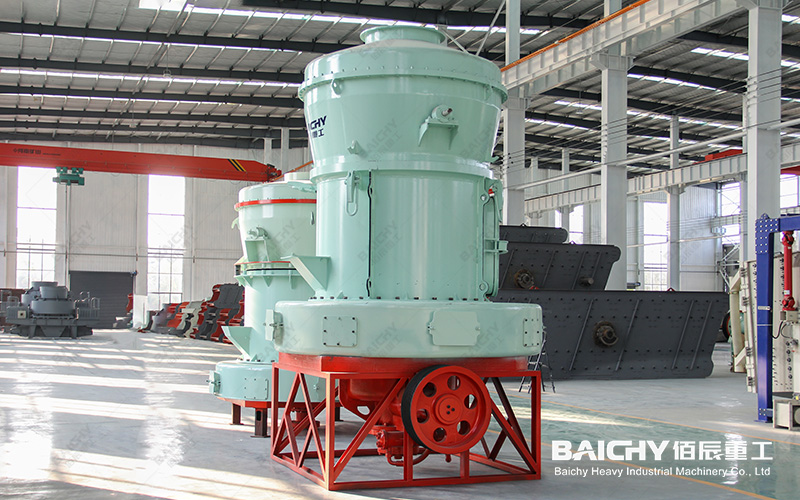
MTW European-style Grinding Equipment
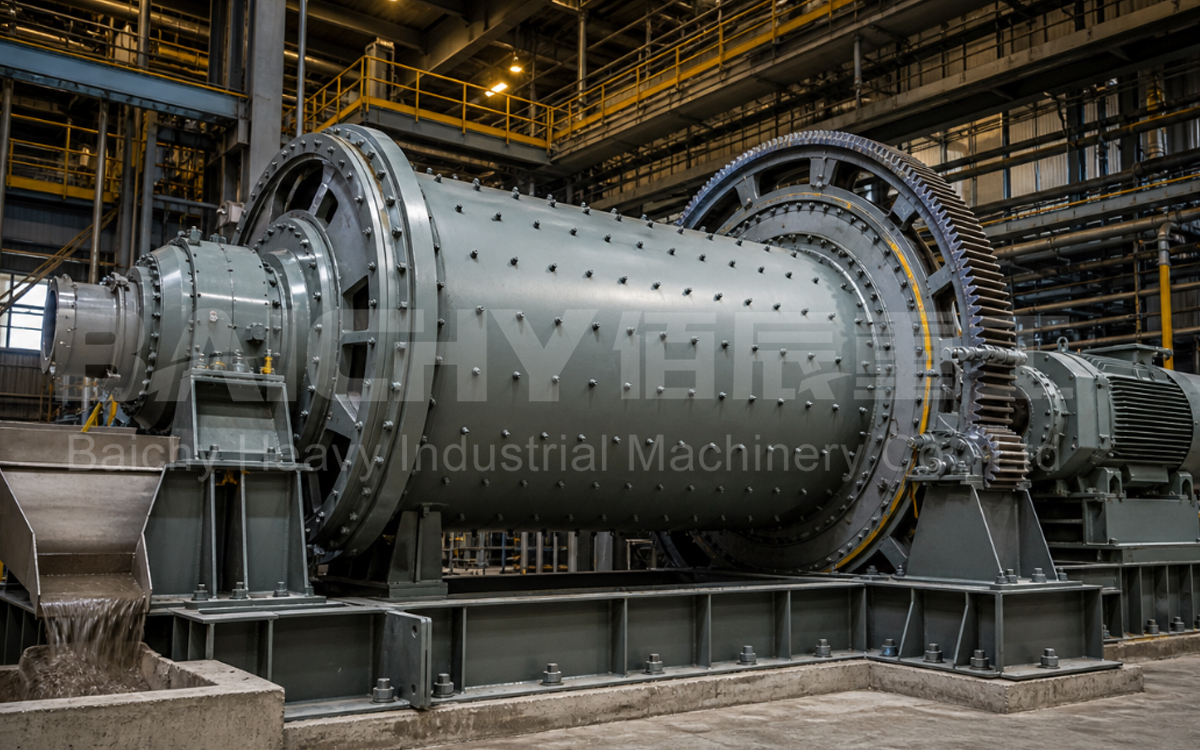
The MTW European-style grinding mill is a primary piece of equipment for producing medium-to-fine powders in the 80–400 mesh range (with continuously adjustable D97 fineness). It is designed not merely for a specific ore, but for a specific type of business: processing medium-soft minerals (Mohs hardness ≤7, controllable moisture content) into industrial powders that are accepted based on batch standards and priced according to fineness. A single unit can handle six mainstream applications: calcium carbonate powder, power plant desulfurization powder, non-metallic mineral powder, gypsum powder, coal powder, and metallurgical auxiliary powder.
I. Strengths and Operational Limits
Before selecting the equipment, it is important to understand its operational boundaries. While the European-style trapezoidal mill belongs to the same roller mill family as the Raymond mill, it features three key structural innovations—an integrated bevel gear drive, centralized thin-oil lubrication, and an internal variable-frequency classifier. These improvements ensure consistent fineness even as wear progresses, enable continuous 24-hour production, and allow for rapid (minute-level) switching between product grades (80–400 mesh). These advantages make it a prime choice for upgrading from Raymond mills, yet its operational limits are equally clear:
• Material Limits: Mohs hardness ≤7; non-flammable and non-explosive. Suitable materials include calcite, limestone, dolomite, gypsum, barite, bentonite, kaolin, talc, potash feldspar, wollastonite, bauxite, manganese ore, and coal. High-hardness materials like quartz sand and corundum are not economically viable, as they cause a drastic reduction in the service life of grinding rollers and rings.
• Moisture Limits: Feed moisture must be controlled within 5%. High moisture causes material to stick to grinding rollers and clog the classifier and air ducts; during the rainy season, raw ore requires pre-drying or blending with dry material.
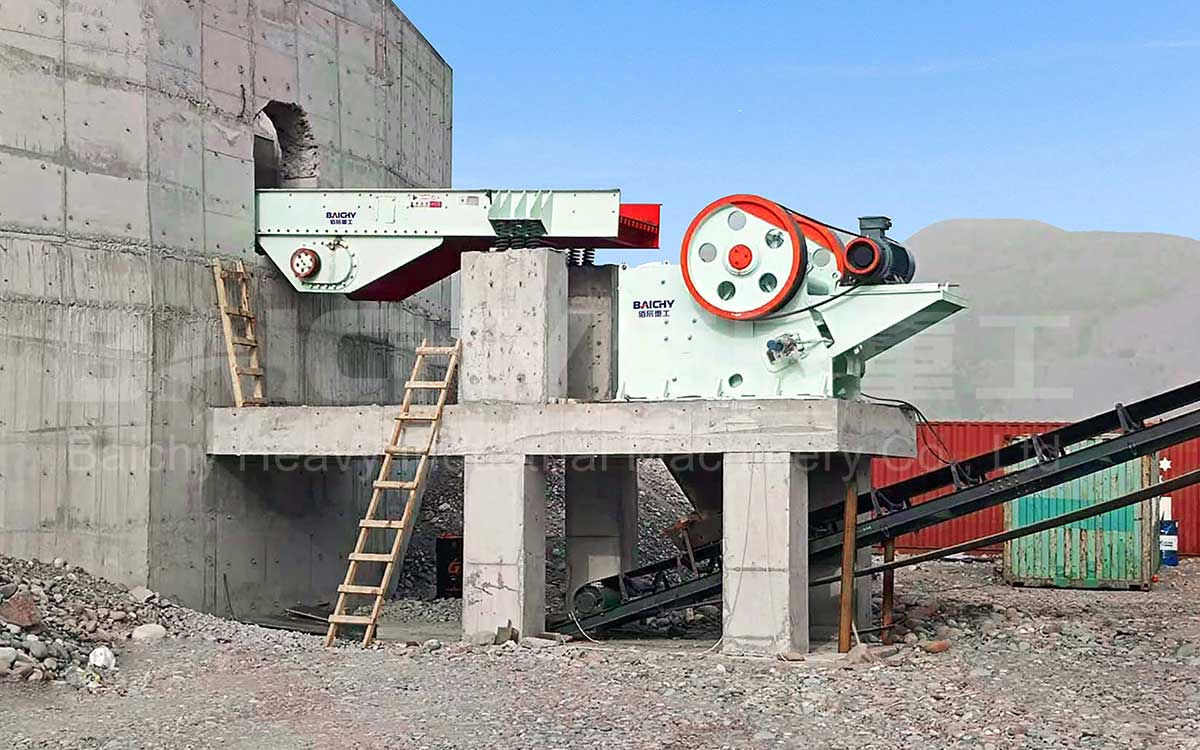
• Feed Size Limits: Feed particle size ≤35 mm; lump ore requires preliminary crushing using equipment such as jaw crushers or double-roll crushers.
• Fineness Limits: The primary operating range is 80–400 mesh. For applications requiring ultrafine powder (above 600 mesh), an HGM ultrafine mill should be used instead of forcing production on this machine, which would compromise capacity.
A concise profile: Medium-hardness minerals, dry feed, impurity removal as a prerequisite, and a focus on medium-to-fine powders—the MTW excels where these four conditions align.
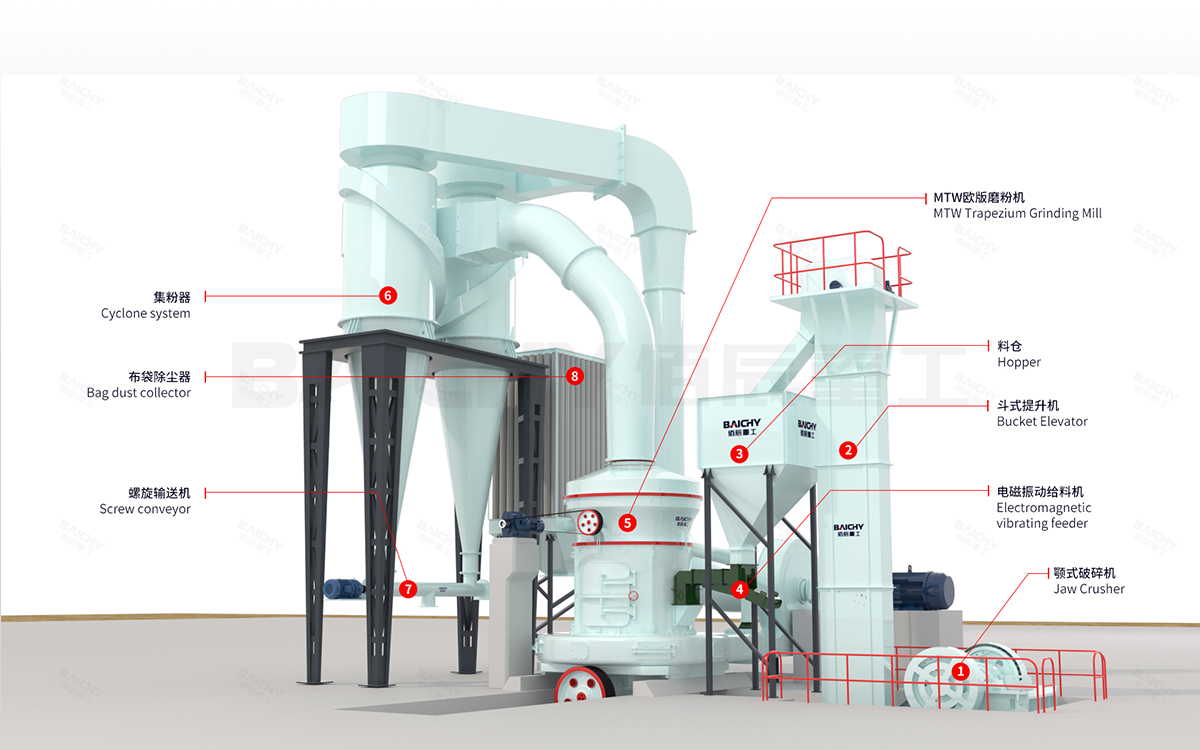
II. Six Major Application Scenarios: Configuring the Production Line Based on Downstream Powder Requirements
The essence of scenario selection lies in "who the powder is sold to": downstream acceptance standards dictate the target fineness, which in turn determines the model and auxiliary equipment. Here is a breakdown of the six scenarios by industry:
2.1 Calcium Carbonate / Ground Calcium Carbonate (GCC) Powder: Fillers for Coatings, Plastics, and Papermaking
GCC powder is priced based on both whiteness and particle size distribution; the 200–400 mesh range is the primary segment for coatings, plastic masterbatches, and paper coating applications. This scenario demands batch consistency: a single instance of particle size drift can result in a drop in price tier. The MTW features variable-frequency classification and finished product spot-checking; a single main unit can switch between 200, 325, and 400 mesh grades, making it ideal for powder suppliers serving multiple customers from one plant.
2.2 Power Plant Flue Gas Desulfurization (FGD): 250-Mesh Limestone Powder
Desulfurization agents are accepted based on sieve residue and reactivity; common specifications include 250 mesh (D97 ≈ 90 μm) and 325 mesh. The biggest pitfall in this scenario is the capacity rating: the capacity for 250-mesh powder is typically one tier lower than the nominal capacity for 200-mesh powder. When inquiring about equipment, one must request the capacity specific to the target mesh size; otherwise, the output may prove insufficient to meet boiler feed schedules after commissioning.
2.3 Deep Processing of Non-metallic Minerals: Bentonite, Kaolin, Talc, Barite, and Potash Feldspar
These minerals share common characteristics: they are often colored, contain impurities, and are sold based on grade. For instance, there is a significant price difference between 200-mesh drilling-grade and casting-grade bentonite; 200/325-mesh barite (used as an API drilling weighting agent) is accepted based on pass rates; and kaolin or talc used in paper coatings must meet standards for both fineness and whiteness. In terms of process, emphasis is placed on pre-grinding sand and impurity removal, as well as calibrating the classifier according to specific product grade parameters; for factories with frequent grade switching, the speed of product changeover—enabled by variable-frequency classification—directly determines order-taking capacity.
2.4 Gypsum Building Materials: Gypsum Board and Plastering Gypsum Powder
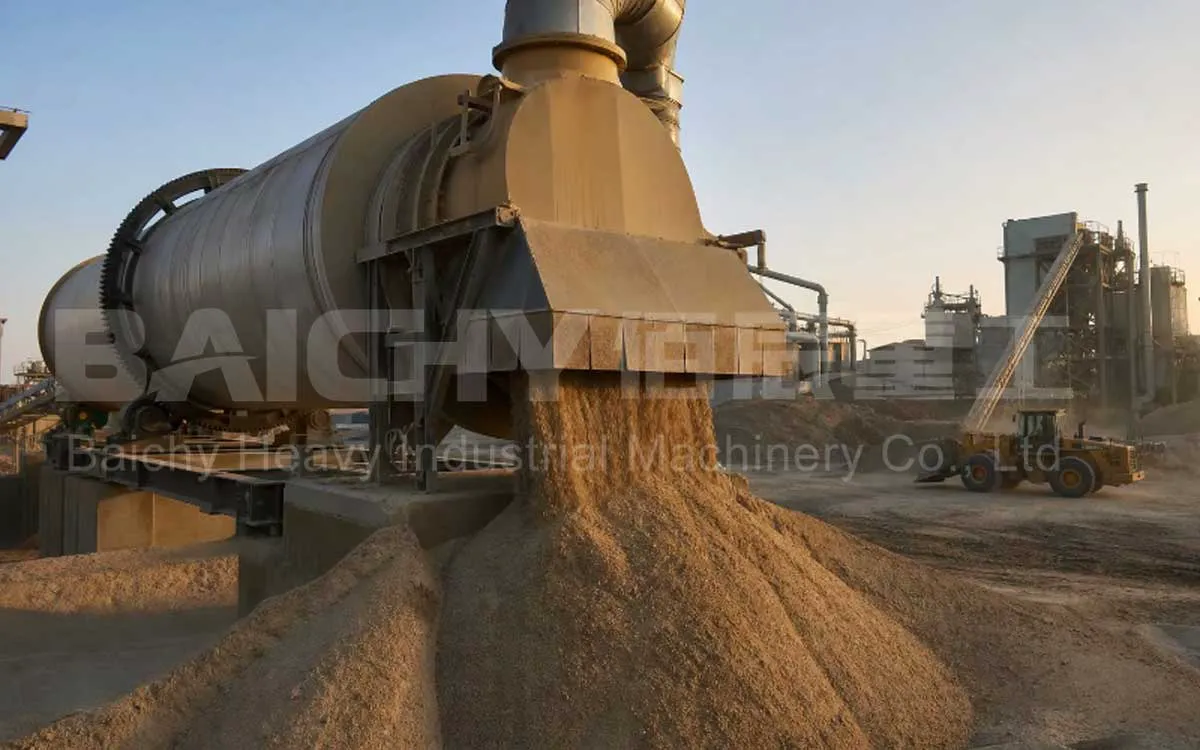
Gypsum is easy to grind (Mohs hardness of only 2), with 200-mesh powder being the primary product specification; the main challenges lie in managing moisture and preventing agglomeration. Both natural and desulfurized gypsum require pre-drying to remove free water before entering the mill; otherwise, material adhesion (clogging the mill) and classifier blockages occur. A coordinated production line—integrating a rotary dryer upstream and anti-caking packaging downstream—is more critical than the procurement of inpidual machines.
2.5 Pulverized Coal Preparation: Boiler Injection and Chemical Industry Feedstock
Bituminous and anthracite coals are processed into 80–200 mesh powder for blast furnace injection and chemical gasification. A unique requirement here is explosion protection: pulverized coal is a flammable and explosive dust. Dust collection systems must incorporate explosion venting and inerting measures in compliance with safety standards, and in-mill temperature monitoring is mandatory. When selecting equipment, it is essential to specify "pulverized coal application" so that electrical and dust collection systems can be designed to meet explosion-proof ratings.
2.6 Metallurgical Auxiliaries and Refractory Raw Materials: Manganese Ore, Bauxite, Magnesite, and Wollastonite
Auxiliaries for steel mills and refractory binders typically require fine powders in the -80 to -200 mesh range; these materials often contain significant silica and are more abrasive than softer ores. The MTW mill is chosen for its continuous production capabilities and batch consistency; however, iron removal is required upstream to intercept metallic foreign objects. Additionally, the material and expected service life of grinding rollers and rings must be determined based on silica content, with a 10%–20% capacity margin included in equipment selection if necessary.
| Application Scenario | Typical Materials | Target Fineness/Specs | Acceptance & Pricing Logic | Selection Tips |
|---|---|---|---|---|
| Calcium Carbonate/Ground Calcium Carbonate (GCC) Powder | Calcite, Marble | 200–400 mesh; whiteness & particle size distribution | Tiered pricing based on whiteness and D97 | Medium-to-large models + variable-frequency classification; include spot checks for whiteness |
| Power Plant Flue Gas Desulfurization (FGD) | Limestone | 250 mesh (D97 ≈ 90μm) / 325 mesh | Acceptance based on sieve residue and reactivity | Verify capacity based on 250-mesh specs; do not use 200-mesh nominal ratings |
| Deep Processing of Non-metallic Minerals | Bentonite, Kaolin, Talc, Barite, Potash Feldspar | 200–325 mesh | Price determined by grade; batch acceptance | Remove sand/impurities before grinding; calibrate classifier based on grade-specific parameters |
| Gypsum Building Materials | Natural gypsum, desulfurization gypsum | Primarily 200 mesh | Fineness + flowability stability | Dry to remove free moisture first; ensure system-wide coordination to prevent caking |
| Pulverized Coal Preparation | Bituminous coal, anthracite | 80–200 mesh | Dual control of particle size and moisture | Equip with dust collection and explosion venting per safety standards; specify coal dust operating conditions |
| Metallurgical Auxiliaries/Refractory Raw Materials | Manganese ore, bauxite, magnesite, wollastonite | -80 to -200 mesh | Continuous supply; batch stability | Iron removal + high-chrome wear-resistant grinding parts; increase selection margin for high-silica content |
III. Core Parameters: Understanding MTW Series Configuration Specs at a Glance
The table below outlines typical parameter ranges for Baichy's MTW series grinding equipment under common operating conditions for medium-soft minerals (based on 200-mesh specifications). Actual capacity fluctuates depending on finished product fineness, feed moisture content, and impurity levels; contractual terms are subject to the technical agreement for the specific model.
| Parameter Dimension | MTW Series Typical Range | Significance for Model Selection |
|---|---|---|
| Finished Product Fineness | 80–400 mesh (D97 continuously adjustable) | One machine covers coarse to medium-fine powder; flexible production switching across scenarios |
| Single-Unit Capacity | Approx. 3–20 t/h (at 200 mesh, depending on model) | High output from a single unit; reduces civil engineering costs associated with parallel multi-unit setups |
| Feed Particle Size | ≤ 35 mm (requires jaw or roll crusher pre-crushing) | Matches standard crushed particle sizes; protects grinding rollers and rings |
| Feed Moisture Content | ≤ 5% (drying or dry material blending required if exceeded) | Prevents mill clogging and classifier blockage; ensures continuous operation |
| Material Hardness | Mohs ≤ 7; non-flammable and non-explosive | Suitable for calcium carbonate and the vast majority of non-metallic minerals |
| Main Motor Power | 90–400 kW (varies by model) | High-power range suitable for continuous production lines |
| Drive Mechanism | Integrated bevel gear drive | Fineness remains stable despite roller wear; consistent batch quality |
| Lubrication Method | Centralized forced-circulation thin-oil lubrication | Oil temperature and pressure monitoring; supports 24-hour continuous operation |
| Classification System | Built-in variable-frequency turbine classifier | Online mesh adjustment; stable batch D97 values |
| Dust Collection (Closed-loop) | Cyclone collector + pulse bag filter | Negative pressure operation; fine powder recovery and compliant emissions (explosion-proof design for coal powder applications) |
Note: The MTW series is an upgraded replacement for traditional Raymond mills, offering lower specific power consumption and reduced maintenance hours for the same fineness (exact figures depend on material testing). Baichy provides free material grinding tests and issues a model selection report based on the results.
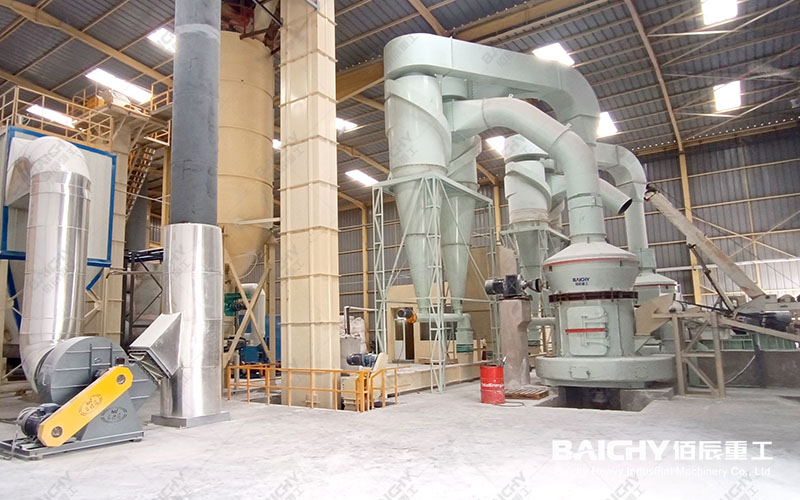
MTW Grinding Production Line – Customer Site in Mexico
IV. How to Select MTW European-Style Grinding Equipment: Define the Powder First, Then the Machine
Selection is not merely about picking parameters; it involves working backward from "what powder the downstream process requires" to determine the entire process chain, locking in specific criteria at four steps:
4.1 Step 1: Define the Material Profile
Specify the material name, Mohs hardness, feed particle size, moisture content, and impurity levels. This step determines whether the MTW model is suitable for the application, whether pre-processing units (drying and iron removal) are required, and the material selection for grinding rollers and rings. For materials with high silica content (e.g., manganese ore, bauxite), the service life of grinding components must be discussed alongside the price of the main unit, rather than focusing solely on the latter.
4.2 Step Two: Define the Product Specification Window
Clearly establish the target mesh size or D97 value, along with downstream acceptance criteria (sieve residue, pass rate, whiteness). Fineness dictates the price range: grinding to 200 mesh versus 325 mesh on the same unit can result in a 30%–40% difference in actual output, while power requirements and dust collection airflow also vary. Specifying the target fineness in the technical agreement is the first step in preventing scenarios where a low bid wins the contract but the equipment fails to meet production standards.
4.3 Step Three: Determine Target Output and Production Scheduling
Calculate the required hourly capacity by piding the daily production target by the scheduled daily operating hours. Then, request the actual output curve for the specific mesh size rather than relying on the unit's nominal rating. Example: A daily target of 120 tons with a 20-hour schedule requires approximately 6 t/h; when supplying multiple mesh grades, verify the reduction coefficient based on the finest grade and allow for a buffer period during product switching.
4.4 Step Four: Define Boundary Conditions
Grid specifications (e.g., 380V/50Hz, 440V/60Hz), altitude, and explosion-proof requirements directly dictate the configuration of motors, variable frequency drives (VFDs), and electrical control cabinets—areas where price padding is most common. Clearly specifying grid requirements for export projects avoids costly rework upon arrival. Finally, address dust collection: a closed-loop pulse-jet bag filter system ensures not only environmental compliance but also recovers fine powder that contributes directly to gross profit.
V. Three Scenarios Where MTW Should Not Be Used: Boundaries Provide the Answer
Knowing when to say no demonstrates professionalism. For the following three types of requirements, it is advisable to switch to other equipment models:
• High-hardness materials (quartz sand, corundum, silicon carbide): The service life of grinding rollers and rings drops precipitously, and per-ton wear costs become uncontrollable; specialized grinding solutions should be consulted.
• Ultrafine powder exceeding 600 mesh (high-end coatings, plastic masterbatch fillers): Forcing MTW mills to produce such fine powder is economically inefficient due to reduced capacity; a staged process—using MTW for coarse powder production followed by HGM for ultrafine powder processing—is recommended.
• Ultra-high capacity or integrated drying-and-grinding requirements (over 30 t/h with high raw material moisture content): Vertical mills offer superior advantages for integrated drying and grinding; decisions should be based on Total Cost of Ownership (TCO) rather than just the unit price.
VI. FAQ
Q1: What are the primary application scenarios for MTW European-style grinding mills? Can a single production line switch between different materials?
A1: There are six main categories: calcium carbonate/ground calcium carbonate (GCC) powder (200–400 mesh); limestone powder for power plant desulfurization (250/325 mesh); deep processing of non-metallic minerals (bentonite, kaolin, talc, barite, potash feldspar, etc., at 200–325 mesh); gypsum building material powder (200 mesh); pulverized coal preparation (80–200 mesh, requiring explosion-proof configuration); and metallurgical auxiliaries/refractory raw materials (-80 to -200 mesh). A single MTW production line can switch between materials provided they are both dry materials with a Mohs hardness ≤7 and require similar fineness ranges; this is achieved by recalibrating the classifier speed, airflow, and feed rate. However, for materials with significant differences in silica content, the grinding roller material must be verified, and material test data should be consulted prior to switching.
Q2: How should our plant choose between MTW mills, Raymond mills, vertical mills, and HGM mills?
A2: Selection is based on fineness and capacity requirements. For the primary market segment—medium-sized grinding plants requiring 80–400 mesh output and single-line capacities of 3–20 t/h—the MTW European-style Trapezium Mill is the top choice for cost-effectiveness and the mainstream upgrade path from traditional Raymond mills. Raymond mills remain valuable for high-volume production of coarse powder (under 5 t/h), while HGM Ultrafine Mills handle requirements exceeding 600 mesh. Vertical mills should be considered for large-scale capacities exceeding 30 t/h or for integrated drying-and-grinding operations. No single piece of equipment is inherently superior; suitability depends entirely on how well it matches the "target fineness" and "required production capacity."
Q3: What information is needed when inquiring about MTW European-style grinding equipment to ensure an accurate model selection and quotation?
A3: Four key sets of data are required:
① Material Profile—name, Mohs hardness, feed particle size, moisture content, and impurity levels;
② Product Specifications—target mesh size or D97 value and acceptance standards;
③ Production Targets—daily tonnage and scheduled operating hours (to calculate the required hourly output for the target fineness);
④ Site Conditions—power grid specifications, altitude, and whether explosion-proof configurations (e.g., for coal powder) are required. Baichy Heavy Industry offers free material grinding tests; we generate configuration lists and full-line quotations based on actual measured output to eliminate discrepancies between theoretical ratings and real-world production performance.
Baichy Heavy Industry
Baichy Heavy Industry is a high-tech mining equipment company integrating R&D, manufacturing, sales, and after-sales service. Focusing on crushing, grinding, and mineral processing equipment, we provide professional solutions to our customers. We are ISO9001:2015 、certified, and our products include mobile crushing palnts, crawler crushing plant, construction waste crushing plants, jaw crushers, sand making machines, cone crushers, fine crushers, grinding mills, ball mills, etc., all with reliable performance to meet diverse project needs.
Baichy Heavy Industry – Your Trusted Partner
To ensure optimal performance of your equipment, Baichy Heavy Industry offers:
- Professional on-site installation guidance
- Comprehensive operator training
- 24/7 technical support & maintenance services
Our complete after-sales service system guarantees long-term, stable operation of your machinery with minimal downtime.
Protect Your Rights – Only Use Official Channels
To avoid scams and ensure authentic support, contact us exclusively through:
• Official Website: www.baichychina.com
• WhatsApp: +8615093222637
• Email: [email protected]
Your satisfaction is our priority – expect prompt, professional service every time.
(Note: Beware of unauthorized third parties claiming to represent Baichy. Always verify through official contacts.)