
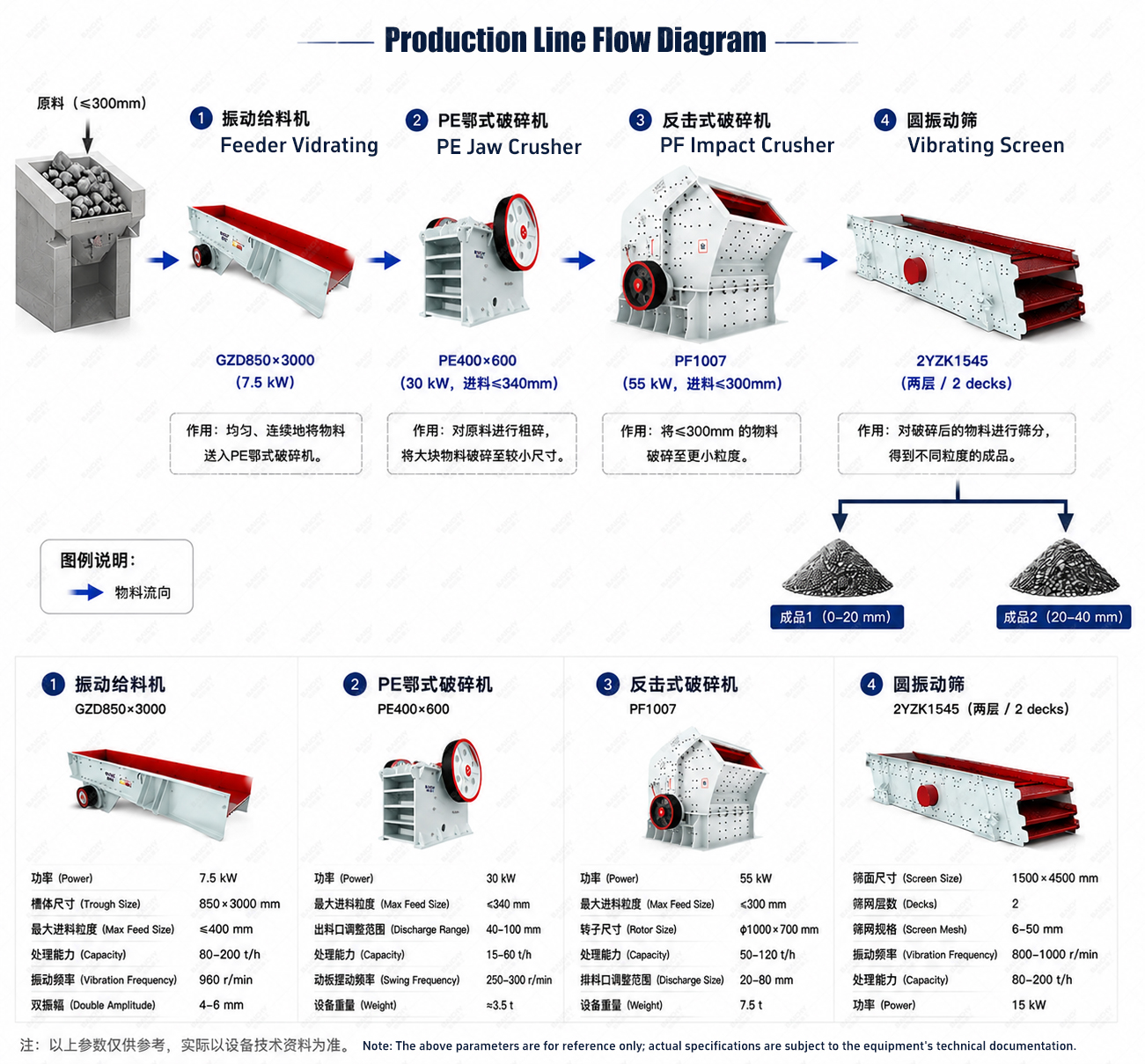
30–50-tph-PE400x600-Jaw-Crusher-Production-Line
In the fields of stone mining and construction aggregates, stationary production lines with a capacity of 30–50 tons per hour (TPH) have emerged as the "gold standard" for small-to-medium-sized quarries and infrastructure support projects. This is due to their moderate investment threshold, stable return-on-investment cycle (typically 12–18 months), and controllable operation and maintenance costs.
Drawing upon 20 years of practical field experience from the manufacturer—and incorporating the latest GB/T industry standards—this article deconstructs the equipment selection logic, classic configuration schemes, and full lifecycle cost control strategies specific to this capacity range.
I. Why is the 30–50 TPH Stationary Production Line a "Golden Track"?
Compared to the high fuel consumption of mobile stations and the low flexibility of traditional civil-works-based lines, stationary production lines offer the lowest per-ton production cost (approximately 0.8–1.5 RMB/ton) in long-term operational scenarios (spanning more than three years).
| Comparison Criteria | Stationary Production Line | Mobile Crushing Station | Semi-Mobile (Steel-Frame) |
| Applicable Duration | >3 Years (Long-term) | <1 Year (Short-term) | 1–3 Years (Medium-term) |
| Per-Ton Production Cost | Lowest (Electric Drive) | Highest (Hybrid Diesel-Electric) | Moderate |
| Environmental Compliance | Easy to Meet Standards (Can be Enclosed) | Difficult to Enclose (Multiple Dust Sources) | Average |
| Automation Level | High (PLC Control) | Moderate (Mostly Remote Control) | Moderate |
| Initial Investment | Moderate | Highest | Lower |
Applicable Scenarios:
• Commercial Concrete Batching Plants: Projects with stringent requirements regarding aggregate shape and gradation, necessitating a stable, long-term supply of materials.
• County-Level Road/Railway Projects: Projects involving large yet geographically dispersed demand for stone materials, where a stationary plant can serve as a central aggregate supply base.
• Medium-Sized Quarries: Sites characterized by concentrated raw material deposits and a planned mining lifespan exceeding five years.
II. Core Configuration Schemes: A Dual-Track Selection System Based on Material Hardness
The primary principle of equipment selection is "let the material determine the machine." For medium-to-high hardness materials (such as granite and basalt), a combination of "Jaw Crusher + Cone Crusher" is mandatory; for medium-to-low hardness materials (such as limestone and bluestone), a combination of "Jaw Crusher + Impact Crusher" can be adopted to reduce costs.
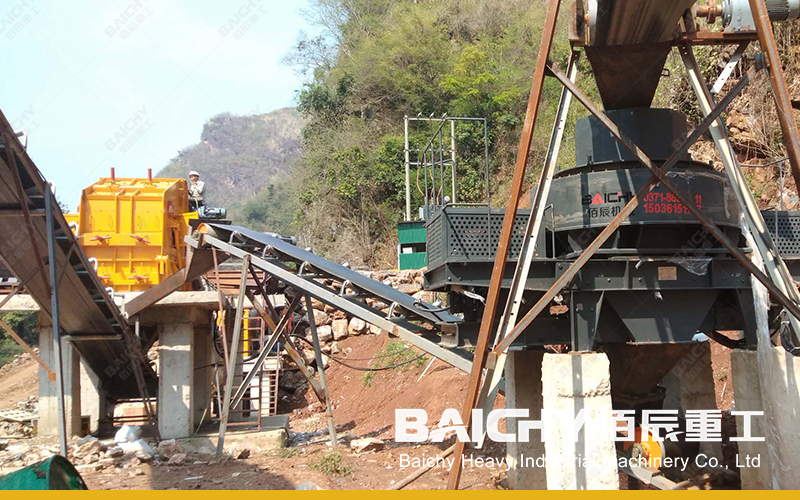
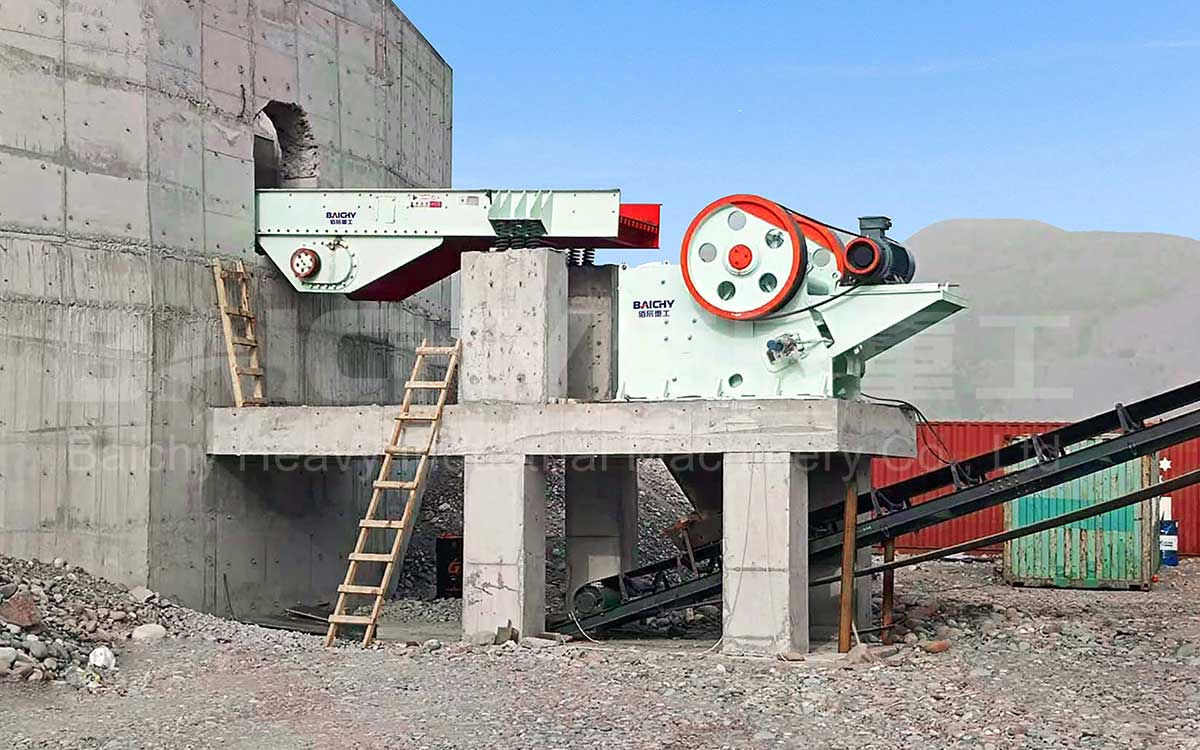
Complete Set Stationary Stone Crushing and Screening Plant
Scheme A: Hard Rock Dedicated Line (Jaw + Cone)
• Applicable Materials: Compressive strength > 150 MPa (e.g., granite, basalt, river pebbles)
• Process Logic: Coarse crushing (Jaw Crusher) handles the "biting and breaking," while medium-to-fine crushing (Cone Crusher) handles the "grinding and crushing," adhering to the principle of laminated crushing.
| Equipment Name | Recommended Model Example | Key Parameters (Reference) | Functional Value |
| Vibrating Feeder | ZSW380×95 | Processing Capacity: 80–120 TPH | Uniform feeding; pre-screening of soil/fines |
| Jaw Crusher | PE400×600 | Feed Size: 340 mm; Discharge Opening: 40–100 mm | Primary crushing; deep-cavity design; overload protection |
| Cone Crusher | PYB900 (Spring-type) or HPT200 (Hydraulic-type) | Discharge Opening: 5–15 mm | Secondary crushing; finished product features a cubic shape with <10% needle-like and flaky content |
| Vibrating Screen | 3YK1235 | Screen Layers: 3 | Classification screening;produces 0–5 mm, 5–10 mm, 10–20 mm, and 20–31.5 mm fractions |
Scheme B: Soft Rock Dedicated Line (Jaw + Impact)
Complete Set Stationary Stone Crushing and Screening Plant
• Applicable Materials: Compressive strength < 100 MPa (e.g., limestone, coal gangue, weathered rock)
• Process Logic: Utilizes impact energy for crushing; also features material shaping capabilities; investment cost is approximately 15%–20% lower than Scheme A.
| Equipment Name | Recommended Model Examples | Key Differentiating Features |
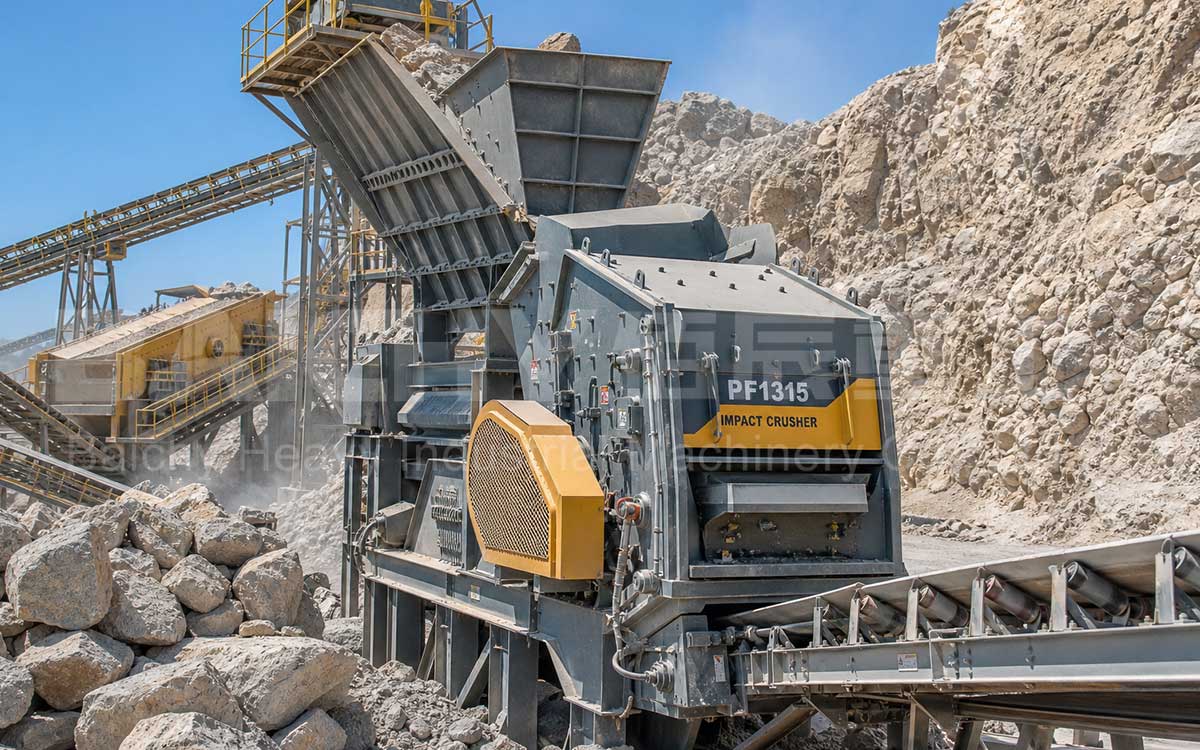
| Impact Crusher | PF1010 / PF1210 | The blow bars are cast from high-chromium alloy iron (compliant with GB/T 5680 standards); they can be flipped over for continued use once worn, ensuring convenient maintenance. |
III. The Accumulation of 20 Years of Experience: Four Intrinsic Values That Go Beyond the Equipment Itself
The true production capacity of a processing line is often determined by its slowest link (the bottleneck process), rather than by the specifications of any single, expensive piece of equipment.
1. The "Streamlined" Principle in Process Design
• Empirical Data: Through a post-project review of a "Sand and Aggregate Supply Project for a High-Speed Rail Section in Shandong (2024)," we discovered that optimizing conveyor belt angles (keeping them within 18°) and incorporating buffer designs at material drop points can reduce downtime caused by material blockages by up to 60%.
2. "Over-Specification" Standards for Critical Components
• Bearings: Bearings across the entire equipment line utilize imported brands such as SKF/FAG or the specialized heavy-duty series from ZWZ (Wafangdian Bearing Group). They feature a designed service life of >30,000 hours—far exceeding the 20,000-hour requirement stipulated in the national standard GB/T 25706-2010.
• Steel Plates: The main frame structure is constructed from Q355B low-alloy high-strength steel, with critical load-bearing sections reinforced with 20% thicker plating.
3. Integrated Systems for Environmental Protection and Intelligent Operation
• Dust Removal: Equipped as standard with a pulse-jet bag filter (filtration precision: 0.5μm), ensuring dust emission concentrations remain below 10 mg/m³—a performance level superior to the Comprehensive Emission Standard of Air Pollutants (GB 16297-1996).
• Control Systems: An optional PLC intelligent control system is available, enabling remote start/stop operations, fault alarms, and real-time current monitoring.
About of Baichy Heavy Industry
Baichy Heavy Industry is a high-tech mining equipment company integrating R&D, manufacturing, sales, and after-sales service. Focusing on crushing, grinding, and mineral processing equipment, we provide professional solutions to our customers. We are ISO9001:2015 、certified, and our products include mobile crushing palnts, crawler crushing plant, construction waste crushing plants, jaw crushers, sand making machines, cone crushers, fine crushers, grinding mills, ball mills, etc., all with reliable performance to meet diverse project needs.
Our advantages:
• Professional pre-sales support: Free project design and comprehensive solutions to help you accurately select the right equipment;
• Comprehensive on-site service: Providing installation guidance and worker training to ensure smooth equipment commissioning;
• Reliable after-sales guarantee: A complete after-sales system, timely response to technical inquiries and equipment maintenance, ensuring long-term stable operation.
To protect your rights, please contact us through the following official channels for professional service:
Official Website Customer Service
https://wa.me/+8615093222637
Email: [email protected]
We are committed to providing high-quality equipment and full-cycle services to deliver comprehensive intelligent solutions for the global mining industry!
IV. Frequently Asked Questions (FAQ)
Q1: How much space is required for a stone processing line with a capacity of 40 tons per hour?
A: We recommend a site area of no less than 30m (length) × 15m (width). If the layout includes a material stockpiling area, a space of 50m × 20m is required. Specific adjustments must be made based on terrain slope; for every 5° increase in slope, the required footprint increases by 10%.
Q2: Approximately how much does a 30–50 ton/hour gravel production line cost?
A: The price range typically falls between 300,000 and 800,000 RMB. The price variation stems primarily from: ① whether civil engineering foundations are included; ② the choice between a cone crusher and an impact crusher; and ③ the level of automation in the electrical control system. Configurations designed for soft rock are less expensive, while those for hard rock are costlier.
Q3: If operating for 10 hours a day, how much revenue can be generated in a year?
A: Based on 300 working days per year and a gross profit of 15 RMB per ton: 40 tons/hour × 10 hours × 300 days × 15 RMB = 1.8 million RMB per year. After deducting electricity costs, labor expenses, and spare parts wear-and-tear, the net profit margin typically ranges from 40% to 50%.
Q4: Is an impact crusher suitable for processing granite?
A: It is not recommended. Granite has a Mohs hardness of 6–7; consequently, the blow bars in an impact crusher would wear out extremely quickly—potentially requiring replacement as often as once a day. This leads to a significant increase in downtime, resulting in overall operating costs that are far higher than those associated with a cone crusher.
Q5: Can the equipment noise level be kept below 85 decibels?
A: Yes. By installing soundproof enclosures (featuring sound-absorbing cotton with a density of 48 kg/m³) around the crushers and fitting rubber springs to the vibrating screens, the noise level at the plant boundary can be reduced to below 65 dB(A) during the daytime. This complies with the GB 12348-2008 *Emission Standard of Environmental Noise for Industrial Enterprises at Boundary*.
Q6: How many different sand specifications can this production line produce?
A: The standard configuration yields three finished product specifications (0–5 mm manufactured sand, 5–10 mm, and 10–20 mm), plus oversize material (>20 mm) which is recirculated for further crushing. If additional specifications are required, the number of decks on the vibrating screen can be increased (e.g., using the 4YK series).
Q7: What are the voltage requirements? Is a transformer needed?
A: The standard domestic configuration requires 380V/50Hz power. The total power consumption is approximately 100–150 kW; we recommend equipping the system with a 200 kVA transformer to ensure sufficient headroom and prevent voltage drops during startup.
Q8: How often do wear parts need to be replaced?
A: The service life of jaw plates (made of high-manganese steel, Mn18Cr2) is approximately 6–12 months; the mantle for the cone crusher lasts about 8–10 months; and conveyor belts last about 2–3 years. The specific lifespan depends on the abrasiveness of the processed material.
Q9: How soon can the equipment go into production after shipment?
A: The lead time for standard equipment is 15–20 days. The installation and commissioning period takes approximately 7–10 days. From the time an order is placed to the commencement of formal production, the entire process can be completed in as little as 25 days.
Q10: Do you provide on-site installation services?
A: Yes. We offer "Turnkey Projects," which include foundation drawing design, guidance on equipment installation, no-load testing, and operator training.